

Making Sense of the Moves: A Friendly Guide to the Classification of Therapeutic Exercise
Let’s be honest, the phrase “therapeutic exercise” can sound a bit… clinical. It might bring to mind sterile rooms and complicated machines. But what if we told you that therapeutic exercise is simply the art and science of using movement as medicine? It’s the secret sauce behind recovering from an injury, managing a chronic condition, and simply moving through life with more strength and less pain. But with so many different types of exercises out there, how do we make sense of it all? This is where understanding the classification of therapeutic exercise becomes your ultimate roadmap to recovery.
If you’ve ever wondered why your physiotherapist at Sync Move Rehab Centre has you holding a wall sit instead of lifting a heavy weight, or why you’re working on balancing on one leg after a sprain, you’re asking the right question. The classification of therapeutic exercise is the system that healthcare professionals use to choose the right tool for the job. It’s like a master chef’s spice rack—each category of exercise has a unique flavour and purpose, and the magic happens when they’re blended together in the perfect recipe for your body.
In this guide, we’re going to demystify this entire system. We’ll break down the different “families” of therapeutic exercise, explain what each one does, and show you how this knowledge is power when it comes to taking control of your health. So, let’s dive in and explore the fascinating world of the classification of therapeutic exercise.
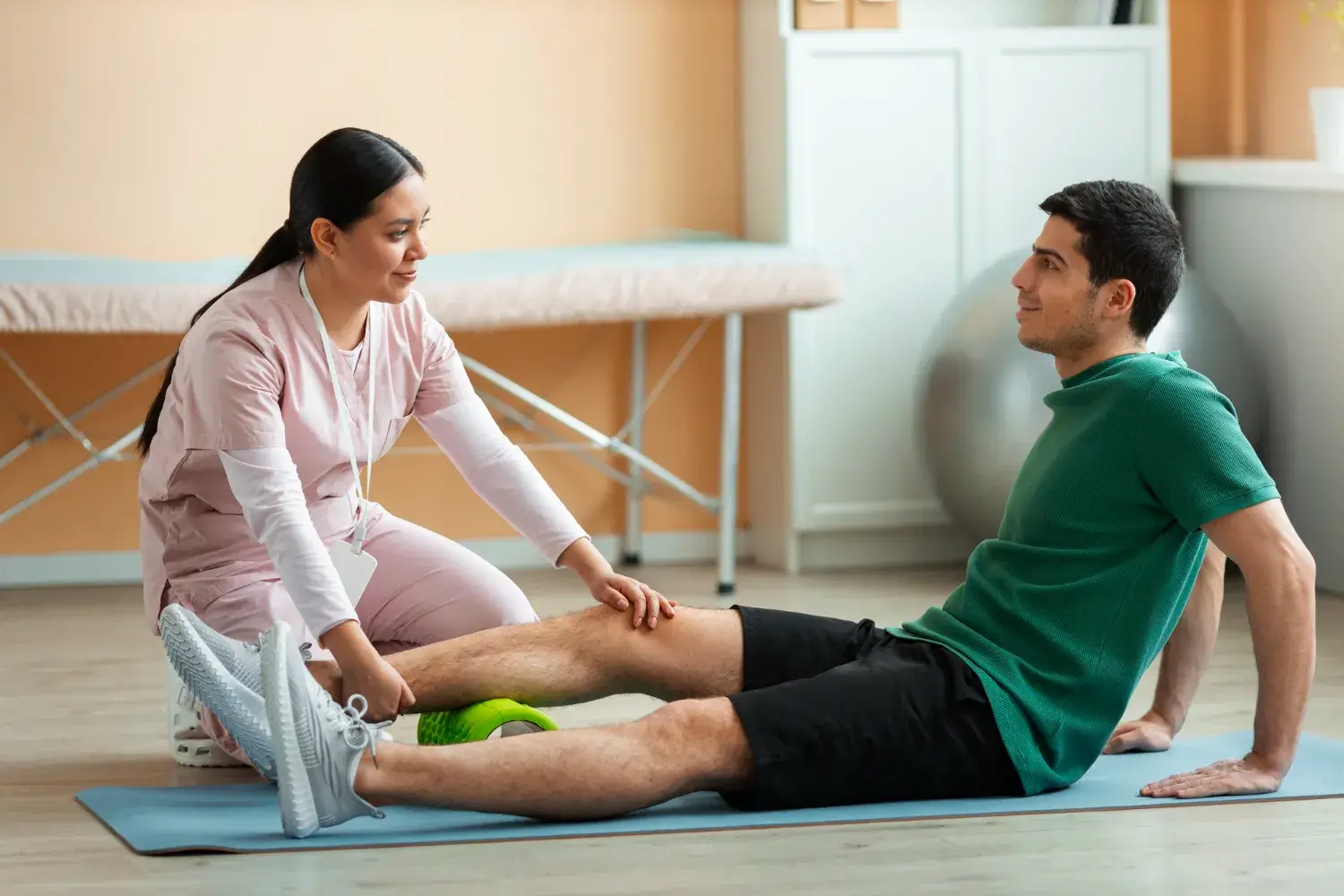
Why Bother Classifying Exercise? It’s Not Just for Experts!
You might be thinking, “Do I really need to know this? Can’t I just do what the physio says?” Of course, trusting your therapist is key. But understanding the “why” behind your exercises is incredibly empowering. It transforms your rehab from a list of chores into a purposeful journey.
Think of it this way: if your car was making a funny noise, you’d want the mechanic to know the difference between a spark plug and a brake pad. Similarly, your body has different systems—your muscles, your nerves, your balance sensors—and each category of exercise targets a specific system. Understanding the classification of therapeutic exercise helps you and your therapist at Sync Move Rehab Centre:
- Set Clear Goals: Are we building raw strength? Or is the priority improving the range of motion in a stiff joint? The classification guides our target.
- Create a Safe Progression: We start with foundational exercises and gradually move to more complex ones, ensuring your body is ready for each new challenge.
- Prevent Re-injury: By strengthening the right systems in the right order, we build a resilient body that’s less likely to get hurt again.
- Track Your Progress: It allows us to measure improvements in specific areas, like holding a stretch longer or lifting a heavier weight with good form.
A 2021 report from the Canadian Physiotherapy Association highlighted that patients who understand the rationale behind their rehabilitation program show significantly higher adherence and better overall outcomes. So, consider this your backstage pass to the logic behind your recovery plan.
The Foundation: Range of Motion (ROM) Exercises
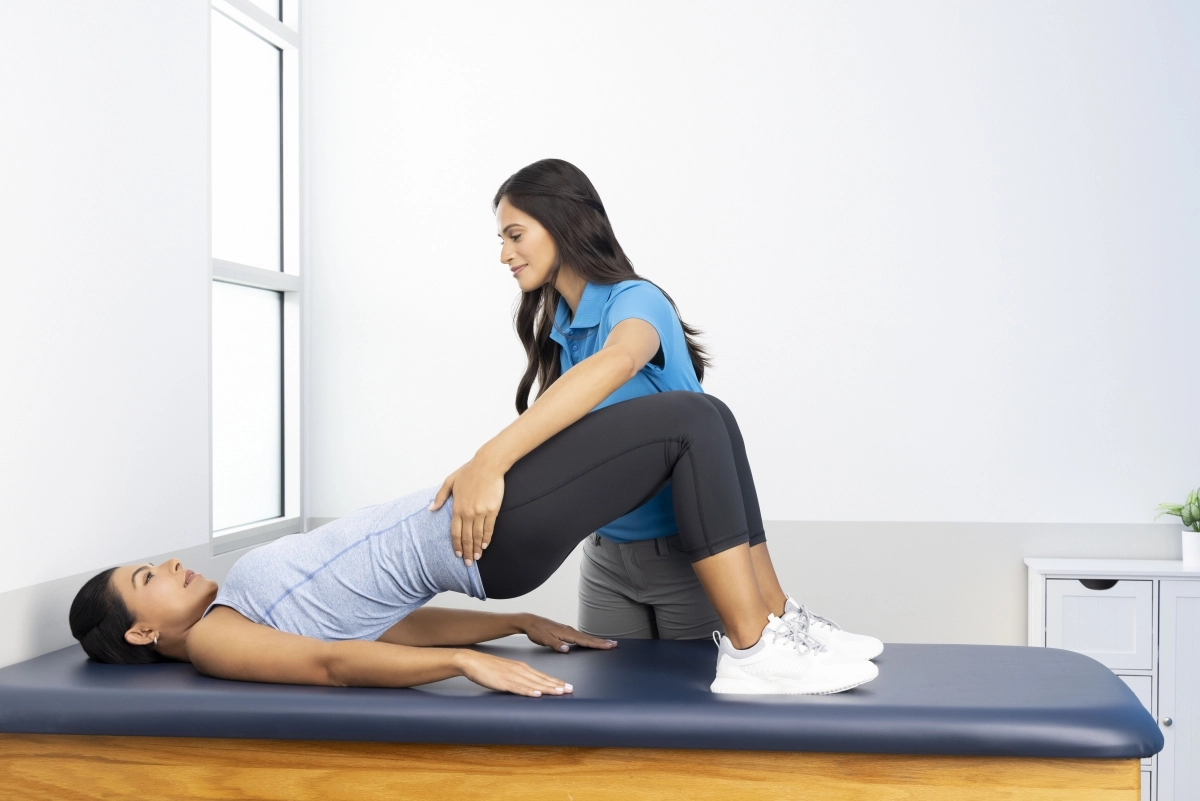
Before you can be strong, you need to be able to move. That’s where Range of Motion (ROM) exercises come in—they are the bedrock upon which all other movement is built. In the classification of therapeutic exercise, ROM work is all about maintaining or improving the freedom of movement in your joints.
Imagine a rusty door hinge. You wouldn’t start slamming the door open and shut; you’d first carefully oil it and gently work it back and forth. ROM exercises are that “oiling” process for your joints. They are often the very first step in a rehab program, especially after a period of immobilization (like wearing a cast) or surgery.
We can break ROM down into three sub-categories:
-
Active Range of Motion (AROM)
This is all you, baby! You use your own muscle power to move a joint through its available range. For example, lifting your arm overhead or bending and straightening your knee without any help. AROM is fantastic because it not only moves the joint but also provides a gentle workout for the muscles that control it.
-
Passive Range of Motion (PROM)
Here, an external force does all the work. This could be a therapist at Sync Move Rehab Centre, a mechanical device, or even your other hand moving the affected limb. The muscles around the joint are completely relaxed. PROM is crucial when you’re in too much pain to move yourself, when a muscle is too weak, or when you need to prevent stiffness in a paralyzed limb.
-
Active-Assistive Range of Motion (AAROM)
This is the perfect teamwork between you and an outside helper. You use your muscles to initiate the movement, but you get a little help to complete the full range. Think of it as training wheels for your joint. A common example is using a strap around your foot to help pull your leg closer during a hamstring stretch. It allows you to do what you can, while safely exploring a greater range.
When do we use them? After shoulder surgery, to combat arthritis stiffness, or in the early stages of stroke rehabilitation. At Sync Move Rehab Centre, we carefully assess which type of ROM is right for each stage of your healing.
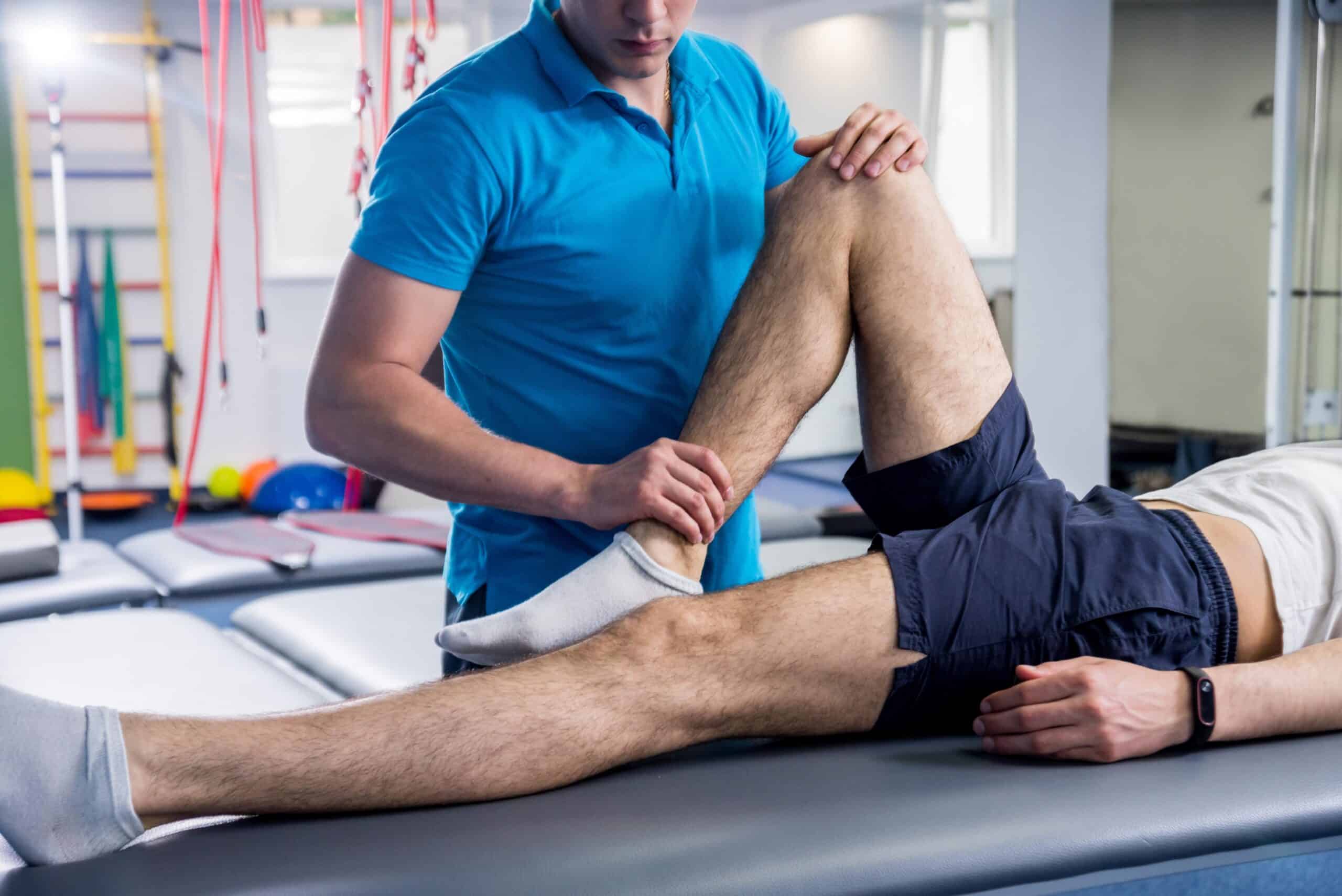
Building the Pillars: Strengthening Exercises
Once a joint can move comfortably, the next step in the classification of therapeutic exercise is to make sure the muscles around it are strong and supportive. Weak muscles are like a shaky foundation for a building—everything becomes unstable and prone to injury. Strengthening exercises are designed to improve the muscle’s ability to generate force.
But not all strength is created equal! We classify strengthening exercises based on how the muscle contracts.
-
Isometric Exercises: The Silent Strength Builders
The word “isometric” means “same length.” In these exercises, you contract your muscle without actually moving the joint. You’re generating tension, but nothing is going anywhere.
- What it looks like: Holding a plank, pushing against an immovable wall, or simply tightening your thigh muscle (quadriceps) while your knee is straight.
- Why it’s awesome: Isometrics are incredibly joint-friendly. They allow you to build strength with very little risk of aggravating an acute injury. They are often the very first strengthening exercise prescribed after an injury.
-
Isotonic Exercises: The Classics
This is what most people think of when they hear “strength training.” “Isotonic” means “same tension.” You’re moving a constant resistance through a range of motion. This category has two main phases:
- Concentric Contraction: The muscle shortens as it contracts. This is the “up” phase of a bicep curl.
- Eccentric Contraction (The “Braking” Force): This is where the muscle lengthens while under tension. It’s the “down” phase of a bicep curl, where you control the weight instead of just dropping it. Eccentric training is a superstar in rehab! It’s crucial for controlling movement, absorbing force (like when you walk downstairs), and it’s been shown to be highly effective for conditions like Achilles tendinopathy.
-
Isokinetic Exercises: The High-Tech Option
This is the Ferrari of strengthening exercises, usually performed on expensive, computerized machines. “Isokinetic” means “same speed.” The machine controls the speed of the movement and provides a resistance that matches your force output throughout the entire range, maximizing effort at every angle. While less common in a typical clinic due to the equipment needed, it’s a gold standard for objective measurement and training in high-performance athletics.
At Sync Move Rehab Centre, we strategically blend these different types of contractions to build robust, resilient muscles that can handle the demands of your daily life and favourite activities.
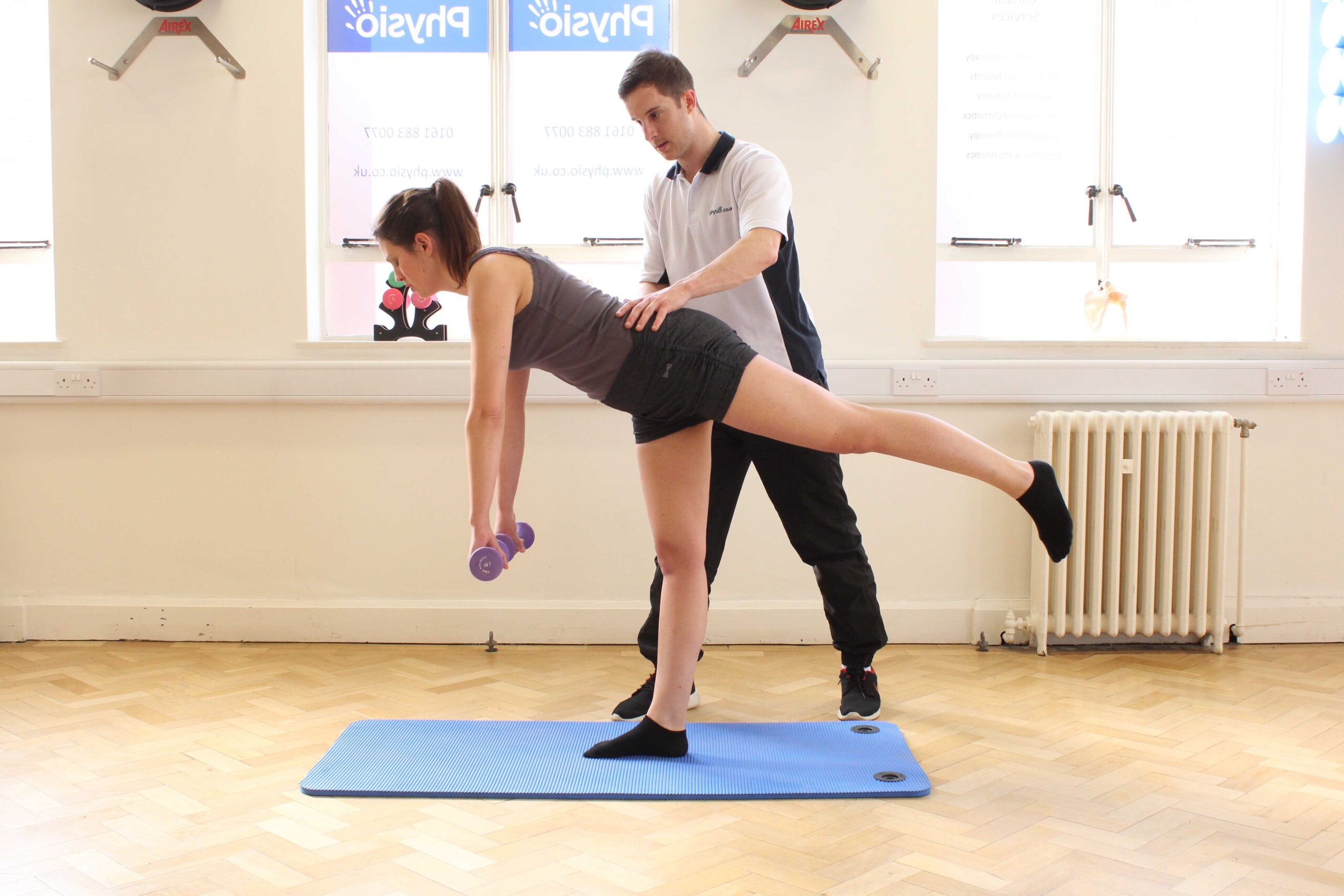
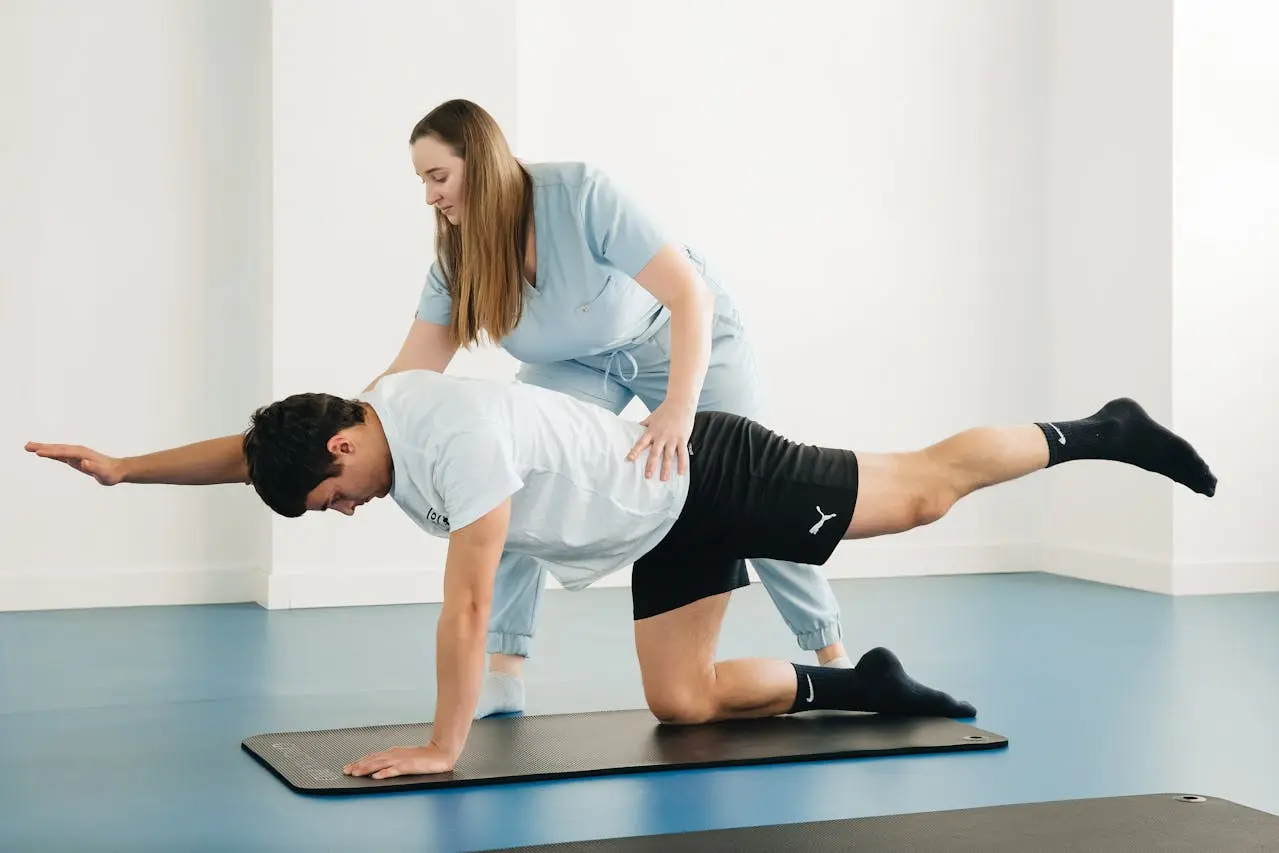
The Unsung Hero: Balance and Coordination Exercises
If strength is the muscle’s ability to generate power, and ROM is the joint’s freedom to move, then balance is the nervous system’s masterful ability to coordinate it all. This part of the classification of therapeutic exercise is often overlooked, but it’s absolutely critical for preventing falls and moving with confidence.
Balance isn’t a single thing; it’s a complex conversation between three systems:
- Your Eyes (Vision): You see the horizon.
- Your Inner Ears (Vestibular System): They sense your head’s position in space.
- Your Joints and Muscles (Proprioception): They send signals to your brain about your body’s position.
Balance exercises work by creatively challenging these systems.
-
Static Balance: Holding Your Ground
This is balance in a stationary position. It starts simple (standing on two legs) and progresses in difficulty.
- Progression: Two legs -> one leg -> two legs on an unstable surface (like a pillow) -> one leg on an unstable surface.
-
Dynamic Balance: Balance in Motion
This is where things get fun and functional. Dynamic balance is your ability to maintain stability while your body is moving.
- What it looks like: Walking in a straight line, walking heel-to-toe (tandem gait), or even more challenging, walking while turning your head side to side. This mimics the real-world task of walking while looking for a friend in a crowd.
The statistics are sobering. According to the Public Health Agency of Canada, 20-30% of seniors experience falls each year, and falls are a leading cause of hospitalization. A proper classification of therapeutic exercise ensures that balance training is never neglected, especially in older adult populations. The team at Sync Move Rehab Centre integrates balance work into almost every rehab plan, because a strong body also needs to be a stable one.
The Power of Endurance: Aerobic Conditioning Exercises
“Cardio” isn’t just for weight loss or a healthy heart. In the world of rehab, aerobic conditioning is a powerful therapeutic tool. This category in the classification of therapeutic exercise focuses on improving the efficiency of your heart, lungs, and circulatory system.
Why is this part of rehab?
- Promotes Healing: Improved blood flow delivers more oxygen and nutrients to injured tissues, speeding up the recovery process.
- Boosts Energy: Chronic pain and inactivity are exhausting. Aerobic exercise increases your overall energy levels.
- Manages Weight: Maintaining a healthy weight reduces stress on weight-bearing joints like the hips, knees, and ankles.
- Mood Enhancement: It releases endorphins, your body’s natural feel-good chemicals, which is a huge benefit when dealing with the frustration of an injury.
The key in a therapeutic setting is choosing the right kind of cardio. We call this “joint-friendly” or “low-impact” aerobic exercise. Instead of prescribing a high-impact activity like running, which might irritate an injured knee, your therapist at Sync Move Rehab Centre might suggest:
- Swimming or Aqua Therapy: The buoyancy of water is a dream for sore joints.
- Stationary Cycling: It builds leg strength and cardio with minimal impact.
- Elliptical Trainer: This provides a gait-like motion without the pounding of each step.
The Final Piece: Functional and Sport-Specific Exercises
This is where the rubber meets the road. All the ROM, strength, balance, and cardio work culminates in this final, crucial category of the classification of therapeutic exercise. Functional exercises bridge the gap between the clinical setting and the real world.
The principle is simple: train for the movements you need in your life. We take the isolated gains you’ve made and integrate them into complex, coordinated patterns.
- For a parent: This might mean practicing lifting a weighted car seat with perfect form.
- For a construction worker: This could involve simulating the motion of lifting a toolbox from the ground.
- For a gardener: We might work on a controlled “squat and reach” to mimic weeding.
Sport-Specific Training takes this a step further. For an athlete, returning to sport isn’t just about being pain-free; it’s about being performance-ready. This phase of training involves drills that mimic the demands of their sport. A soccer player will work on cutting and pivoting maneuvers. A tennis player will focus on lateral lunges and overhead motions. This ensures that when they step back onto the field or court, their body is not just healed, but re-trained for the specific challenges of their game.
The Sync Move Method: Blending the Categories for Your Success
At Sync Move Rehab Centre, we don’t just pick exercises from a list. We see the classification of therapeutic exercise as a dynamic, fluid guide. Your body is a complex, integrated system, and your therapy should be too.
A typical session with us might look like this:
- Warm-up (ROM & Light Aerobic): We start by gently preparing your body with movements to increase blood flow and joint fluid.
- Strength & Balance Combo: We might have you perform a bicep curl while standing on one leg. This simultaneously challenges your muscular system and your balance system, which is far more reflective of real life than doing a curl while sitting down.
- Functional Integration: We’ll take the strength you’ve built and apply it to a task like getting up from a chair without using your hands, or carrying a weight while walking.
- Cool-down (ROM): We finish with gentle stretching to maintain the flexibility we’ve worked on.
This integrated approach is what leads to lasting results. It’s the difference between having a strong muscle in the clinic and having a strong, useful, and coordinated body in the world.
The Future is Moving: Latest Trends in Therapeutic Exercise
The field is always advancing. Here are some exciting developments that build upon the traditional classification of therapeutic exercise:
-
Tele-rehab:
The use of video conferencing to guide exercises at home. This improves access and adherence, allowing your therapist at Sync Move Rehab Centre to check your form and progress remotely.
-
Exergaming:
Using consoles like the Nintendo Wii or VR systems for rehab. Games that require squatting, reaching, and balancing make exercise engaging and fun, which is a huge win for adherence, especially with younger patients or those who find traditional exercise boring.
-
Blood Flow Restriction (BFR) Training:
This involves lightly wrapping a cuff around a limb to partially restrict venous blood flow while performing low-intensity resistance exercises. The fascinating result is that it produces strength and muscle growth similar to high-intensity training, but with much lighter loads. This is a revolutionary tool for rehabbing patients who can’t yet put heavy stress on a healing joint.
Your Movement Prescription Awaits
Understanding the classification of therapeutic exercise is like learning a new language—the language of your own body. It helps you see that every stretch, every weight lifted, and every balance hold has a distinct purpose in the grand symphony of your recovery. From the gentle, early work of restoring range of motion to the empowering final stages of sport-specific training, this classification system ensures that your rehab journey is logical, safe, and laser-focused on your goals.
Movement is medicine, and at Sync Move Rehab Centre, we are experts in prescribing the right dosage. You don’t have to navigate pain and recovery alone.
Ready to experience the power of a truly personalized therapeutic exercise program? Contact the caring team at Sync Move Rehab Centre today. Visit our website at https://syncmove.ca/ to schedule your assessment and take the first step towards a stronger, more balanced, and pain-free life. Let’s build your roadmap to recovery, together.
References
- Canadian Physiotherapy Association. (2021). The Value of Physiotherapy. https://physiotherapy.ca/
- Public Health Agency of Canada. (2021). Seniors’ Falls in Canada: Second Report. https://www.canada.ca/en/public-health/services/health-promotion/aging-seniors/publications/publications-general-public/seniors-falls-canada-second-report.html
- American College of Sports Medicine. (2022). ACSM’s Guidelines for Exercise Testing and Prescription. https://www.acsm.org/
- Kisner, C., & Colby, L. A. (2017). Therapeutic Exercise: Foundations and Techniques. Fa Davis.
- National Institute on Aging. (2022). Four Types of Exercise Can Improve Your Health and Physical Ability. https://www.nia.nih.gov/health/four-types-exercise-can-improve-your-health-and-physical-ability
- The Chartered Society of Physiotherapy (UK). (2020). What is physiotherapy? https://www.csp.org.uk/careers-jobs/what-physiotherapy
- Loprinzi, P. D., et al. (2019). The Effects of Eccentric Exercise on Muscle Strength and Flexibility in Older Adults. The Journals of Gerontology. https://academic.oup.com/biomedgerontology/article/74/4/518/5067843
- Patterson, S. D., et al. (2019). Blood Flow Restriction Exercise: Considerations of Methodology, Application, and Safety. Frontiers in Physiology. https://www.frontiersin.org/articles/10.3389/fphys.2019.00533/full
- Arthritis Society Canada. (2022). Exercise and Arthritis. https://arthritis.ca/living-with-arthritis/treatment/self-management/exercise
- Heart & Stroke Foundation of Canada. (2021). Physical Activity. https://www.heartandstroke.ca/healthy-living/healthy-eating/physical-activity