

Compression Stockings: Benefits and Side Effects – The Ultimate Guide for Canadians
Let’s be honest, the words “compression stockings” don’t exactly spark joy for most people. They might conjure up images of something your grandparent wore or a medical garment you’d rather forget. But what if we told you these unassuming socks are one of the most powerful, accessible, and underrated tools in modern wellness and recovery? Whether you’re a nurse on your feet all day, a long-haul traveller, a post-surgery patient, or a dedicated athlete, understanding the benefits and side effects of compression stockings could be a game-changer for your health and comfort.
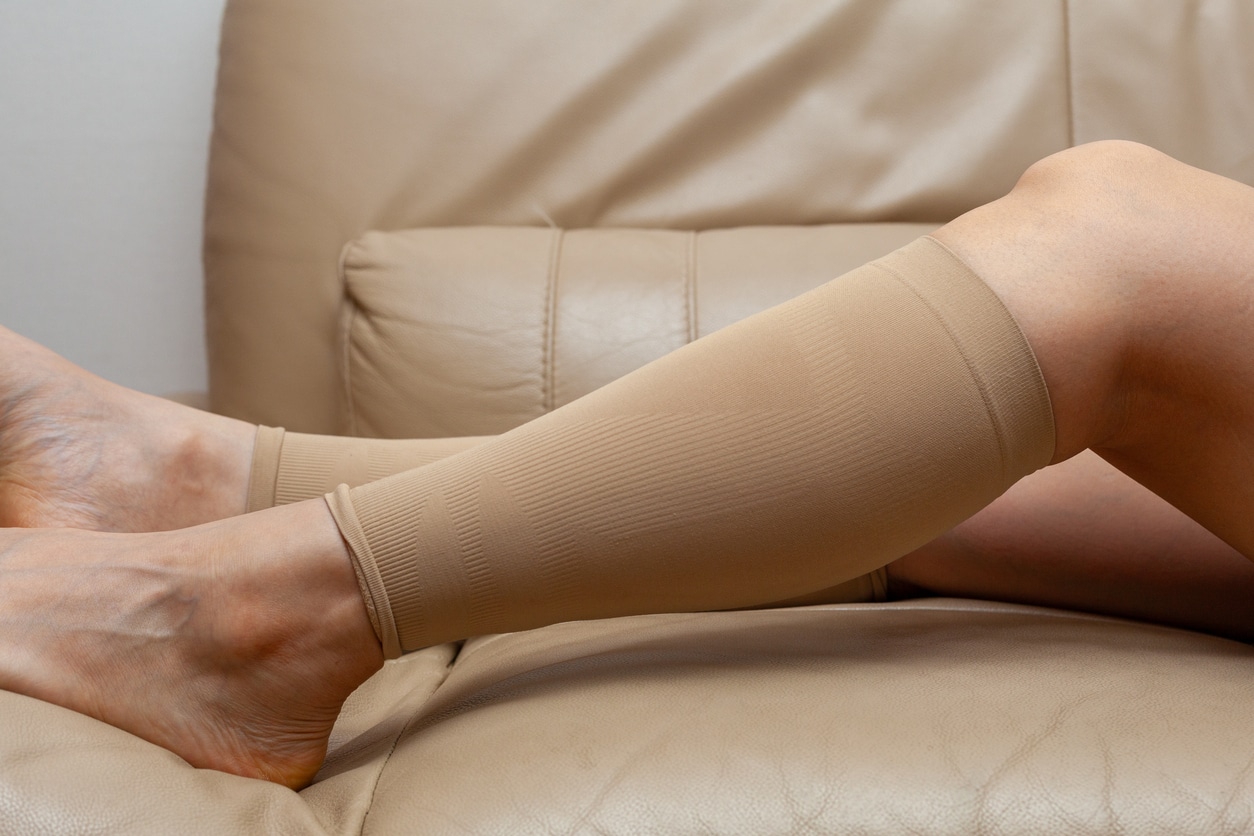
So, let’s pull up a chair (and maybe put our feet up) and unravel the mystery. What are the real benefits and side effects of compression stockings? In simple terms, they are specially designed socks or stockings that apply gentle, graduated pressure to your legs and feet. This isn’t just about a tight hug for your calves; it’s a sophisticated engineering feat that helps your circulatory system do its job better, pushing blood back up towards your heart against the pull of gravity. Think of them as a gentle, constant assist for your veins, and a key tool we often recommend at Sync Move Rehab Centre to support overall mobility and recovery.
This guide will walk you through everything you need to know—from the profound benefits that go far beyond tired legs to the potential side effects and how to avoid them. We’ll bust myths, share stats, and help you figure out if compression therapy is the right fit for you.
The Science of Squeeze: How Do Compression Stockings Actually Work?
To understand the benefits and side effects of compression stockings, we first need to understand the “how.” It all boils down to basic physics and human physiology. Your heart pumps oxygen-rich blood to your limbs through arteries. But getting the deoxygenated blood back up your legs through your veins is a tougher job, especially when gravity is working against it. Your leg muscles act as a secondary pump; when you walk and contract them, they squeeze the deep veins, pushing blood upward. One-way valves inside the veins prevent the blood from flowing backward.
When this system gets lazy—maybe you’re sitting at a desk for 8 hours or standing still all day—blood can pool in the lower legs. This leads to swelling, heaviness, achiness, and, over time, can contribute to more serious vein issues.
This is where the magic of graduated compression comes in. Unlike regular socks that are equally tight throughout, medical-grade compression stockings are engineered to be tightest at the ankle and gradually decrease in pressure as they go up the leg. This pressure gradient acts like a ladder, helping your veins and valves usher blood efficiently from your feet back to your heart. It gives your circulatory system a helpful nudge, reducing the diameter of major veins so blood flows faster and preventing blood from settling where it shouldn’t.
It’s a simple concept with powerful implications, and it’s a cornerstone of the conservative management strategies we discuss with clients at Sync Move Rehab Centre.
More Than Just Socks for Granny: Debunking Common Myths
Before we dive into the specific benefits, let’s clear the air. Compression wear has an image problem, and it’s time for a rebrand.
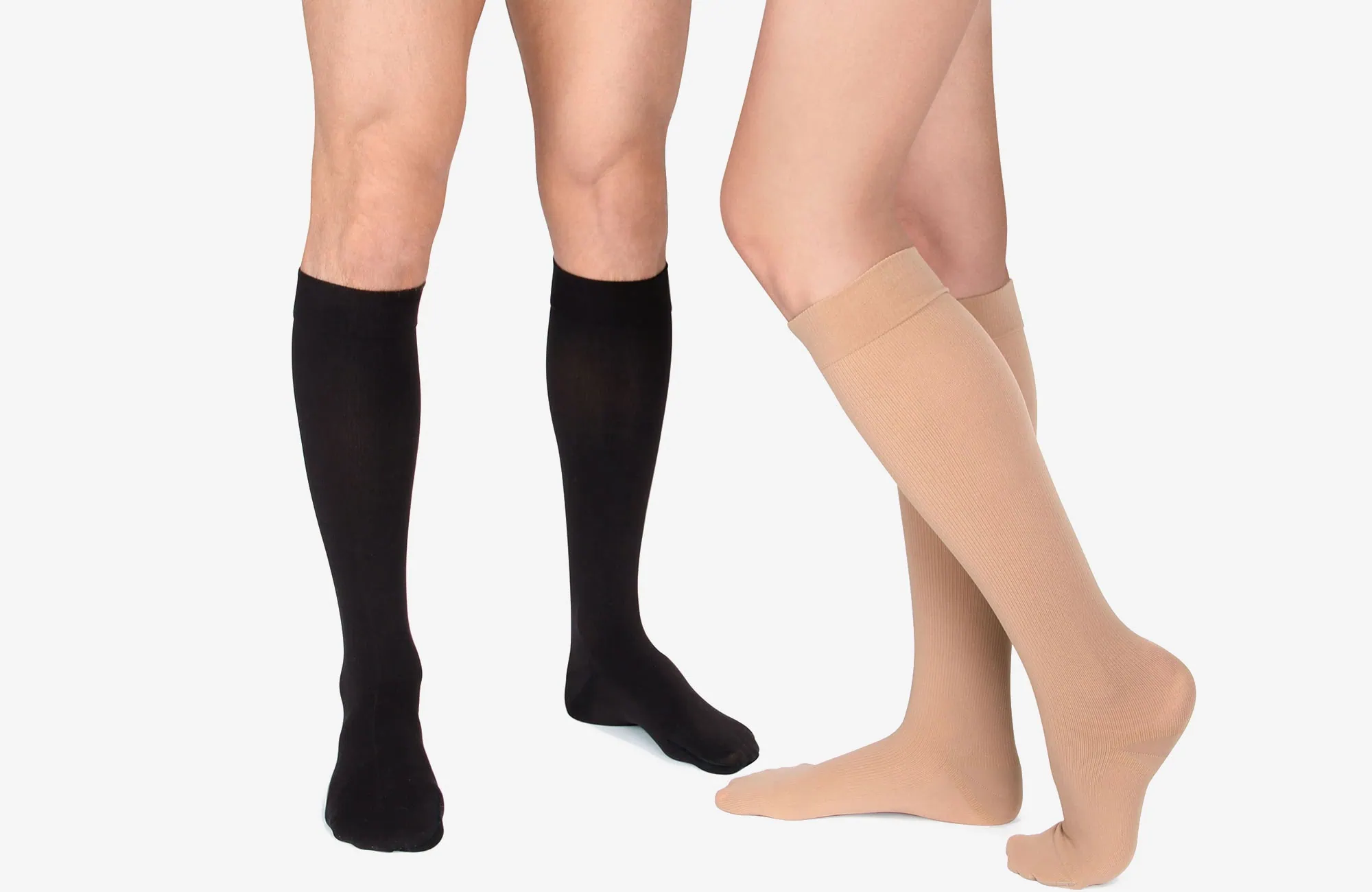
- Myth #1: They’re only for old people. Absolutely not! While they are invaluable for seniors, their user base is incredibly diverse. Pregnant women, marathon runners, office workers, flight attendants, and people recovering from surgery all use them. They are for anyone with legs that feel tired, achy, or swollen.
- Myth #2: They’re unbearably hot and ugly. This might have been true decades ago. Today, compression garments come in a vast array of materials, including moisture-wicking, breathable fabrics perfect for summer. You can find them in various colours, patterns, and even sheer styles that look like fashionable tights.
- Myth #3: Any tight sock will do. This is a crucial one. Cheap, non-graduated “support” socks that are equally tight throughout the calf can actually do more harm than good, acting like a tourniquet and impeding blood flow. True medical-grade compression is graduated and measured in millimeters of mercury (mmHg), a standard we trust when guiding patients at Sync Move Rehab Centre.
A 2019 study published in the Canadian Journal of Cardiology highlighted that despite their proven efficacy, compression stocking use remains low due to “a lack of awareness and misconceptions about comfort and aesthetics.” It’s time to change that narrative.
The Good Stuff: A Deep Dive into the Benefits of Compression Stockings
Now, let’s get to the good part. Why would you go through the trouble of putting these on? The list of benefits is longer than you might think.
-
Banishing Tired, Achy, and Swollen Legs
This is the most common and immediate benefit. If you finish your day feeling like your legs are made of lead, compression stockings can provide noticeable relief. By preventing blood and fluid from pooling in your lower legs, they reduce edema (swelling) and that heavy, fatigued feeling. It’s like giving your legs a constant, gentle massage that helps flush out metabolic waste products that contribute to achiness.
-
A Powerful Ally Against Varicose and Spider Veins
Varicose veins are those swollen, twisted, often blue or purple veins you can see under the skin. They occur when vein valves weaken or fail, allowing blood to flow backward and pool. While compression stockings can’t make existing varicose veins disappear, they are a first-line defense for:
- Preventing them from getting worse. The external pressure supports the weakened vein walls.
- Alleviating symptoms like aching, throbbing, and swelling associated with them.
- Preventing their formation in high-risk individuals, such as those with a family history or during pregnancy.
-
The Gold Standard for Deep Vein Thrombosis (DVT) Prevention
This is a serious benefit. DVT is a blood clot that forms in a deep vein, usually in the leg. It can be life-threatening if the clot breaks off and travels to the lungs (a pulmonary embolism). Compression stockings are a critical prophylactic tool, especially in high-risk situations:
- During and after surgery, particularly orthopedic surgeries like knee or hip replacements.
- During long-distance travel (“economy class syndrome”), where immobility increases clot risk.
- For hospitalized patients who are largely bedridden.
A landmark review in the Cochrane Database of Systematic Reviews concluded that graduated compression stockings significantly reduce the risk of DVT in hospital patients undergoing surgery.
-
Supercharging Athletic Performance and Recovery
This is where compression wear has exploded in popularity. Athletes from runners to basketball players swear by them. The benefitshere are two-fold:
- Performance: Some studies suggest compression can improve proprioception (the sense of your body’s position in space) and reduce muscle oscillation (the vibration of muscles during impact), leading to better efficiency and slightly reduced fatigue.
- Recovery: This is the stronger claim. By enhancing blood flow, compression is thought to help deliver more oxygen to muscles and clear lactate and other metabolic by-products faster after intense exercise, reducing soreness and speeding up recovery time. It’s a tool we often integrate into recovery plans at Sync Move Rehab Centre for active individuals.
-
A Lifesaver for Lymphedema Management
Lymphedema is a chronic condition involving swelling, typically in an arm or leg, due to a compromised lymphatic system (often after cancer treatment). While different from circulatory edema, compression garments are the cornerstone of management. They provide the external pressure needed to help move lymphatic fluid out of the affected limb and prevent the buildup that causes swelling.
-
Supporting Health During and After Pregnancy
Pregnancy is a beautiful journey, but it can be tough on the legs. Increased blood volume, the pressure of the growing uterus on pelvic veins, and hormonal changes make pregnant women particularly prone to varicose veins, swelling, and DVT. Maternity compression stockings can provide immense relief from these symptoms and support vascular health throughout pregnancy and postpartum.
-
Helping Wounds Heal: The Role in Managing Venous Ulcers
For people with chronic venous insufficiency, poor blood flow can lead to painful, hard-to-heal wounds on the lower legs called venous ulcers. Compression therapy is the non-negotiable, primary treatment. By drastically improving venous return and reducing swelling, it creates the optimal environment for these stubborn wounds to finally heal.
The statistics speak volumes. A report from the Canadian Institute for Health Information (CIHI) indicated that venous leg ulcers affect nearly 1% of the Canadian population, costing the healthcare system hundreds of millions annually. Proper compression therapy is a cost-effective and essential intervention.
Not Always a Perfect Fit: Understanding the Side Effects and Drawbacks
Now, let’s address the other side of the coin. While the benefits of compression stockings are significant, they are not without potential side effects. Most of these are avoidable with proper use and fit.
-
Discomfort and Improper Fit
This is the number one complaint. If stockings are too tight, too loose, or bunched up, they can be uncomfortable or even painful. They can dig into your skin, leaving red marks (which should fade within 20-30 minutes of removal). This is why professional fitting is so crucial. The team at Sync Move Rehab Centrecan advise on how to get the right fit to avoid these issues.
- Skin Irritation, Dryness, and Itching
The materials in the stockings, combined with heat and moisture, can sometimes cause skin irritation, dryness, or itching. This can be mitigated by:
- Choosing stockings made of breathable, hypoallergenic materials.
- Wearing them over moisturizer-free skin (apply moisturizer at night after you’ve taken them off).
- Washing them regularly according to manufacturer instructions to remove sweat and oils.
-
The Dreaded “Difficulty Putting Them On”
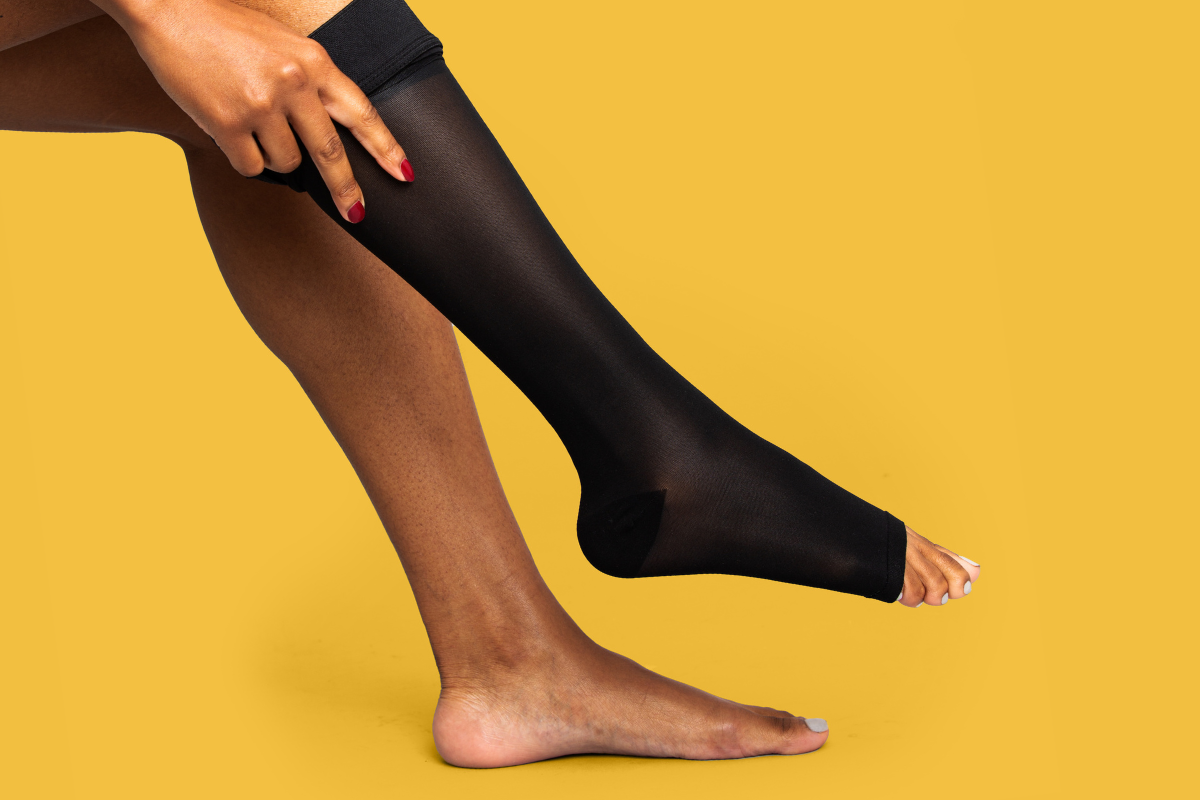
Let’s not sugarcoat it: getting medical-grade compression stockings on can be a workout. This is a significant barrier for many, especially those with arthritis or limited hand strength. The key is technique and tools:
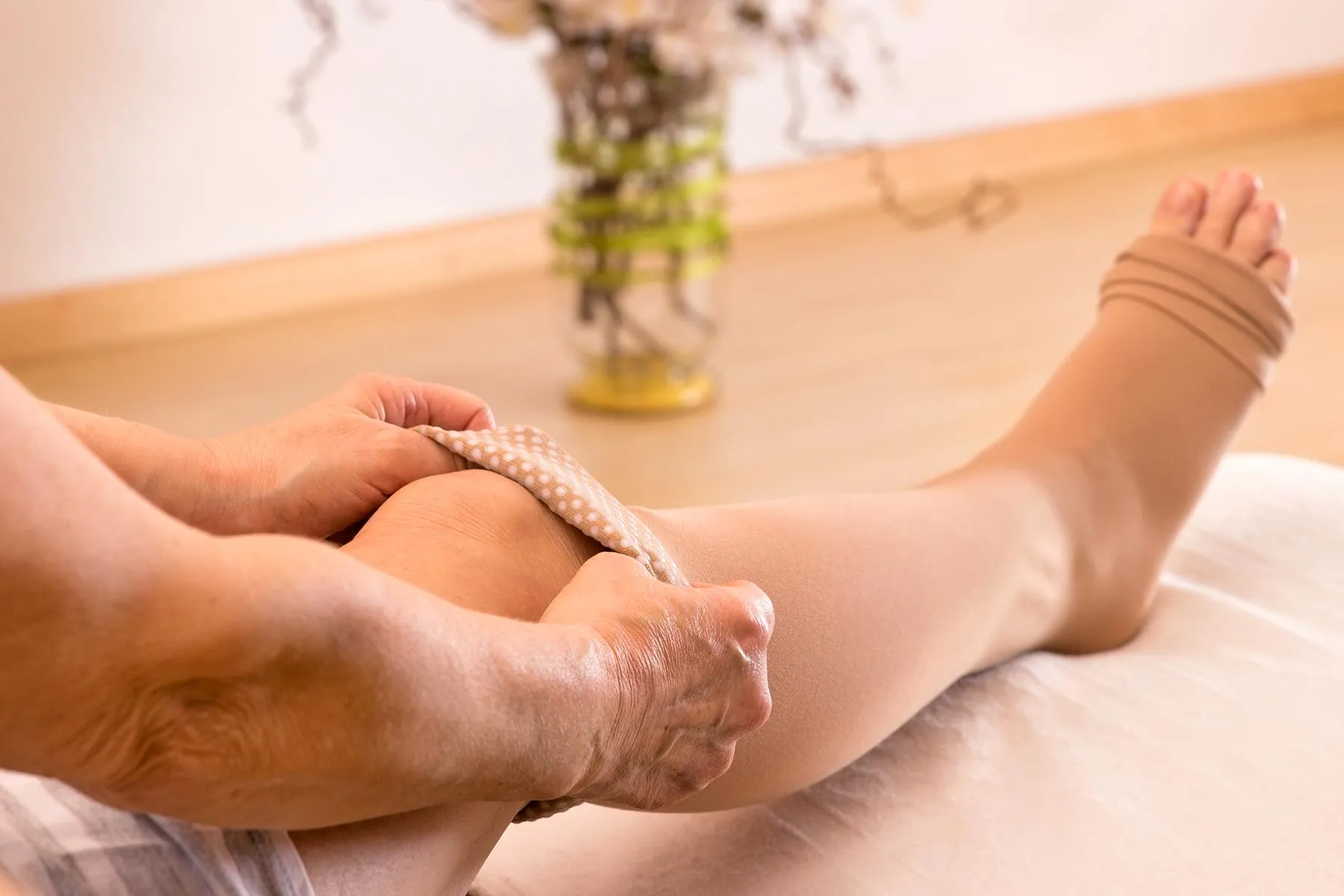
- Don’t pull from the top! Turn them inside out until you get to the heel, put your foot in, and then gradually roll them up your leg.
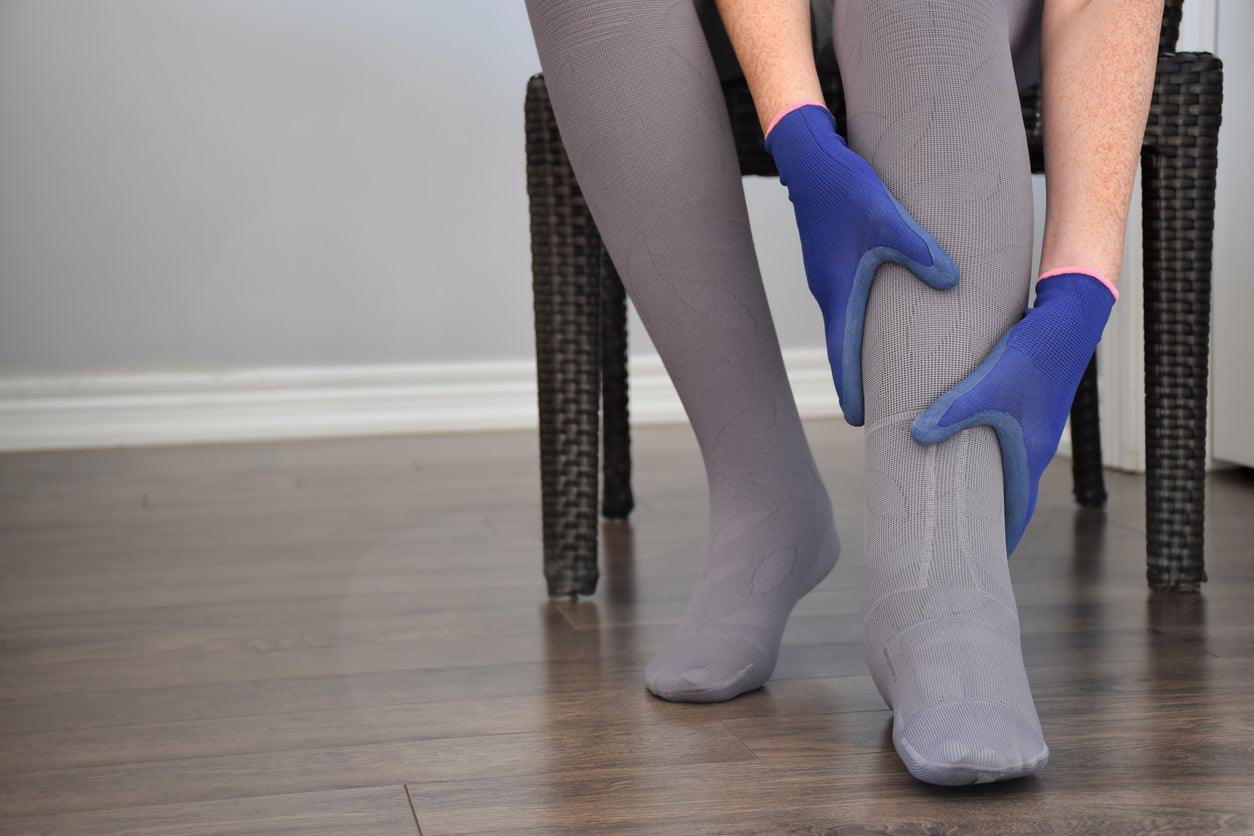
- Use donning aids. Rubber gloves, metal frames called “donners,” or plastic sleeves can make the process infinitely easier and preserve the life of the stockings.
-
Breaking the Bank: Cost and Durability
Quality medical compression stockings are an investment. They typically range from $50 to over $100 per pair and need to be replaced every 3-6 months with regular wear. While some provincial health plans or private insurance may cover them with a doctor’s prescription, it’s not always guaranteed.
-
Rare but Serious Risks
In very rare cases, compression stockings can be harmful. This is almost exclusively when they are used incorrectly.
- Impaired Arterial Blood Flow: For individuals with severe peripheral arterial disease (PAD), where arteries are narrowed and blood flow to the legs is already restricted, compression can be dangerous. The external pressure can further reduce this critical blood supply. It is essential to be assessed by a healthcare professional, like those at Sync Move Rehab Centre, to rule out contraindications like PAD.
- Nerve Compression: Ill-fitting stockings can, in rare instances, put pressure on superficial nerves, causing temporary numbness or tingling.
The key takeaway is that the vast majority of negative side effects of compression stockings are related to poor fit, incorrect use, or underlying, un-diagnosed health conditions.
Navigating the Pressure Maze: Compression Levels and Styles Explained
Not all compression is created equal. Walking into a pharmacy and grabbing a random pair can lead to disappointment. Here’s your cheat sheet:
Compression Levels (mmHg):
- Mild (8-15 mmHg): Over-the-counter. Great for mild leg fatigue, minor swelling, and travel. Perfect for beginners.
- Moderate (15-20 mmHg): Also often available over-the-counter. Used for moderate varicose veins, significant swelling during pregnancy, or after sclerotherapy. Good for recovery after athletic events.
- Firm (20-30 mmHg): The most common medical grade. Usually requires measurement and sometimes a prescription. Used for moderate to severe varicose veins, managing healed venous ulcers, significant lymphedema, and post-surgical DVT prevention.
- Extra Firm (30-40 mmHg, 40-50 mmHg+): For severe conditions like significant lymphedema, chronic venous insufficiency, and active venous ulcers. Always requires a prescription and professional fitting.
Styles:
- Knee-High: The most common. Effective for issues localized to the lower leg and feet.
- Thigh-High: Needed if symptoms extend above the knee.
- Pantyhose/Waist-High: Best for overall leg symptoms and when thigh-highs tend to roll down.
- Open-Toe: Can be more comfortable, allow for toe-wiggling, and are useful if you have foot deformities or want to wear them with sandals.
Consulting with a professional at Sync Move Rehab Centre can help you demystify these choices and find the perfect type and pressure for your specific needs.
The Future is Tight: Latest Innovations in Compression Wear
The world of compression isn’t standing still. The latest science is making them smarter and more user-friendly.
- Smart Compression: Devices that mimic the muscle pump are now available. These are pneumatic sleeves that rhythmically inflate and deflate, providing intermittent pneumatic compression (IPC), which can be even more effective than static stockings for some conditions like severe lymphedema.
- Wearable Sensors: Researchers are integrating tiny sensors into compression garments to monitor parameters like swelling, activity level, and even blood flow, providing real-time data to patients and clinicians.
- Advanced Materials: The development of even more breathable, antimicrobial, and sustainable fabrics is ongoing, making compliance easier for long-term users.
Your Action Plan: How to Use Compression Stockings Correctly
Knowing the benefits and side effects of compression stockings is one thing; using them correctly is another.
- Get Measured: For anything above mild compression, get professionally measured first thing in the morning when your legs are at their least swollen.
- Start Slow: Begin by wearing them for a few hours a day, gradually increasing the time.
- Put Them On in the Morning: Don them as soon as you wake up, before gravity has had a chance to cause swelling.
- Take Them Off at Night: Unless specifically instructed by your doctor for a condition like an active ulcer, always remove them before bed.
- Care for Them: Hand-wash or machine-wash gently in cool water and air-dry. This preserves the elastic and compression.
Finding the Right Support in Canada
In Canada, you can find mild compression stockings at most pharmacies. For medical-grade compression, you’ll need a medical supply store, some specialized clinics, or a pharmacy that offers measuring services. A great first step is to speak with a healthcare provider, such as a physiotherapist or your family doctor, who can assess your needs and point you in the right direction. At Sync Move Rehab Centre, we are always here to provide guidance and connect you with the resources you need for your vascular and muscular health.
To Squeeze or Not to Squeeze?
So, where does this leave us on the great compression debate? The evidence is clear: when used correctly, the benefits of compression stockings profoundly outweigh the potential side effects. They are a simple, non-invasive, and powerfully effective tool for a stunningly wide range of conditions—from preventing life-threatening blood clots to simply making a long workday more comfortable.
The potential drawbacks—discomfort, difficulty donning, cost—are real but largely manageable with the right knowledge, fit, and tools. The most critical step is to see them not as a one-size-fits-all solution but as a precise medical tool. Getting professional advice ensures you reap all the rewards without the headaches.
Your journey to happier, healthier legs doesn’t have to be a solo trek. If you’re struggling with leg fatigue, swelling, or are at risk for vascular issues, consider making compression therapy part of your wellness toolkit.
Ready to step into a world of better comfort and circulation? The team at Sync Move Rehab Centre is here to help you understand your options and find the right support for your lifestyle. Contact us today or visit our website at https://syncmove.ca/ to book a consultation and let us help you move forward with confidence and ease.
References
- Canadian Society for Vascular Surgery. (2022). Varicose Veins. https://canadianvascular.ca/Varicose-Veins
- Health Canada. (2021). Medical Devices – Compression Garments. https://www.canada.ca/en/health-canada/services/medical-devices.html
- Sachdeva, A., et al. (2018). Graduated compression stockings for prevention of deep vein thrombosis. Cochrane Database of Systematic Reviews. https://www.cochranelibrary.com/cdsr/doi/10.1002/14651858.CD001484.pub4/full
- Partsch, H., & Clark, M. (2019). The science of compression therapy. Phlebology. https://journals.sagepub.com/doi/10.1177/0268355519851934
- Canadian Institute for Health Information (CIHI). (2020). Health Indicators. https://www.cihi.ca/en/indicators
- The Lymphatic Education & Research Network (LE&RN). (n.d.). Compression Therapy. https://lymphaticnetwork.org/living-with-lymphedema/compression-therapy
- American College of Phlebology. (2022). Patient Information. https://www.phlebology.org/patient-information/
- The Society of Obstetricians and Gynaecologists of Canada (SOGC). (2019). Healthy Pregnancy – Varicose Veins. https://www.pregnancyinfo.ca/your-pregnancy/healthy-pregnancy/varicose-veins/
- MacRae, B. A., et al. (2021). The Effect of Compression Garments on Recovery Following Exercise-Induced Muscle Damage: A Systematic Review. Sports Medicine. https://link.springer.com/article/10.1007/s40279-021-01521-x
- Kahn, S. R., et al. (2019). Barriers to Compression Stocking Use in Patients with Venous Disease. Canadian Journal of Cardiology. https://www.onlinecjc.ca/article/S0828-282X(19)30112-0/fulltext