
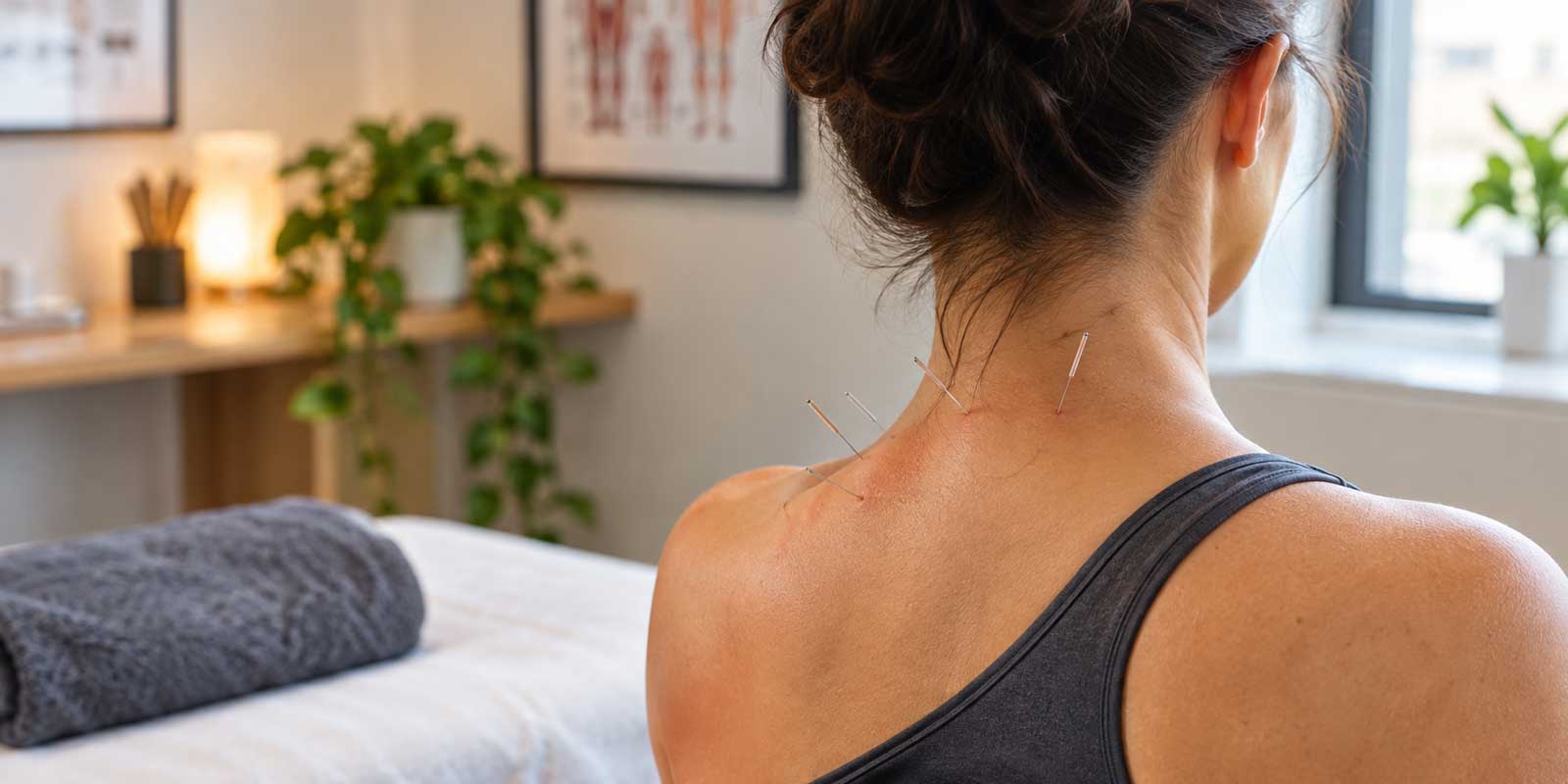
Can acupuncture release muscle knots?
Can Acupuncture Release Muscle Knots? What Science Says
Have you ever found a stubborn spot in your neck or shoulder that feels like a tiny rock buried inside the muscle? You press it, and suddenly you discover a whole new level of “ouch.” If so, you have probably wondered: Can acupuncture release muscle knots?
The short answer is: acupuncture may help reduce the pain and muscle tension associated with so-called “muscle knots,” but it is more accurate to say that it may help calm irritated muscle and pain pathways rather than physically untie a knot like a shoelace.
These painful areas are often described in healthcare as myofascial trigger points. They can occur in the neck, shoulders, upper back, lower back, hips and other areas. Acupuncture and dry needling are both used in rehabilitation settings to address muscular pain, although they are not exactly the same treatment.
For Canadians dealing with stubborn muscle tension, the good news is that research has become increasingly interesting in this area. A 2025 systematic review found that needling trigger points was associated with better pain outcomes than several other non-drug treatments for myofascial pain syndrome, although the researchers also noted that more high-quality research is needed [1].
So, could those little needles finally convince your grumpy shoulder to relax?
Let’s look at what the evidence actually says.
What Is a Muscle Knot?
“Muscle knot” is a friendly everyday term rather than a precise medical diagnosis.
Healthcare professionals may use terms such as myofascial trigger point or myofascial pain when describing a painful, sensitive area within a muscle.
A trigger point may feel like a tight band or particularly tender spot. Pressing on it can reproduce the person’s familiar pain and, in some cases, may cause pain to be felt somewhere else.
An international expert consensus study described several features used when identifying myofascial trigger points, including a taut band, a hypersensitive spot and pain that can be referred to another area [2].
For example, a trigger point in the upper trapezius muscle—the large muscle running from your neck toward your shoulder—may produce pain around the shoulder, upper back or even toward the side of the head.
This is one reason a “knot” can sometimes feel confusing.
The painful spot is not always the whole story.
Why Do Muscle Knots Happen?
There is no single explanation for every trigger point.
Muscle tension can be associated with several everyday factors, including:
- Repetitive movements
- Long hours at a desk
- Poorly tolerated postures
- Sudden increases in exercise
- Sports or work-related strain
- Lack of recovery after physical activity
- Stress and prolonged muscle tension
- Previous injuries
- Reduced movement
Imagine sitting at your computer for six hours with your shoulders slowly creeping toward your ears.
Your body may eventually say, “Enough already.”
The resulting discomfort can feel like stiffness, tightness, tenderness or a deep aching sensation.
However, persistent pain should not automatically be blamed on a muscle knot. Neck, shoulder and back pain can have many causes, and a proper assessment is important when symptoms continue, worsen or include neurological symptoms.
Can Acupuncture Release Muscle Knots?
Now to the question everyone came for.
Can acupuncture release muscle knots?
It may help, particularly when the pain is related to myofascial trigger points or muscular tension.
But “release” needs a little explanation.
Acupuncture does not literally pull a knot out of a muscle. Instead, needling may influence pain processing, the nervous system and local tissues. Modern research suggests that acupuncture can have effects on the nervous system and tissues around the needle, while treatment-related factors such as relaxation and the therapeutic interaction may also contribute to the overall effect [3].
This is important because pain is not simply a mechanical problem.
Your brain and nervous system constantly process information coming from muscles and other tissues. When an area becomes sensitive, the nervous system can become part of the problem.
Acupuncture may help change how that pain is processed.
That may translate into:
- Less pain
- Reduced sensitivity
- Improved movement
- Less perceived muscle tension
- Better tolerance for exercise or stretching
- Improved function
So rather than imagining a needle physically “untangling” muscle fibres, think of acupuncture as potentially helping turn down the volume on an irritated pain system.
What Does the Research Say?
This is where things get particularly interesting.
A large individual-patient meta-analysis involving 20,827 people across 39 randomized trials examined acupuncture for several chronic pain conditions, including musculoskeletal pain, osteoarthritis, headache and shoulder pain. The researchers found acupuncture performed better than both sham acupuncture and no acupuncture, although the difference compared with sham treatment was considerably smaller than the difference compared with no treatment [4].
That distinction matters.
It suggests that acupuncture may have effects beyond simply receiving attention or expecting treatment to work. At the same time, the relatively modest difference between real and sham acupuncture reminds us that the full treatment experience—including touch, expectations, relaxation and the therapeutic setting—may contribute to the result.
More recent research has specifically examined myofascial pain.
A 2025 systematic review and meta-analysis included 13 randomized controlled trials comparing trigger-point needling with other non-pharmacological treatments. The researchers reported better pain outcomes with needling, but also called for stronger clinical trials before firm conclusions can be made [1].
That is a useful summary of the current situation:
The evidence is promising, but “promising” is not the same thing as “guaranteed.”
What About Acupuncture Specifically Versus Dry Needling?
This is one of the most common sources of confusion.
Acupuncture and dry needling both use very thin needles, but the approaches can be different.
Acupuncture traditionally comes from Traditional Chinese Medicine and uses specific acupuncture points according to an acupuncture treatment framework. Modern clinical practice may also describe effects in terms of nervous-system and pain modulation.
Dry needling is generally an anatomy-based technique used in musculoskeletal rehabilitation. It commonly targets myofascial trigger points, tight muscle bands or other structures identified during a physical assessment.
If you are specifically asking about a painful “knot” in your upper back, the terminology you hear from a physiotherapist may therefore be different from the terminology used by an acupuncturist.
Neither term should be interpreted as meaning that one approach is automatically right for everyone.
At Sync Move Rehab Centre, acupuncture and dry needling are offered as part of a broader rehabilitation approach. You can learn more about the clinic’s approach on the [Acupuncture / Dry Needling service page].
What Happens During Treatment?
If the idea of needles immediately makes you imagine something resembling a medieval torture device, take a breath.
Modern acupuncture needles are extremely thin.
During a treatment, a practitioner assesses your symptoms and chooses treatment points based on the condition being addressed.
Needles may produce sensations such as:
- A brief pinch
- Tingling
- Mild aching
- Heaviness
- Warmth
- A feeling of pressure
Some people barely notice the needles.
Others notice a distinct sensation around the treated area.
The experience varies from person to person.
At Sync Move Rehab Centre, the clinic describes acupuncture as a treatment that may be used alongside other rehabilitation approaches, rather than necessarily being the entire treatment plan [5].
That broader approach can be especially useful when muscle tension is connected to movement habits, strength deficits, repetitive activity or an old injury.
Does Acupuncture Actually Make a Muscle Less Stiff?
This question is slightly different from asking whether it reduces pain.
Researchers are increasingly interested in measuring changes in muscle properties rather than relying only on what patients report.
A 2026 systematic review and meta-analysis of 11 randomized trials involving 612 participants found that dry needling reduced muscle stiffness in the short term, although the certainty of the evidence ranged from very low to low and longer-term effects were not clearly demonstrated [6].
This is an important distinction.
It suggests that needling may produce measurable short-term changes in muscle stiffness, but we cannot automatically assume that every painful “knot” has been permanently removed.
In rehabilitation, short-term symptom relief can be useful—but the bigger goal is usually to help a person move better and return to normal activities.
What If the Knot Keeps Coming Back?
This is where treatment gets more interesting.
Suppose you have a painful knot in your upper shoulder.
Acupuncture may help reduce the pain.
But if you spend eight hours every day in the same aggravating position, rarely move your upper back and have limited shoulder strength, the original problem may continue.
It is a little like repeatedly mopping the kitchen floor while leaving the tap running.
The mop is not the problem.
The leak is.
That is why a rehabilitation plan may include other strategies such as:
- Therapeutic exercise
- Strengthening
- Mobility exercises
- Posture and movement education
- Ergonomic changes
- Manual therapy
- Massage therapy
- Gradual return to activity
For people who need more than symptom relief, combining needling with active rehabilitation may make more sense than relying on passive treatment alone.
Can Acupuncture Help Neck and Shoulder Knots?
Neck and shoulder tension is one of the most common situations in which people describe having a “knot.”
Office workers, drivers, healthcare professionals, students, tradespeople and athletes can all develop persistent muscle discomfort.
Acupuncture may help some people experience:
- Less neck pain
- Reduced shoulder discomfort
- Easier movement
- Less muscle tenderness
- Improved tolerance for daily activities
Research on musculoskeletal pain overall supports acupuncture as a potential option for pain management, while the evidence specifically targeting individual trigger points is more limited and variable [3,4].
That distinction is worth keeping in mind.
Acupuncture is not a magic eraser for every tight muscle.
It is one possible tool in the rehabilitation toolbox.
Can Acupuncture Help Lower Back Muscle Knots?
Lower back pain is another area where people commonly describe tight muscles or “knots.”
And the problem is enormous.
The World Health Organization estimates that 619 million people worldwide experienced low back pain in 2020, with the number projected to reach 843 million by 2050 [7].
For Canadians, this is hardly an abstract statistic. Pain-related disability affects millions of people across the country.
Statistics Canada reported that in 2022, 16.7% of Canadians aged 15 and older—about 4.9 million people—had a pain-related disability [8].
When low back pain is primarily musculoskeletal, rehabilitation often focuses on restoring movement, building strength and helping people return to normal activity. Acupuncture may be considered as one part of that process.
It should not, however, replace assessment when back pain has warning signs such as significant weakness, loss of bladder or bowel control, unexplained weight loss, fever, major trauma or other concerning symptoms.
How Many Acupuncture Sessions Might You Need?
There is no universal number.
Anyone promising that exactly three, five or ten sessions will permanently eliminate your muscle knots should be viewed cautiously.
Response depends on factors such as:
- How long you have had the problem
- What is causing the pain
- Your activity level
- Sleep and recovery
- Stress
- Other health conditions
- Whether you continue aggravating activities
- Whether acupuncture is combined with rehabilitation
Some people notice a difference after an early session.
Others need several treatments.
And some people simply do not respond enough to make continuing worthwhile.
A good rehabilitation plan should have a way to measure progress rather than continuing indefinitely just because “more sessions” were scheduled.
What Does a Successful Treatment Look Like?
Success does not necessarily mean leaving the clinic feeling completely pain-free.
Sometimes the more meaningful signs are practical.
For example:
Before treatment:
“You can barely turn your head when backing out of the driveway.”
After treatment:
“You can turn your head more comfortably.”
That is progress.
Other useful signs include:
- Sleeping more comfortably
- Sitting longer without pain
- Returning to exercise
- Working with fewer symptoms
- Moving more freely
- Having fewer pain flare-ups
- Needing fewer breaks during everyday activities
The goal is not to win a competition for the fewest painful muscles.
The goal is to get your life moving again.
Is Acupuncture Safe for Muscle Knots?
For most appropriately selected patients, acupuncture is generally considered relatively safe when performed correctly by a properly trained professional.
However, “natural” does not automatically mean “risk-free.”
Reported adverse effects can include temporary soreness, bleeding, bruising, dizziness or fainting. More serious complications are uncommon but can occur, particularly when treatment is performed improperly or with non-sterile equipment [3,9].
A large evidence-mapping study reviewed 535 systematic reviews involving acupuncture-related adverse effects. It found that many reported adverse effects were relatively mild, but it also emphasized limitations in the quality of much of the underlying evidence [9].
Good practice matters.
Needles should be sterile and intended for single use, and the practitioner should understand anatomy, contraindications and safe needling techniques.
If you take blood thinners, have a bleeding disorder, are pregnant, have an infection, or have another condition that could affect treatment safety, discuss it with your healthcare provider before treatment.
When Should You See a Healthcare Professional Instead of Treating a “Knot”?
Not every lump, tight spot or painful area is a muscle knot.
You should seek an appropriate medical assessment if you have symptoms such as:
- New or unexplained weakness
- Numbness or progressive tingling
- Severe or rapidly worsening pain
- Significant swelling
- Fever
- Unexplained weight loss
- Pain following major trauma
- A persistent mass that does not behave like ordinary muscle tension
- Chest pain or difficulty breathing
- Loss of bladder or bowel control
These symptoms may require a different type of assessment.
Acupuncture should complement appropriate healthcare—not delay it.
Acupuncture Plus Exercise: Why the Combination Matters
One of the most useful ways to think about acupuncture is as a potential supporting treatment.
Suppose acupuncture reduces your shoulder pain enough that you can finally perform your strengthening exercises comfortably.
That creates an opportunity.
You can now work on the factors that may have contributed to the problem in the first place.
Research on trigger-point needling increasingly supports this kind of combined approach. A 2024 systematic review found that adding deep dry needling to stretching may improve pain outcomes compared with stretching alone, although the researchers noted limitations in the included studies [10].
This is why rehabilitation can be different from simply chasing pain.
Pain relief can open the door.
Movement helps you walk through it.
What Can You Do Between Treatments?
You do not need to spend the entire week waiting for your next appointment.
Depending on your condition, a healthcare professional may recommend:
Keep Moving
Gentle, regular movement is often preferable to completely avoiding activity.
Build Strength Gradually
If weak or underused muscles contribute to your symptoms, strengthening may be an important part of long-term recovery.
Review Your Workstation
If your “knot” appears every afternoon after computer work, your desk setup and work habits deserve some attention.
Take Movement Breaks
Even short movement breaks can interrupt long periods of static positioning.
Pay Attention to Sleep
Poor sleep can influence pain sensitivity and recovery.
Track Function, Not Just Pain
Ask yourself:
“Can I do more than I could two weeks ago?”
That question can be more useful than obsessively checking whether your pain changed from 5/10 to 4/10.
Can Massage and Acupuncture Be Used Together?
They can sometimes be included within the same rehabilitation plan, depending on the person’s condition and the judgment of the healthcare professionals involved.
Massage may help with comfort, relaxation and soft-tissue symptoms, while acupuncture may be used to address pain and other symptoms.
Exercise can then help improve strength and movement capacity.
At Sync Move Rehab Centre, several rehabilitation disciplines are available under one roof, including physiotherapy, massage therapy, therapeutic exercise and acupuncture/dry needling. This allows treatment to be considered as part of a broader rehabilitation strategy rather than as an isolated procedure.
You can also explore the centre’s [massage therapy services] and [physiotherapy services] when looking at different approaches to persistent muscular pain.
Acupuncture or Dry Needling: Which One Should You Choose?
There is no single answer for everyone.
The appropriate approach depends on the source of your symptoms, your goals, your medical history and the practitioner’s assessment.
A person with a clearly identified myofascial trigger point may be considered for a trigger-point-focused approach such as dry needling.
Another person may benefit from acupuncture as part of a broader pain-management plan.
Sometimes the most useful question is not:
“Which treatment is better?”
Instead, ask:
“What is causing my pain, and what combination of treatments will help me return to normal activity?”
That question moves the conversation away from trendy treatments and toward actual rehabilitation.
What Does Current Science Really Tell Us?
If we strip away the advertising language, the picture is fairly straightforward.
Research supports acupuncture as a potentially useful treatment for several types of pain, including chronic musculoskeletal pain [3,4].
Research specifically examining myofascial trigger points and needling also shows encouraging results [1,6].
However, studies differ considerably in treatment methods, patient groups, comparison treatments and outcome measures.
That means we should be careful with statements such as:
“Acupuncture permanently removes muscle knots.”
The science does not justify such a broad promise.
A more accurate statement is:
Acupuncture may reduce pain and muscle-related symptoms associated with trigger points and may help some people move more comfortably.
That is useful without pretending that every stubborn knot has met its tiny-needle nemesis.
Frequently Asked Questions
Can acupuncture completely remove a muscle knot?
It may reduce pain, sensitivity and muscle-related symptoms, but it is better to think of acupuncture as helping manage the underlying pain and muscle dysfunction rather than physically removing a “knot.”
Is dry needling better than acupuncture for muscle knots?
Not necessarily. Dry needling is commonly directed at myofascial trigger points, while acupuncture follows a different treatment framework. The appropriate option depends on the individual’s condition and treatment goals.
How quickly does acupuncture work for muscle knots?
Some people notice changes quickly, while others need several treatments. There is no reliable universal timeline.
Can acupuncture make a muscle knot worse?
Temporary soreness, bruising or sensitivity can occur after needling. Significant or persistent worsening should be discussed with the treating professional.
Can I exercise after acupuncture?
In many cases, gentle activity is appropriate, but recommendations depend on what is being treated and how you respond. Your clinician can provide specific guidance.
Should I choose acupuncture, massage or physiotherapy?
It depends on the cause of your symptoms. Physiotherapy may be particularly useful when pain is linked to movement, strength, injury or functional limitations. Massage may help with soft-tissue symptoms and relaxation. Acupuncture can be used as part of a pain-management or rehabilitation plan.
Can acupuncture help chronic muscle tension?
It may. Evidence supports acupuncture for several chronic pain conditions, while evidence specifically focused on individual trigger points is still developing.
The Bottom Line: Can Acupuncture Release Muscle Knots?
So, can acupuncture release muscle knots?
It can potentially help—but “release” should not be taken literally.
What people call a muscle knot is often related to myofascial trigger points, muscle sensitivity and changes in the way the nervous system processes pain. Research suggests that acupuncture and other needling approaches may reduce pain and improve symptoms for some people, while newer studies continue to investigate measurable changes in muscle stiffness and trigger-point-related pain.
The most effective long-term strategy is rarely about finding one magical treatment. It is usually about understanding why the problem developed, reducing symptoms enough to move comfortably, and then improving strength, mobility and everyday movement.
If persistent muscle pain or trigger points are interfering with your work, exercise, sleep or daily activities, Sync Move Rehab Centre in Thornhill, Ontario, offers acupuncture/dry needling alongside physiotherapy, therapeutic exercise, massage and other rehabilitation services. You can learn more about the clinic and its approach through the Sync Move Rehab Centre website and explore its [Acupuncture / Dry Needling service] as a starting point for discussing your symptoms and rehabilitation goals.
References
- Zhao Y, et al. Needling trigger points for treating myofascial pain syndrome: A systematic review and meta-analysis. Complementary Therapies in Clinical Practice, 2025.
- Fernández-de-las-Peñas C, et al. International Consensus on Diagnostic Criteria and Clinical Considerations of Myofascial Trigger Points: A Delphi Study.
- National Center for Complementary and Integrative Health. Acupuncture: Effectiveness and Safety.
- Vickers AJ, et al. Acupuncture for Chronic Pain: Update of an Individual Patient Data Meta-Analysis.
- Sync Move Rehab Centre. Acupuncture / Dry Needling.
- Dry needling and muscle mechanical properties in myofascial trigger points: a systematic review and meta-analysis, 2026.
- World Health Organization. Low Back Pain.
- Statistics Canada. Pain-related disabilities, 2022.
- Adverse effects associated with acupuncture therapies: An evidence mapping from 535 systematic reviews, 2023.
- Guzmán-Pavón MJ, et al. Effectiveness of deep dry needling combined with stretching for the treatment of pain in patients with myofascial trigger points: A systematic review and meta-analysis, 2024.
- Moro MZ, et al. Dry needling, trigger point electroacupuncture and motor point electroacupuncture for the treatment of myofascial pain syndrome involving the trapezius: a randomised clinical trial, 2024.
- Yu C, et al. Effects of sham acupuncture for chronic musculoskeletal pain syndrome: A systematic review and network meta-analysis of randomized controlled trials, 2023.
Primary Keyword
Can acupuncture release muscle knots