Craniosacral Osteopathy

Craniosacral Osteopathy: Benefits, Safety & Research

Craniosacral Osteopathy: What It Is, Benefits, Safety and What Research Says

This is short, readable, contains the primary keyphrase and avoids unnecessary dates or words.

Have you ever felt that your body is asking you to slow down, but your schedule clearly did not get the memo? If you live with headaches, neck tension, ongoing pain, stress, or a feeling of physical tightness, you may have come across Craniosacral Osteopathy.

Craniosacral Osteopathy is a gentle, hands-on approach associated with osteopathic care. It uses light touch and manual techniques around areas such as the head, neck, spine and sacrum. People often look into it when they want a less forceful form of hands-on care or when conventional approaches have not fully addressed how they feel.

But there is an important question behind the popularity of this treatment: Does Craniosacral Osteopathy actually work?

The honest answer is more complicated than a simple yes or no. Some clinical studies have reported improvements in pain or other symptoms, while newer systematic reviews have questioned whether the overall evidence is strong enough to confirm meaningful clinical benefits. That difference is worth understanding before choosing any treatment.

In this guide, we will explain what Craniosacral Osteopathy is, what a session may involve, why people seek it, what current research says, how safety should be considered, and how it may fit into a broader rehabilitation plan in Canada.

Important: Craniosacral Osteopathy should not be viewed as a replacement for medical diagnosis or appropriate medical treatment. If you have new, severe, or unexplained symptoms, speak with a qualified healthcare professional.

What Is Craniosacral Osteopathy?

Craniosacral Osteopathy is a hands-on approach that focuses on gentle manual contact around the craniosacral area of the body.

The term “craniosacral” refers broadly to the relationship between the structures of the head and the sacrum, which is located at the base of the spine. Practitioners who use this approach may assess areas of tension and movement and apply light-touch techniques.

At first glance, it can look almost too simple.

There is no complicated machine. No loud equipment. No heroic wrestling match with your spine.

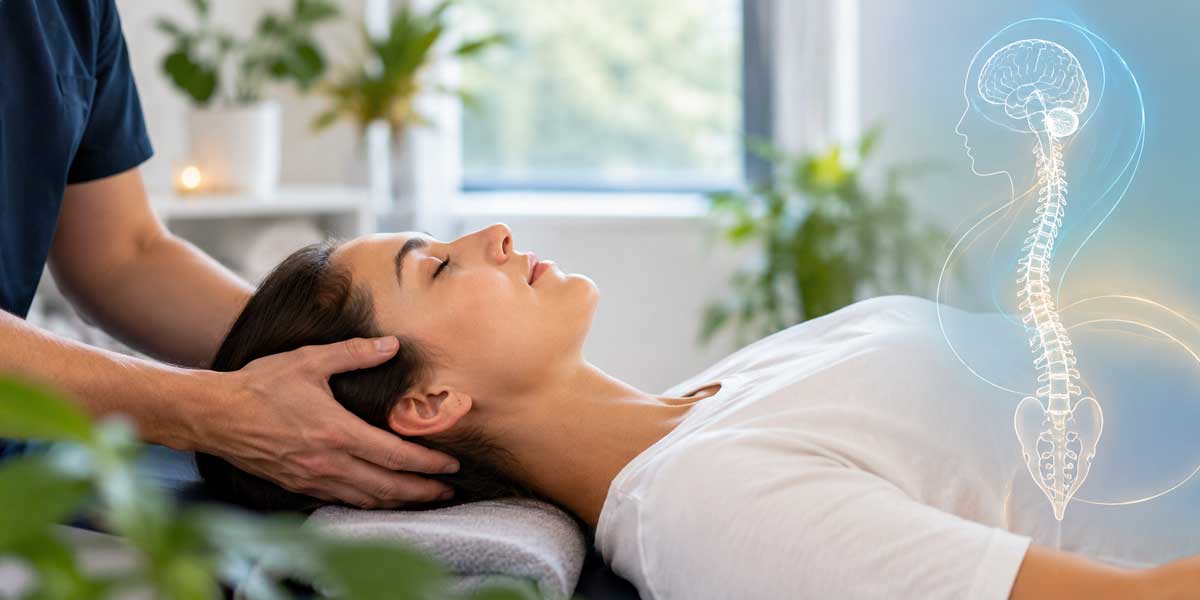
Instead, treatment generally involves the practitioner using their hands while the patient remains comfortably positioned, often lying on a treatment table.

At Sync Move Rehab Centre, Craniosacral Osteopathy is offered as part of a broader range of rehabilitation and hands-on services in Thornhill, Ontario.

The clinic describes its approach as gentle and focused on the craniosacral system. You can learn more about the service on the Sync Move Craniosacral Osteopathy page.

Why Are People Interested in Craniosacral Osteopathy?

The interest in gentle manual therapies is easy to understand.

Pain is not simply a matter of “something hurts, so fix that one spot.” Pain can affect sleep, movement, work, exercise, mood and everyday activities.

This is particularly relevant in Canada, where chronic pain affects a large part of the population. Health Canada reports that approximately one in five Canadians lives with chronic pain, or nearly eight million people. Chronic pain can affect physical activity, mental well-being, work and quality of life. (Health Canada)

Statistics Canada has also reported that the proportion of Canadian adults reporting no pain or discomfort decreased from 77.9% in 2015 to 72.0% in 2024. The 2024 data came from the Canadian Community Health Survey and included adults aged 18 and older living in the provinces. (Statistics Canada)

So, when Canadians search for options such as osteopathy, physiotherapy, massage therapy or other rehabilitation services, they are often looking for something very practical:

“How can I move better and feel better without making my body feel even more irritated?”

That is one reason gentle manual approaches continue to attract attention.

What Happens During a Craniosacral Osteopathy Session?

A session usually starts with a conversation.

This part matters more than many people expect.

A practitioner may ask about:

  • Your main symptoms
  • When the problem started
  • Previous injuries
  • Your daily activities
  • Work and exercise habits
  • Pain patterns
  • Previous treatments
  • Relevant medical history

The practitioner may then assess your posture, movement and areas of tension.

During the hands-on portion, the patient usually remains fully clothed and lies comfortably on a treatment table. Gentle contact may be used around the head, neck, spine, pelvis or other areas depending on the practitioner’s assessment.

The experience can feel quite different from a deep-tissue massage.

Some people describe it as relaxing. Others notice very little sensation during the session but feel changes in comfort or movement afterward.

And sometimes the most exciting part is simply getting 45 minutes where nobody expects you to answer an email.

What Conditions Do People Seek Craniosacral Osteopathy For?

People may seek Craniosacral Osteopathy for a variety of complaints, including:

Headaches and Migraine

Headaches are one of the most common reasons people become interested in craniosacral approaches.

There have been randomized clinical trials examining CST and migraine symptoms. For example, a 2022 randomized controlled trial involving 50 people with migraine reported improvements in pain, migraine frequency and disability after a four-week treatment protocol compared with a sham intervention. (PubMed)

However, one study does not settle the question.

A later systematic review and meta-analysis of headache disorders included four studies and concluded that the evidence was of very low certainty. Although a statistically significant change in pain intensity was observed, the authors considered the clinical effect too small to be meaningful, and they found no significant improvement in disability or headache impact. (PubMed)

That is a good example of why health information needs context. A research paper can report a statistically significant result without that result necessarily being large enough to make a noticeable difference in everyday life.

Neck Tension and Neck Pain

Chronic neck pain is another area that has been studied.

One randomized sham-controlled trial included 54 people with chronic non-specific neck pain. Participants received either eight weekly sessions of Craniosacral Therapy or light-touch sham treatment. The researchers reported improvements in pain intensity and some other outcomes, including functional disability and quality of life. No serious adverse events were reported. (PubMed)

This is interesting evidence, but again, it should be interpreted alongside broader research rather than on its own.

Back Pain and General Musculoskeletal Pain

People with ongoing back or musculoskeletal discomfort may also explore gentle manual therapies.

Canada’s approach to chronic pain increasingly recognizes that pain management may require more than one type of care. Health Canada notes that pain management plans can include physical therapy, psychological and social support, medication, procedures and self-management strategies. (Health Canada)

This broader approach is important because chronic pain is rarely identical from one person to another.

Two people can have the same diagnosis and completely different experiences.

One may need strengthening and exercise. Another may need help changing movement habits. Another may benefit from education, sleep improvement, stress management or hands-on treatment as part of a larger plan.

What Does the Latest Research Say About Craniosacral Osteopathy?

This is where things get particularly interesting.

Research on Craniosacral Osteopathy and Craniosacral Therapy has produced mixed results.

An earlier systematic review and meta-analysis published in 2019 examined 10 randomized controlled trials involving 681 participants with conditions including neck and back pain, migraine, headache, fibromyalgia, epicondylitis and pelvic girdle pain.

The authors reported statistically significant improvements in pain and disability compared with some control groups and concluded that more high-quality research was needed. (PubMed)

But newer reviews have reached more cautious conclusions.

A 2024 systematic review and meta-analysis searched multiple databases and included 15 randomized controlled trials in its qualitative review and seven in its quantitative analysis. The authors reported that the evidence did not demonstrate statistically significant or clinically relevant benefits for the musculoskeletal or non-musculoskeletal conditions they assessed. They also highlighted methodological limitations in some of the available trials. (PubMed)

Another 2024 meta-analysis examined 24 randomized controlled trials involving 1,613 participants. The researchers found no significant overall effects for the primary outcomes. Some secondary analyses produced statistically significant findings, but the authors cautioned that wide prediction intervals, risk of bias and statistical limitations made the real-world meaning uncertain. (PubMed)

So, Is Craniosacral Osteopathy Effective?

Based on the research available today, the most responsible answer is:

There is not enough high-quality evidence to say that Craniosacral Osteopathy is an established treatment for a specific medical condition.

At the same time, this does not mean that every person who receives a gentle manual treatment will experience no benefit.

A person may experience relaxation, temporary symptom relief, improved comfort, or a better sense of body awareness. Those experiences can be real even when researchers have not established a specific biological mechanism or consistent clinical effect across large studies.

The key is not to confuse an individual experience with proof that a treatment works for everyone.

Why Do Research Results Differ?

This is one of the most useful questions to ask about complementary therapies.

Studies can differ in:

  • Number of participants
  • Treatment protocols
  • Practitioner experience
  • Number and length of sessions
  • Comparison groups
  • Outcome measures
  • Follow-up periods
  • Blinding methods
  • Patient expectations
  • The condition being treated

For example, one study may compare Craniosacral Therapy with usual care, while another uses a carefully designed sham treatment involving light touch.

Those are not exactly the same experiment.

Researchers also have to separate a specific treatment effect from other factors that can influence how someone feels.

The therapeutic environment itself may matter. A quiet room, focused attention, time away from work, reassurance, expectation and simply being able to rest for an hour can all influence a person’s experience.

That does not mean an improvement is “imaginary.” It means that determining exactly why someone improves is more complicated.

Craniosacral Osteopathy vs. Regular Osteopathy

The two terms can sound almost identical, and that can be confusing.

Osteopathy is a broader field of hands-on care. It may involve assessment and treatment of different parts of the musculoskeletal system.

Craniosacral Osteopathy is more specifically focused on techniques involving the cranial and sacral regions and related manual approaches.

In practice, the exact techniques can vary between practitioners.

For someone considering treatment, it is therefore reasonable to ask:

  1. What training does the practitioner have?
  2. What techniques will be used?
  3. What condition or symptom are we trying to address?
  4. How will progress be measured?
  5. What should I expect after several sessions?
  6. When would you recommend another healthcare professional?

The World Health Organization has published benchmarks for osteopathic training that emphasize appropriate education, supervised clinical experience and patient safety. (WHO)

Is Craniosacral Osteopathy Safe?

Gentle does not automatically mean risk-free.

The available clinical research has generally reported few serious adverse events. In the 2019 systematic review, five of the included trials reported safety data, and no serious adverse events were reported. Minor events included things such as temporary headache, tiredness, drowsiness or increased pain in some participants. (PMC)

Still, people should not assume that hands-on treatment is appropriate in every situation.

If you have:

  • A recent serious injury
  • Severe or unexplained headache
  • Sudden weakness or numbness
  • Loss of balance
  • New problems with speech or vision
  • Fever with severe pain
  • Recent surgery
  • A serious neurological condition
  • A suspected fracture or infection

you should seek appropriate medical assessment rather than simply booking a manual therapy session.

And if your symptoms are new, getting worse, or unusual for you, tell your healthcare provider.

Who Might Consider Craniosacral Osteopathy?

Craniosacral Osteopathy may be something to discuss with a qualified practitioner if you are looking for a gentle hands-on approach as part of a broader rehabilitation strategy.

It may be particularly interesting to people who:

  • Prefer gentle manual techniques
  • Experience muscle or neck tension
  • Have ongoing musculoskeletal discomfort
  • Want relaxation alongside rehabilitation
  • Are exploring complementary approaches
  • Want hands-on care combined with exercise or movement strategies

However, it should ideally be considered as one part of a complete care plan, rather than a universal solution.

For example, someone with persistent lower back pain may benefit from education and progressive exercise. Someone recovering from an injury may need strength and mobility work. Someone with vestibular symptoms may require a specialized vestibular rehabilitation program.

The best approach depends on the person, not just the name of the treatment.

Can Craniosacral Osteopathy Replace Physiotherapy or Medical Care?

Generally, it should not be thought of as a replacement for necessary medical care.

Rehabilitation is often more effective when different pieces of the puzzle are considered together.

Depending on the problem, a rehabilitation plan may include:

  • Physiotherapy
  • Therapeutic exercise
  • Manual therapy
  • Education
  • Activity modification
  • Balance training
  • Strength training
  • Mobility work
  • Pain-management strategies
  • Medical assessment when necessary

This is one reason a multidisciplinary rehabilitation centre can be useful.

At Sync Move Rehab Centre, services include physiotherapy, osteopathy, massage therapy, chiropractic care, shockwave therapy, acupuncture/dry needling, vestibular rehabilitation and therapeutic exercise.

The advantage of looking at rehabilitation as a bigger picture is simple: the goal is not merely to provide a treatment. The goal is to help the person function better.

What Should You Ask Before Booking a Session?

Before trying Craniosacral Osteopathy, you do not need to become a medical researcher overnight.

A few straightforward questions can help.

1. What is the goal of treatment?

A good treatment plan should have a reason.

Is the goal to improve movement? Reduce discomfort? Support relaxation? Improve function?

The clearer the goal, the easier it becomes to decide whether treatment is helping.

2. How will progress be measured?

“How do you know it is working?” is a perfectly reasonable question.

Depending on your problem, progress might be measured through pain levels, movement, function, sleep, activity tolerance or another practical outcome.

3. How many sessions should I expect?

Be cautious about promises of unlimited treatment with no clear reassessment.

A sensible approach is to reassess progress rather than automatically continuing forever.

4. What happens if I do not improve?

This may be the most important question of all.

A responsible practitioner should be comfortable discussing other options or recommending another healthcare professional when appropriate.

How Does Craniosacral Osteopathy Fit Into a Canadian Rehabilitation Plan?

Canada has increasingly emphasized the importance of managing chronic pain through a combination of physical, psychological, social and medical approaches.

The Canadian Pain Task Force reported that approximately 7.63 million Canadians aged 15 and older were living with chronic pain in 2019, with estimated direct and indirect economic costs of $38.3 to $40.4 billion that year. The report also emphasized a biopsychosocial approach to pain management. (Health Canada)

This is important because modern rehabilitation is moving away from the idea that every problem has one magic fix.

Think of rehabilitation more like assembling a toolbox.

Sometimes the right tool is exercise.

Sometimes it is education.

Sometimes it is hands-on care.

Sometimes it is a medical assessment.

And sometimes you need several tools working together.

A Note About “Natural” or “Gentle” Treatments

The words “natural,” “gentle” and “non-invasive” can sound reassuring, but they should not automatically be treated as proof of effectiveness.

The opposite is also true: the absence of strong evidence for a particular treatment does not mean that a person’s experience of comfort or relaxation is fake.

A balanced approach is much more useful.

Ask what the treatment is intended to do, look at the evidence, understand its limitations, and consider it within the larger context of your health.

That is especially important when a treatment is being promoted as capable of treating a long list of unrelated conditions.

What Does This Mean for Someone in Thornhill or the Greater Toronto Area?

If you live in Thornhill, Markham, Richmond Hill or the Greater Toronto Area and are researching Craniosacral Osteopathy, it can be helpful to start with a conversation rather than assuming that one treatment is automatically the answer.

At Sync Move Rehab Centre, located at 8220 Bayview Avenue, Unit 206, Thornhill, Ontario, Craniosacral Osteopathy is one of the clinic’s rehabilitation services.

You can learn more about the clinic through its About Sync Move Rehab Centre information, explore the Craniosacral Osteopathy service, or book an appointment if you would like to discuss whether this type of care is appropriate for your needs.

Frequently Asked Questions About Craniosacral Osteopathy

Is Craniosacral Osteopathy the same as massage?

No. Both involve hands-on contact, but they are different approaches. Massage generally focuses more directly on soft tissues and muscles, while Craniosacral Osteopathy uses specific gentle manual techniques associated with the craniosacral approach.

Does Craniosacral Osteopathy hurt?

It is generally intended to be gentle. Most people should not expect forceful manipulation. However, individual responses vary, and temporary soreness or other minor symptoms have been reported in some clinical research.

How long does a session take?

Session length can vary depending on the practitioner, clinic and treatment plan. Ask the clinic about the expected appointment length before booking.

Can it help with headaches?

Headache and migraine have been studied, and some trials have reported improvements. However, systematic reviews have found that the overall certainty of evidence is low or very low, and clinically meaningful benefits have not been consistently demonstrated.

Is Craniosacral Osteopathy scientifically proven?

There is research on the subject, including randomized controlled trials and systematic reviews. However, the current evidence is mixed, and recent systematic reviews do not establish Craniosacral Therapy as an effective treatment for a specific medical condition.

Should I stop my current treatment and try Craniosacral Osteopathy instead?

No. Do not stop prescribed medication or medically recommended treatment without speaking with the relevant healthcare professional.

Can it be combined with physiotherapy?

Depending on your condition, different rehabilitation approaches may be used together. A qualified healthcare professional can help determine what combination makes sense for your situation.

Final Thoughts

Craniosacral Osteopathy is a gentle hands-on approach that has attracted attention among people looking for complementary options for pain, tension, headaches and general physical discomfort. Research has produced some encouraging individual findings, particularly in areas such as neck pain and migraine, but more recent systematic reviews have highlighted important limitations and do not provide strong evidence that Craniosacral Therapy is an established treatment for specific conditions. The most sensible way to approach it is therefore with an open mind and realistic expectations, while keeping appropriate medical care and active rehabilitation at the centre of your health plan. If you are in Thornhill or the surrounding Greater Toronto Area and want to learn whether Craniosacral Osteopathy could fit into a personalized rehabilitation approach, Sync Move Rehab Centre offers Craniosacral Osteopathy alongside physiotherapy, osteopathy and other rehabilitation services, giving you an opportunity to discuss your individual needs with the clinic before deciding on a treatment plan.

References

  1. Health Canada – About Chronic Pain
    Health Canada – About Chronic Pain
  2. Statistics Canada – Functional Health of Canadian Adults, 2015 to 2024
    Statistics Canada – Functional Health of Canadian Adults
  3. Health Canada – Canadian Pain Task Force Report, 2020
    Canadian Pain Task Force Report
  4. Ceballos-Laita et al. – Is Craniosacral Therapy Effective? A Systematic Review and Meta-Analysis
    PubMed – Craniosacral Therapy Systematic Review and Meta-Analysis
  5. Amendolara et al. – Effectiveness of Osteopathic Craniosacral Techniques: A Meta-analysis
    PubMed – Osteopathic Craniosacral Techniques Meta-analysis
  6. Haller et al. – Craniosacral Therapy for Chronic Pain: Systematic Review and Meta-analysis
    PubMed – Craniosacral Therapy for Chronic Pain
  7. Ceballos-Laita et al. – Clinical Effectiveness of Craniosacral Therapy in Patients with Headache Disorders
    PubMed – Craniosacral Therapy and Headache Disorders
  8. Haller et al. – Craniosacral Therapy for the Treatment of Chronic Neck Pain
    PubMed – Chronic Neck Pain Randomized Trial
  9. Muñoz-Gómez et al. – Effect of a Craniosacral Therapy Protocol in People with Migraine
    PubMed – Migraine Randomized Controlled Trial
  10. World Health Organization – Benchmarks for Training in Osteopathy
    WHO – Benchmarks for Training in Osteopathy
  11. Sync Move Rehab Centre – Craniosacral Osteopathy
    Sync Move – Craniosacral Osteopathy
  12. Sync Move Rehab Centre – Osteopathy Services
    Sync Move – Osteopathy
Can acupuncture release muscle knots

Can acupuncture release muscle knots?

Can Acupuncture Release Muscle Knots? What Science Says

Have you ever found a stubborn spot in your neck or shoulder that feels like a tiny rock buried inside the muscle? You press it, and suddenly you discover a whole new level of “ouch.” If so, you have probably wondered: Can acupuncture release muscle knots?

The short answer is: acupuncture may help reduce the pain and muscle tension associated with so-called “muscle knots,” but it is more accurate to say that it may help calm irritated muscle and pain pathways rather than physically untie a knot like a shoelace.

These painful areas are often described in healthcare as myofascial trigger points. They can occur in the neck, shoulders, upper back, lower back, hips and other areas. Acupuncture and dry needling are both used in rehabilitation settings to address muscular pain, although they are not exactly the same treatment.

For Canadians dealing with stubborn muscle tension, the good news is that research has become increasingly interesting in this area. A 2025 systematic review found that needling trigger points was associated with better pain outcomes than several other non-drug treatments for myofascial pain syndrome, although the researchers also noted that more high-quality research is needed [1].

So, could those little needles finally convince your grumpy shoulder to relax?

Let’s look at what the evidence actually says.

What Is a Muscle Knot?

“Muscle knot” is a friendly everyday term rather than a precise medical diagnosis.

Healthcare professionals may use terms such as myofascial trigger point or myofascial pain when describing a painful, sensitive area within a muscle.

A trigger point may feel like a tight band or particularly tender spot. Pressing on it can reproduce the person’s familiar pain and, in some cases, may cause pain to be felt somewhere else.

An international expert consensus study described several features used when identifying myofascial trigger points, including a taut band, a hypersensitive spot and pain that can be referred to another area [2].

For example, a trigger point in the upper trapezius muscle—the large muscle running from your neck toward your shoulder—may produce pain around the shoulder, upper back or even toward the side of the head.

This is one reason a “knot” can sometimes feel confusing.

The painful spot is not always the whole story.

Why Do Muscle Knots Happen?

There is no single explanation for every trigger point.

Muscle tension can be associated with several everyday factors, including:

  • Repetitive movements
  • Long hours at a desk
  • Poorly tolerated postures
  • Sudden increases in exercise
  • Sports or work-related strain
  • Lack of recovery after physical activity
  • Stress and prolonged muscle tension
  • Previous injuries
  • Reduced movement

Imagine sitting at your computer for six hours with your shoulders slowly creeping toward your ears.

Your body may eventually say, “Enough already.”

The resulting discomfort can feel like stiffness, tightness, tenderness or a deep aching sensation.

However, persistent pain should not automatically be blamed on a muscle knot. Neck, shoulder and back pain can have many causes, and a proper assessment is important when symptoms continue, worsen or include neurological symptoms.

Can Acupuncture Release Muscle Knots?

Now to the question everyone came for.

Can acupuncture release muscle knots?

It may help, particularly when the pain is related to myofascial trigger points or muscular tension.

But “release” needs a little explanation.

Acupuncture does not literally pull a knot out of a muscle. Instead, needling may influence pain processing, the nervous system and local tissues. Modern research suggests that acupuncture can have effects on the nervous system and tissues around the needle, while treatment-related factors such as relaxation and the therapeutic interaction may also contribute to the overall effect [3].

This is important because pain is not simply a mechanical problem.

Your brain and nervous system constantly process information coming from muscles and other tissues. When an area becomes sensitive, the nervous system can become part of the problem.

Acupuncture may help change how that pain is processed.

That may translate into:

  • Less pain
  • Reduced sensitivity
  • Improved movement
  • Less perceived muscle tension
  • Better tolerance for exercise or stretching
  • Improved function

So rather than imagining a needle physically “untangling” muscle fibres, think of acupuncture as potentially helping turn down the volume on an irritated pain system.

What Does the Research Say?

This is where things get particularly interesting.

A large individual-patient meta-analysis involving 20,827 people across 39 randomized trials examined acupuncture for several chronic pain conditions, including musculoskeletal pain, osteoarthritis, headache and shoulder pain. The researchers found acupuncture performed better than both sham acupuncture and no acupuncture, although the difference compared with sham treatment was considerably smaller than the difference compared with no treatment [4].

That distinction matters.

It suggests that acupuncture may have effects beyond simply receiving attention or expecting treatment to work. At the same time, the relatively modest difference between real and sham acupuncture reminds us that the full treatment experience—including touch, expectations, relaxation and the therapeutic setting—may contribute to the result.

More recent research has specifically examined myofascial pain.

A 2025 systematic review and meta-analysis included 13 randomized controlled trials comparing trigger-point needling with other non-pharmacological treatments. The researchers reported better pain outcomes with needling, but also called for stronger clinical trials before firm conclusions can be made [1].

That is a useful summary of the current situation:

The evidence is promising, but “promising” is not the same thing as “guaranteed.”

What About Acupuncture Specifically Versus Dry Needling?

This is one of the most common sources of confusion.

Acupuncture and dry needling both use very thin needles, but the approaches can be different.

Acupuncture traditionally comes from Traditional Chinese Medicine and uses specific acupuncture points according to an acupuncture treatment framework. Modern clinical practice may also describe effects in terms of nervous-system and pain modulation.

Dry needling is generally an anatomy-based technique used in musculoskeletal rehabilitation. It commonly targets myofascial trigger points, tight muscle bands or other structures identified during a physical assessment.

If you are specifically asking about a painful “knot” in your upper back, the terminology you hear from a physiotherapist may therefore be different from the terminology used by an acupuncturist.

Neither term should be interpreted as meaning that one approach is automatically right for everyone.

At Sync Move Rehab Centre, acupuncture and dry needling are offered as part of a broader rehabilitation approach. You can learn more about the clinic’s approach on the [Acupuncture / Dry Needling service page].

What Happens During Treatment?

If the idea of needles immediately makes you imagine something resembling a medieval torture device, take a breath.

Modern acupuncture needles are extremely thin.

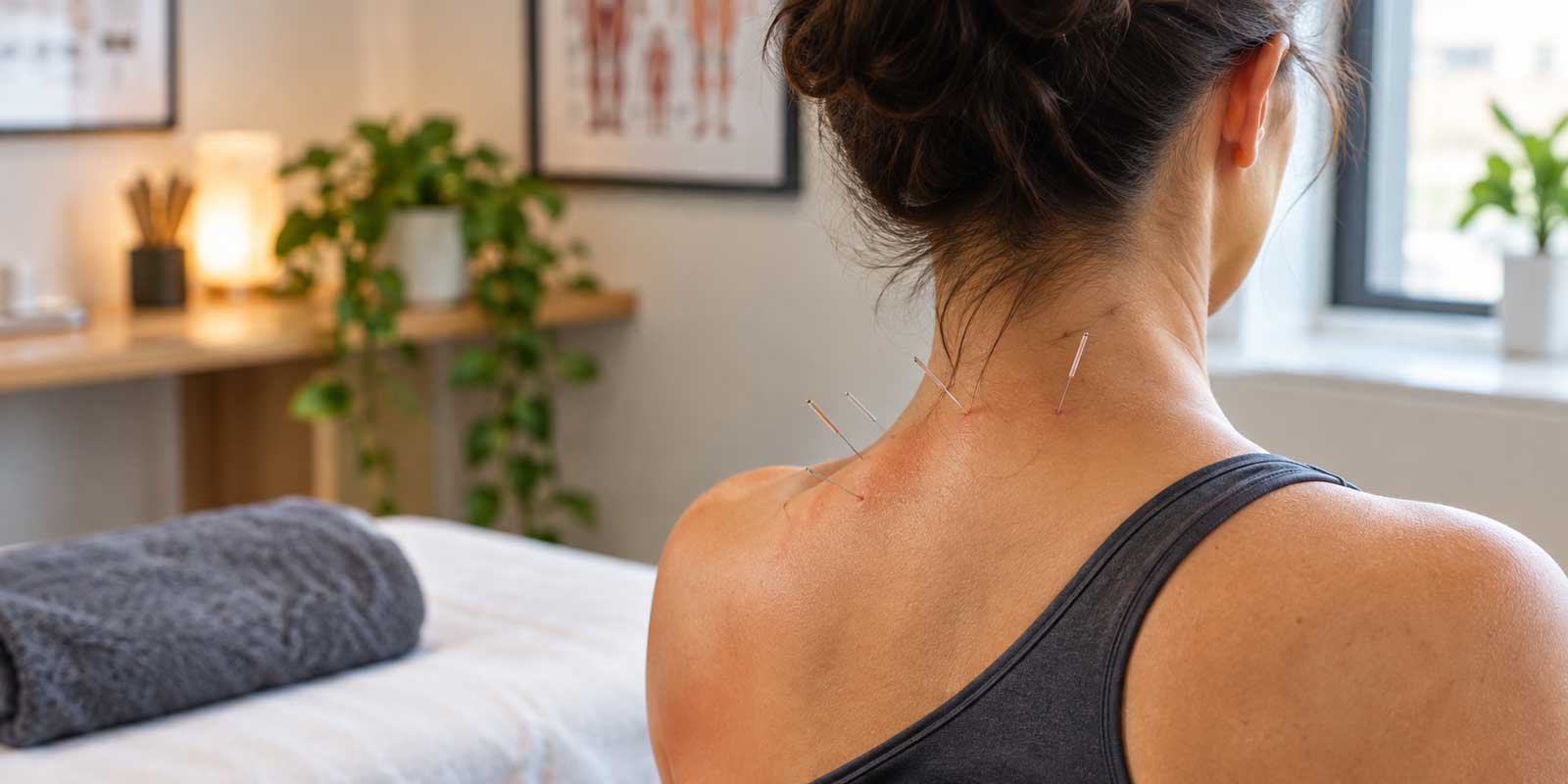
During a treatment, a practitioner assesses your symptoms and chooses treatment points based on the condition being addressed.

Needles may produce sensations such as:

  • A brief pinch
  • Tingling
  • Mild aching
  • Heaviness
  • Warmth
  • A feeling of pressure

Some people barely notice the needles.

Others notice a distinct sensation around the treated area.

The experience varies from person to person.

At Sync Move Rehab Centre, the clinic describes acupuncture as a treatment that may be used alongside other rehabilitation approaches, rather than necessarily being the entire treatment plan [5].

That broader approach can be especially useful when muscle tension is connected to movement habits, strength deficits, repetitive activity or an old injury.

Does Acupuncture Actually Make a Muscle Less Stiff?

This question is slightly different from asking whether it reduces pain.

Researchers are increasingly interested in measuring changes in muscle properties rather than relying only on what patients report.

A 2026 systematic review and meta-analysis of 11 randomized trials involving 612 participants found that dry needling reduced muscle stiffness in the short term, although the certainty of the evidence ranged from very low to low and longer-term effects were not clearly demonstrated [6].

This is an important distinction.

It suggests that needling may produce measurable short-term changes in muscle stiffness, but we cannot automatically assume that every painful “knot” has been permanently removed.

In rehabilitation, short-term symptom relief can be useful—but the bigger goal is usually to help a person move better and return to normal activities.

What If the Knot Keeps Coming Back?

This is where treatment gets more interesting.

Suppose you have a painful knot in your upper shoulder.

Acupuncture may help reduce the pain.

But if you spend eight hours every day in the same aggravating position, rarely move your upper back and have limited shoulder strength, the original problem may continue.

It is a little like repeatedly mopping the kitchen floor while leaving the tap running.

The mop is not the problem.

The leak is.

That is why a rehabilitation plan may include other strategies such as:

  • Therapeutic exercise
  • Strengthening
  • Mobility exercises
  • Posture and movement education
  • Ergonomic changes
  • Manual therapy
  • Massage therapy
  • Gradual return to activity

For people who need more than symptom relief, combining needling with active rehabilitation may make more sense than relying on passive treatment alone.

Can Acupuncture Help Neck and Shoulder Knots?

Neck and shoulder tension is one of the most common situations in which people describe having a “knot.”

Office workers, drivers, healthcare professionals, students, tradespeople and athletes can all develop persistent muscle discomfort.

Acupuncture may help some people experience:

  • Less neck pain
  • Reduced shoulder discomfort
  • Easier movement
  • Less muscle tenderness
  • Improved tolerance for daily activities

Research on musculoskeletal pain overall supports acupuncture as a potential option for pain management, while the evidence specifically targeting individual trigger points is more limited and variable [3,4].

That distinction is worth keeping in mind.

Acupuncture is not a magic eraser for every tight muscle.

It is one possible tool in the rehabilitation toolbox.

Can Acupuncture Help Lower Back Muscle Knots?

Lower back pain is another area where people commonly describe tight muscles or “knots.”

And the problem is enormous.

The World Health Organization estimates that 619 million people worldwide experienced low back pain in 2020, with the number projected to reach 843 million by 2050 [7].

For Canadians, this is hardly an abstract statistic. Pain-related disability affects millions of people across the country.

Statistics Canada reported that in 2022, 16.7% of Canadians aged 15 and older—about 4.9 million people—had a pain-related disability [8].

When low back pain is primarily musculoskeletal, rehabilitation often focuses on restoring movement, building strength and helping people return to normal activity. Acupuncture may be considered as one part of that process.

It should not, however, replace assessment when back pain has warning signs such as significant weakness, loss of bladder or bowel control, unexplained weight loss, fever, major trauma or other concerning symptoms.

How Many Acupuncture Sessions Might You Need?

There is no universal number.

Anyone promising that exactly three, five or ten sessions will permanently eliminate your muscle knots should be viewed cautiously.

Response depends on factors such as:

  • How long you have had the problem
  • What is causing the pain
  • Your activity level
  • Sleep and recovery
  • Stress
  • Other health conditions
  • Whether you continue aggravating activities
  • Whether acupuncture is combined with rehabilitation

Some people notice a difference after an early session.

Others need several treatments.

And some people simply do not respond enough to make continuing worthwhile.

A good rehabilitation plan should have a way to measure progress rather than continuing indefinitely just because “more sessions” were scheduled.

What Does a Successful Treatment Look Like?

Success does not necessarily mean leaving the clinic feeling completely pain-free.

Sometimes the more meaningful signs are practical.

For example:

Before treatment:
“You can barely turn your head when backing out of the driveway.”

After treatment:
“You can turn your head more comfortably.”

That is progress.

Other useful signs include:

  • Sleeping more comfortably
  • Sitting longer without pain
  • Returning to exercise
  • Working with fewer symptoms
  • Moving more freely
  • Having fewer pain flare-ups
  • Needing fewer breaks during everyday activities

The goal is not to win a competition for the fewest painful muscles.

The goal is to get your life moving again.

Is Acupuncture Safe for Muscle Knots?

For most appropriately selected patients, acupuncture is generally considered relatively safe when performed correctly by a properly trained professional.

However, “natural” does not automatically mean “risk-free.”

Reported adverse effects can include temporary soreness, bleeding, bruising, dizziness or fainting. More serious complications are uncommon but can occur, particularly when treatment is performed improperly or with non-sterile equipment [3,9].

A large evidence-mapping study reviewed 535 systematic reviews involving acupuncture-related adverse effects. It found that many reported adverse effects were relatively mild, but it also emphasized limitations in the quality of much of the underlying evidence [9].

Good practice matters.

Needles should be sterile and intended for single use, and the practitioner should understand anatomy, contraindications and safe needling techniques.

If you take blood thinners, have a bleeding disorder, are pregnant, have an infection, or have another condition that could affect treatment safety, discuss it with your healthcare provider before treatment.

When Should You See a Healthcare Professional Instead of Treating a “Knot”?

Not every lump, tight spot or painful area is a muscle knot.

You should seek an appropriate medical assessment if you have symptoms such as:

  • New or unexplained weakness
  • Numbness or progressive tingling
  • Severe or rapidly worsening pain
  • Significant swelling
  • Fever
  • Unexplained weight loss
  • Pain following major trauma
  • A persistent mass that does not behave like ordinary muscle tension
  • Chest pain or difficulty breathing
  • Loss of bladder or bowel control

These symptoms may require a different type of assessment.

Acupuncture should complement appropriate healthcare—not delay it.

Acupuncture Plus Exercise: Why the Combination Matters

One of the most useful ways to think about acupuncture is as a potential supporting treatment.

Suppose acupuncture reduces your shoulder pain enough that you can finally perform your strengthening exercises comfortably.

That creates an opportunity.

You can now work on the factors that may have contributed to the problem in the first place.

Research on trigger-point needling increasingly supports this kind of combined approach. A 2024 systematic review found that adding deep dry needling to stretching may improve pain outcomes compared with stretching alone, although the researchers noted limitations in the included studies [10].

This is why rehabilitation can be different from simply chasing pain.

Pain relief can open the door.

Movement helps you walk through it.

What Can You Do Between Treatments?

You do not need to spend the entire week waiting for your next appointment.

Depending on your condition, a healthcare professional may recommend:

Keep Moving

Gentle, regular movement is often preferable to completely avoiding activity.

Build Strength Gradually

If weak or underused muscles contribute to your symptoms, strengthening may be an important part of long-term recovery.

Review Your Workstation

If your “knot” appears every afternoon after computer work, your desk setup and work habits deserve some attention.

Take Movement Breaks

Even short movement breaks can interrupt long periods of static positioning.

Pay Attention to Sleep

Poor sleep can influence pain sensitivity and recovery.

Track Function, Not Just Pain

Ask yourself:

“Can I do more than I could two weeks ago?”

That question can be more useful than obsessively checking whether your pain changed from 5/10 to 4/10.

Can Massage and Acupuncture Be Used Together?

They can sometimes be included within the same rehabilitation plan, depending on the person’s condition and the judgment of the healthcare professionals involved.

Massage may help with comfort, relaxation and soft-tissue symptoms, while acupuncture may be used to address pain and other symptoms.

Exercise can then help improve strength and movement capacity.

At Sync Move Rehab Centre, several rehabilitation disciplines are available under one roof, including physiotherapy, massage therapy, therapeutic exercise and acupuncture/dry needling. This allows treatment to be considered as part of a broader rehabilitation strategy rather than as an isolated procedure.

You can also explore the centre’s [massage therapy services] and [physiotherapy services] when looking at different approaches to persistent muscular pain.

Acupuncture or Dry Needling: Which One Should You Choose?

There is no single answer for everyone.

The appropriate approach depends on the source of your symptoms, your goals, your medical history and the practitioner’s assessment.

A person with a clearly identified myofascial trigger point may be considered for a trigger-point-focused approach such as dry needling.

Another person may benefit from acupuncture as part of a broader pain-management plan.

Sometimes the most useful question is not:

“Which treatment is better?”

Instead, ask:

“What is causing my pain, and what combination of treatments will help me return to normal activity?”

That question moves the conversation away from trendy treatments and toward actual rehabilitation.

What Does Current Science Really Tell Us?

If we strip away the advertising language, the picture is fairly straightforward.

Research supports acupuncture as a potentially useful treatment for several types of pain, including chronic musculoskeletal pain [3,4].

Research specifically examining myofascial trigger points and needling also shows encouraging results [1,6].

However, studies differ considerably in treatment methods, patient groups, comparison treatments and outcome measures.

That means we should be careful with statements such as:

“Acupuncture permanently removes muscle knots.”

The science does not justify such a broad promise.

A more accurate statement is:

Acupuncture may reduce pain and muscle-related symptoms associated with trigger points and may help some people move more comfortably.

That is useful without pretending that every stubborn knot has met its tiny-needle nemesis.

Frequently Asked Questions

Can acupuncture completely remove a muscle knot?

It may reduce pain, sensitivity and muscle-related symptoms, but it is better to think of acupuncture as helping manage the underlying pain and muscle dysfunction rather than physically removing a “knot.”

Is dry needling better than acupuncture for muscle knots?

Not necessarily. Dry needling is commonly directed at myofascial trigger points, while acupuncture follows a different treatment framework. The appropriate option depends on the individual’s condition and treatment goals.

How quickly does acupuncture work for muscle knots?

Some people notice changes quickly, while others need several treatments. There is no reliable universal timeline.

Can acupuncture make a muscle knot worse?

Temporary soreness, bruising or sensitivity can occur after needling. Significant or persistent worsening should be discussed with the treating professional.

Can I exercise after acupuncture?

In many cases, gentle activity is appropriate, but recommendations depend on what is being treated and how you respond. Your clinician can provide specific guidance.

Should I choose acupuncture, massage or physiotherapy?

It depends on the cause of your symptoms. Physiotherapy may be particularly useful when pain is linked to movement, strength, injury or functional limitations. Massage may help with soft-tissue symptoms and relaxation. Acupuncture can be used as part of a pain-management or rehabilitation plan.

Can acupuncture help chronic muscle tension?

It may. Evidence supports acupuncture for several chronic pain conditions, while evidence specifically focused on individual trigger points is still developing.

The Bottom Line: Can Acupuncture Release Muscle Knots?

So, can acupuncture release muscle knots?

It can potentially help—but “release” should not be taken literally.

What people call a muscle knot is often related to myofascial trigger points, muscle sensitivity and changes in the way the nervous system processes pain. Research suggests that acupuncture and other needling approaches may reduce pain and improve symptoms for some people, while newer studies continue to investigate measurable changes in muscle stiffness and trigger-point-related pain.

The most effective long-term strategy is rarely about finding one magical treatment. It is usually about understanding why the problem developed, reducing symptoms enough to move comfortably, and then improving strength, mobility and everyday movement.

If persistent muscle pain or trigger points are interfering with your work, exercise, sleep or daily activities, Sync Move Rehab Centre in Thornhill, Ontario, offers acupuncture/dry needling alongside physiotherapy, therapeutic exercise, massage and other rehabilitation services. You can learn more about the clinic and its approach through the Sync Move Rehab Centre website and explore its [Acupuncture / Dry Needling service] as a starting point for discussing your symptoms and rehabilitation goals.

References

  1. Zhao Y, et al. Needling trigger points for treating myofascial pain syndrome: A systematic review and meta-analysis. Complementary Therapies in Clinical Practice, 2025.
  2. Fernández-de-las-Peñas C, et al. International Consensus on Diagnostic Criteria and Clinical Considerations of Myofascial Trigger Points: A Delphi Study.
  3. National Center for Complementary and Integrative Health. Acupuncture: Effectiveness and Safety.
  4. Vickers AJ, et al. Acupuncture for Chronic Pain: Update of an Individual Patient Data Meta-Analysis.
  5. Sync Move Rehab Centre. Acupuncture / Dry Needling.
  6. Dry needling and muscle mechanical properties in myofascial trigger points: a systematic review and meta-analysis, 2026.
  7. World Health Organization. Low Back Pain.
  8. Statistics Canada. Pain-related disabilities, 2022.
  9. Adverse effects associated with acupuncture therapies: An evidence mapping from 535 systematic reviews, 2023.
  10. Guzmán-Pavón MJ, et al. Effectiveness of deep dry needling combined with stretching for the treatment of pain in patients with myofascial trigger points: A systematic review and meta-analysis, 2024.
  11. Moro MZ, et al. Dry needling, trigger point electroacupuncture and motor point electroacupuncture for the treatment of myofascial pain syndrome involving the trapezius: a randomised clinical trial, 2024.
  12. Yu C, et al. Effects of sham acupuncture for chronic musculoskeletal pain syndrome: A systematic review and network meta-analysis of randomized controlled trials, 2023.

Primary Keyword

Can acupuncture release muscle knots

GLA:D Canada exercise program for knee and hip osteoarthritis

GLA:D® Canada vs Traditional Osteoarthritis Treatment

GLA:D® Canada vs. Traditional Osteoarthritis Treatment: What’s the Difference?

If knee or hip osteoarthritis has started making everyday activities harder, you may have heard the same advice many times: take medication, rest when it hurts, lose some weight, and consider surgery if things get bad enough. But there is another approach that puts education, movement, and active self-management at the centre of care. This is where GLA:D® Canada for knee and hip osteoarthritis comes in.

Osteoarthritis, or OA, is extremely common in Canada. In fact, GLA:D® Canada research has described the program as an evidence-based approach developed to make guideline-recommended care available to the millions of Canadians living with knee and hip osteoarthritis.

So, what makes GLA:D® different from traditional osteoarthritis treatment?

The short answer is that it does not necessarily replace medication, injections, weight management, physiotherapy, or surgery. Instead, it gives people a structured way to use education and supervised exercise as an important part of their overall treatment plan.

And that difference matters.

Because when your knee hurts every time you climb the stairs, “just exercise more” is not exactly the world’s most helpful instruction.

What is GLA:D® Canada?

GLA:D® stands for Good Life with osteoArthritis in Denmark. The program was originally developed in Denmark and has since been implemented in several countries, including Canada.

The Canadian program is designed specifically for people with knee and hip osteoarthritis. It combines education with supervised exercise and is delivered by trained healthcare professionals.

The goal is not to promise a miracle cure. Osteoarthritis currently has no simple cure that makes the condition disappear. Instead, the goal is to help people understand their condition, manage symptoms, move more confidently, improve physical function and stay active.

According to the official GLA:D® Canada program, participants receive education about osteoarthritis, self-management and exercise, followed by supervised neuromuscular exercise sessions.

At Sync Move Rehab Centre, the GLA:D® Canada Program is offered for people dealing with knee and hip osteoarthritis in Thornhill and surrounding communities.

You can learn more about the program directly on the GLA:D® Canada Program page at Sync Move Rehab Centre.

Traditional Osteoarthritis Treatment: What Does It Usually Mean?

There is no single “traditional” treatment for osteoarthritis.

In reality, osteoarthritis care often involves several different strategies depending on the severity of symptoms, the affected joint, the person’s health, lifestyle, goals and response to treatment.

Common approaches may include:

  • Pain-relieving medication
  • Anti-inflammatory medication
  • Therapeutic exercise
  • General physical activity
  • Weight management
  • Physiotherapy
  • Braces or walking aids
  • Injections
  • Lifestyle changes
  • Joint replacement surgery for severe cases

Some people use only one or two of these options. Others move through several stages over time.

The important point is that GLA:D® Canada is not simply “exercise instead of medical treatment.” It is better understood as a structured, evidence-based way of putting education and exercise into the treatment plan.

This distinction is important because modern osteoarthritis care increasingly focuses on active management rather than simply trying to make the pain disappear temporarily.

Arthritis Society Canada also emphasizes physical activity, therapeutic exercise, self-management and weight management as important parts of osteoarthritis care.

GLA:D® Canada vs. Traditional Treatment: The Main Difference

The biggest difference is how the person is involved in their own treatment.

A traditional approach may sometimes feel like this:

“Here is your prescription. Take this when it hurts. Come back if it gets worse.”

A structured program such as GLA:D® takes a different approach:

“Let’s help you understand what is happening, teach you how to move safely, build your strength and give you practical tools that you can continue using in everyday life.”

That does not mean medication has no place.

It does not mean injections are always wrong.

And it certainly does not mean surgery is never necessary.

Instead, GLA:D® focuses on giving people more tools before they reach the point where their only perceived option is surgery.

1. Education Is Part of the Treatment

One of the most important differences with GLA:D® Canada is that education is not treated as an optional extra.

Participants learn about osteoarthritis, symptoms, risk factors, available treatment options and ways to manage their symptoms.

They also learn why exercise can help and how to deal with everyday activities that have become difficult.

This may sound simple, but understanding osteoarthritis can change how a person responds to pain.

For example, many people instinctively believe that pain means the joint is being damaged every time they move.

That fear can lead to less movement.

Less movement can lead to weaker muscles.

Weaker muscles can make everyday activities harder.

And suddenly the person is caught in a frustrating cycle of pain, inactivity and reduced confidence.

Education can help break that cycle.

The official GLA:D® Canada program specifically includes education about osteoarthritis, self-management and the role of exercise.

2. Exercise Is Structured Rather Than Random

Another important difference is that GLA:D® is not simply a list of exercises downloaded from the internet.

The program uses supervised exercise sessions led by trained professionals.

At Sync Move Rehab Centre, the program includes an initial physiotherapy assessment followed by education and supervised neuromuscular exercise. Exercises can be modified according to the individual’s abilities, fitness level and symptoms.

This matters because two people with “knee arthritis” can have completely different needs.

One person may struggle mainly with stairs.

Another may have difficulty getting up from a chair.

Someone else may have reduced balance or feel nervous about walking outdoors.

A good exercise program should take those differences into account.

3. GLA:D® Focuses on Neuromuscular Control

You may have heard that people with osteoarthritis simply need to “strengthen their muscles.”

Strength is certainly important, but movement quality matters too.

GLA:D® includes neuromuscular exercises designed to help people improve movement control, stability and the way they use their joints during everyday activities.

The official Canadian program describes exercises that help participants improve joint stability and apply better movement strategies to daily life.

In practical terms, this can mean learning how to move more confidently when:

  • Walking
  • Climbing stairs
  • Standing from a chair
  • Getting in and out of a car
  • Carrying everyday items
  • Performing household activities
  • Returning to recreational activities

The objective isn’t to turn everyone into an Olympic athlete.

For most people with osteoarthritis, being able to get through Tuesday without negotiating with their knee is already a pretty excellent achievement.

4. Supervision Can Make Exercise More Effective

One of the challenges with home exercise is knowing what to do, how much to do and whether you are doing it correctly.

It is also surprisingly easy to start enthusiastically on Monday and forget the whole plan by Thursday.

Research-based osteoarthritis guidelines support exercise as a central part of treatment, and evidence suggests supervised exercise can be particularly useful. The American College of Rheumatology/Arthritis Foundation guideline strongly recommends exercise for people with knee and hip osteoarthritis and notes that exercise programs tend to be more effective when supervised.

That is one reason structured programs can be appealing.

You have a schedule.

You have guidance.

You can ask questions.

And your exercises can be adjusted as your ability changes.

5. GLA:D® Is Designed to Build Confidence, Not Just Strength

Pain is only one part of osteoarthritis.

Confidence is another.

A person may technically be capable of walking farther but avoid doing so because they are afraid their knee will suddenly hurt.

Someone may stop taking the stairs because they expect pain.

Another person may avoid recreational activities they used to enjoy.

This is where education, supervised exercise and gradual progression can make a meaningful difference.

The aim is not simply:

“Your pain score went from 6 to 4.”

It is also:

“I can walk to the store again.”

“I can get out of my chair more easily.”

“I can go for a walk with my family.”

“I am less worried about moving.”

Those improvements can have a surprisingly large effect on quality of life.

What Does the Research Say About GLA:D®?

This is where things become particularly interesting.

A large study published in Osteoarthritis and Cartilage looked at 28,370 people with symptomatic knee or hip osteoarthritis who participated in GLA:D® programs in Denmark, Canada and Australia.

The program included education and 12 supervised exercise sessions.

Following the program, participants experienced:

  • 26–33% improvement in average pain intensity
  • 8–12% improvement in walking speed
  • 18–30% improvement in chair-stand performance
  • 12–26% improvement in joint-related quality of life
  • About 43–47% of participants experienced clinically relevant pain reductions

The researchers concluded that the results supported positive outcomes following implementation of guideline-based education and exercise therapy.

That is a substantial number of people.

And it is one reason GLA:D® has attracted attention beyond Denmark.

What Do Canadian GLA:D® Results Show?

Canadian data are also encouraging.

The official GLA:D® Canada 2023 results reported that:

  • 58.3% of knee participants reported improved pain
  • 55.8% of hip participants reported improved pain
  • 56.4% of knee participants reported improved function
  • 51% of hip participants reported improved function
  • 64.4% of knee participants reported improved quality of life
  • 57.6% of hip participants reported improved quality of life

The same report noted that by that point, the program had trained 2,015 clinicians and had launched at 402 sites across 9 provinces and 2 territories.

These numbers are important because they reflect implementation of the program in Canada rather than results from a small laboratory experiment.

What About the People Who Have More Severe Osteoarthritis?

This is a common question.

Many people assume that exercise-based treatment is only useful when osteoarthritis is mild.

That is not necessarily true.

The GLA:D® Canada program is intended for people with a range of knee and hip osteoarthritis symptoms. A person’s suitability should be assessed by a qualified healthcare professional.

At Sync Move Rehab Centre, the program page notes that the program can be appropriate for mild, moderate and severe knee or hip osteoarthritis, with the physiotherapist determining whether it is suitable after assessment.

Exercise also does not automatically disappear from the treatment plan just because someone has advanced osteoarthritis.

In some cases, improving strength, balance, movement confidence and daily function can be particularly valuable while a person is considering other treatment options.

Can GLA:D® Replace Medication?

Not necessarily.

This is one of the biggest misconceptions about exercise-based osteoarthritis programs.

GLA:D® is not a promise that you will never need medication.

Pain medication and anti-inflammatory treatments may be appropriate for some people. Other treatments may also be useful depending on the individual.

The difference is that GLA:D® focuses on strategies that help people actively manage their condition rather than relying only on passive treatments.

Arthritis Society Canada notes that osteoarthritis treatment can include a combination of self-management, therapeutic exercise, physical activity, weight management, medication and, when necessary, surgery.

In other words, it does not have to be an “either/or” decision.

For some people, the best approach may be:

exercise + education + lifestyle changes + medication when appropriate

rather than:

medication alone

What About Cortisone or Other Injections?

Injections can be useful for some people with osteoarthritis, depending on their situation.

They may provide temporary symptom relief, but they do not teach you how to move better or strengthen the muscles supporting the joint.

This is another area where GLA:D® takes a different approach.

The program is focused on skills that participants can continue using outside the clinic.

Think of it as the difference between borrowing an umbrella during a rainstorm and learning where the weather forecast is on your phone.

Both can be useful.

But one gives you a tool you can use again tomorrow.

What About Joint Replacement Surgery?

Knee or hip replacement can be an important and highly effective treatment for people with severe osteoarthritis when other approaches are no longer providing enough relief.

GLA:D® does not claim to eliminate the need for surgery.

However, an exercise and education program may be useful for people who want to improve function, manage symptoms or potentially postpone surgery while working with their healthcare team.

Pre-surgery rehabilitation can also be valuable for improving strength and physical capacity.

Ultimately, the decision about surgery should be made with an appropriate healthcare professional based on symptoms, function, imaging when needed, overall health and personal goals.

GLA:D® Canada Is Not “Just Physiotherapy”

There is some overlap between GLA:D® and physiotherapy, but the program is more structured.

A physiotherapist may provide many different forms of treatment depending on the patient’s needs.

GLA:D® Canada follows a standardized framework built around:

  1. Education
  2. Supervised neuromuscular exercise
  3. Ongoing outcome monitoring

The standardized nature of the program is important because it helps ensure that participants receive an evidence-based approach rather than a completely different treatment depending on which clinic they visit.

GLA:D® Canada also uses a national data collection system to monitor outcomes at baseline, around three months and again at 12 months.

Why Does Outcome Tracking Matter?

Imagine buying a pair of running shoes and never checking whether they actually helped you run.

You would probably want to know.

Healthcare is no different.

GLA:D® Canada collects information about pain, quality of life and physical activity, allowing outcomes to be monitored over time.

The Canadian program’s published participant data also show the scale of the program.

By the end of 2022, the registry included 15,193 participants, including 11,228 people with knee OA and 3,965 with hip OA. The average participant was 66 years old, and many participants had been living with symptoms for several years before entering the program.

Interestingly, about two-thirds of participants reported using pain medication before starting the program, while approximately one-third reported wanting joint surgery.

This tells us something important: GLA:D® participants are not necessarily people with minor aches and pains.

Many are people whose osteoarthritis is already affecting their lives.

So, Which Is Better: GLA:D® or Traditional Treatment?

There is no single answer for everyone.

It may be more useful to think of GLA:D® as part of modern osteoarthritis management rather than a competitor trying to defeat every other treatment.

Traditional treatments such as medication, injections, braces and surgery can have an appropriate role.

At the same time, current evidence strongly supports exercise and self-management for knee and hip osteoarthritis.

The real question is therefore:

Are you receiving a treatment plan that helps you manage your osteoarthritis today and gives you skills for tomorrow?

For many people, that means combining several approaches.

GLA:D® Canada vs. Traditional Osteoarthritis Treatment at a Glance

GLA:D® Canada Traditional or Conventional Approach
Structured education Education may vary
Supervised exercise Exercise may or may not be supervised
Neuromuscular training May focus mainly on general strengthening
Self-management strategies Depends on the treatment plan
Progress monitoring Varies between providers
Group-based sessions Often individual treatment
Focus on long-term active management May focus more heavily on symptom relief
Designed specifically for knee and hip OA Treatment depends on the individual
Can work alongside other treatments May include medication, injections or surgery

This does not mean one column is automatically “good” and the other is “bad.”

Modern osteoarthritis care can include elements from both.

Who Might Consider GLA:D® Canada?

You may want to ask a healthcare professional about the program if you have:

  • Knee osteoarthritis
  • Hip osteoarthritis
  • Pain when walking
  • Difficulty climbing stairs
  • Morning stiffness
  • Difficulty standing from a chair
  • Reduced mobility
  • Reduced balance
  • Fear or lack of confidence with movement
  • Difficulty participating in activities you enjoy
  • A desire to become more active
  • An interest in delaying or preparing for joint replacement surgery

At Sync Move Rehab Centre, the GLA:D® journey starts with an assessment to determine whether the program is appropriate for you. Exercises are adjusted according to individual ability and symptoms.

Do You Need a Doctor’s Referral?

Requirements can vary by clinic and insurance provider.

At Sync Move Rehab Centre, a doctor’s referral is generally not required to participate in the GLA:D® Canada program. However, insurance coverage can depend on your individual extended health plan.

If you have insurance coverage for physiotherapy, it is worth checking with your provider before starting.

What Happens During the GLA:D® Canada Program?

The program at Sync Move Rehab Centre includes a comprehensive assessment followed by education and supervised exercise.

The standard program includes education sessions and 12 supervised neuromuscular exercise sessions. The exercise sessions are generally 60 minutes and take place twice a week over six weeks.

Participants learn about:

  • Osteoarthritis
  • Pain and symptom management
  • Movement strategies
  • Muscle strength
  • Joint stability
  • Balance
  • Functional movement
  • Everyday activity

The goal is to make exercise useful outside the clinic.

After all, the real test isn’t whether you can perform an exercise perfectly inside a physiotherapy clinic.

It’s whether you can use what you learned when you’re standing in your kitchen, walking through a grocery store or trying to get up from your favourite chair.

Why Choose a Certified GLA:D® Provider?

Standardization is one of the strengths of the GLA:D® model.

Healthcare professionals who deliver the Canadian program receive specific GLA:D® training. The official GLA:D® Canada certification program is designed to train providers in evidence-based osteoarthritis management, neuromuscular exercise and implementation of the program.

This helps create consistency across participating locations.

At Sync Move Rehab Centre, the program is delivered by physiotherapists with a focus on individualized progression and evidence-based care.

The clinic serves communities including Thornhill, Markham, Richmond Hill, Vaughan and North York.

The Bigger Picture: Treat the Person, Not Just the X-Ray

One of the most useful ways to think about osteoarthritis is to remember that an X-ray is only one piece of the puzzle.

Two people can have similar-looking joint changes but very different levels of pain and disability.

One person may have significant changes on an X-ray but remain active.

Another may have less obvious changes but experience substantial pain and difficulty walking.

That is why modern osteoarthritis management looks beyond imaging.

Pain, strength, mobility, confidence, physical activity, sleep, weight, lifestyle and personal goals all matter.

GLA:D® fits well into this broader approach because it gives people practical tools rather than focusing only on what the joint looks like.

What the Evidence Really Means

It is important not to overpromise.

Research showing that many people improve does not mean every participant will experience the same results.

GLA:D® is not a cure for osteoarthritis.

It cannot guarantee that someone will avoid surgery.

It cannot guarantee that pain will disappear.

And it does not mean medication will never be necessary.

What the research does suggest is that a structured program combining education and exercise can improve pain, physical function and quality of life for many people with knee and hip osteoarthritis.

That is a much more useful promise than a miracle cure.

The Bottom Line

The biggest difference between GLA:D® Canada and traditional osteoarthritis treatment is not that one uses exercise while the other uses medication. The real difference is the emphasis on active, structured self-management. GLA:D® combines education, supervised neuromuscular exercise and ongoing progress monitoring to help people with knee and hip osteoarthritis understand their condition and become more confident in managing it. Medication, injections, weight management, physiotherapy and surgery may still have an appropriate place in an individual’s care. The best treatment is the one that matches the person’s symptoms, health, goals and lifestyle. If knee or hip osteoarthritis is limiting your ability to walk, exercise, work or enjoy everyday activities, the GLA:D® Canada Program at Sync Move Rehab Centre offers a structured, evidence-based approach designed to help you move better, reduce symptoms and stay active.

Frequently Asked Questions

Is GLA:D® Canada a cure for osteoarthritis?

No. There is currently no simple cure for osteoarthritis. GLA:D® is designed to help people manage symptoms, improve physical function and stay active.

Is GLA:D® better than medication?

It is not necessarily an either/or choice. Medication may be appropriate for some people, while exercise and self-management are also important parts of osteoarthritis care.

Can people with severe knee or hip osteoarthritis participate?

Potentially, yes. Suitability depends on the individual. A physiotherapist should assess your condition and determine whether the program is appropriate.

How long does GLA:D® Canada take?

The standard program includes education sessions and 12 supervised exercise sessions. At Sync Move Rehab Centre, the exercise sessions are generally delivered twice a week over six weeks.

Do I need an X-ray before starting?

Not necessarily. At Sync Move Rehab Centre, a doctor’s referral or X-ray is often not required to begin the program. An assessment is used to determine whether GLA:D® is appropriate.

Can GLA:D® help me delay joint replacement?

It may help improve symptoms and function and can be useful for people who want to remain active while considering their treatment options. However, no program can guarantee that surgery will be avoided.

Is GLA:D® covered by insurance in Canada?

Coverage depends on your individual extended health insurance plan. Many plans provide some coverage for physiotherapy services, but patients should confirm their benefits directly with their insurer.

Sources & Further Reading

  1. GLA:D® Canada – Results in Canada – Canadian program outcomes, implementation data and participant results. GLA:D® Canada Results
  2. GLA:D® Canada – Education and Exercise – Official explanation of the program structure and evidence-based approach. GLA:D® Canada Education and Exercise
  3. GLA:D® Canada – Data Collection – Information about outcome monitoring at baseline, three months and 12 months. GLA:D® Canada Data Collection
  4. Young JJ, et al. The GLA:D® Canada program for knee and hip osteoarthritis: A comprehensive profile of program participants from 2017 to 2022. PLOS ONE. Read the PLOS ONE study
  5. Skou ST, et al. Immediate outcomes following the GLA:D® program in Denmark, Canada and Australia. Osteoarthritis and Cartilage. Read the research study
  6. Arthritis Society Canada – Osteoarthritis – Canadian information on osteoarthritis, exercise, weight management and treatment. Arthritis Society Canada – Osteoarthritis
  7. Arthritis Society Canada – Exercises for Osteoarthritis of the Hip & Knee – Practical information about exercise and osteoarthritis. Exercises for Hip & Knee Osteoarthritis
  8. Kolasinski SL, et al. 2019 American College of Rheumatology/Arthritis Foundation Guideline for the Management of Osteoarthritis of the Hand, Hip, and Knee. Read the ACR/Arthritis Foundation Guideline
  9. GLA:D® Canada – Certification Course – Information about training and standardized delivery of the program. GLA:D® Canada Certification Course
  10. Arthritis Society Canada – Pain Management Guide – Canadian guidance on physical activity, exercise and osteoarthritis pain management. Arthritis Pain Management Guide
  11. Sync Move Rehab Centre – GLA:D® Canada Program – Program information, assessment, sessions and local service details. GLA:D® Canada at Sync Move Rehab Centre
GLA:D® Canada

How Exercise and Education in GLA:D® Canada Support Joint Health

Living with knee or hip osteoarthritis can sometimes feel like your joints are setting their own rules. One day you can walk comfortably, and the next day a flight of stairs suddenly feels like a mountain. You may start avoiding certain activities because you are worried that movement will make the pain worse.

But here is an important point: movement is often part of the solution, not the problem.

The GLA:D® Canada Program takes this idea one step further. Instead of simply telling people with osteoarthritis to “exercise more,” the program combines education and supervised exercise to help people understand their condition, move with greater confidence, strengthen the muscles around the joint, and develop practical strategies for managing symptoms.

GLA:D® stands for “Good Life with osteoArthritis in Denmark.” The program was originally developed in Denmark and is now available in Canada through trained healthcare professionals. The Canadian program focuses on people experiencing symptoms related to knee or hip osteoarthritis.

For people looking for an evidence-based approach to managing osteoarthritis, the combination of education and exercise is one of the most important features of GLA:D® Canada.

Why Does Exercise Matter When You Have Osteoarthritis?

One of the most common misunderstandings about osteoarthritis is that painful joints need complete rest.

It is understandable why someone might think this way.

If your knee hurts when you walk, your first instinct may be to walk less. If stairs hurt, you may start taking the elevator. If standing up from a chair is uncomfortable, you may avoid getting up unnecessarily.

The problem is that avoiding movement for too long can create another problem: your muscles may become weaker and everyday movements can become more difficult.

GLA:D® Canada focuses on helping people stay active in a safe and practical way rather than simply avoiding movement. The program uses exercises designed to improve strength, movement control and everyday function.

This approach is also supported by broader research.

A major systematic review published in The BMJ in 2025 examined 217 randomized controlled trials involving 15,684 people with knee osteoarthritis. The researchers found that exercise could improve pain, physical function, walking ability and quality of life. Different forms of exercise offered different benefits, with aerobic exercise showing particularly strong overall results, while strengthening and mixed exercise were also helpful for function.

In other words, exercise is not simply about “getting fit.”

For someone with osteoarthritis, exercise can be about making everyday life easier.

Education Is Just as Important as Exercise

Imagine being handed a set of exercises without being told why you are doing them.

You might do them for a week.

Maybe two.

Then one morning your knee feels sore and you think, “Well, apparently this isn’t working.”

That is where education becomes important.

GLA:D® Canada does not treat exercise as a mysterious list of movements. Participants learn about osteoarthritis, physical activity, joint stability, pain and ways of managing their condition in daily life.

Understanding your condition can change the way you respond to symptoms.

Instead of thinking:

“My knee hurts, so I must stop moving.”

You may begin to think:

“My knee hurts today. How can I adjust my activity and movement while still staying active?”

That is a very different mindset.

Education can help people make better decisions rather than feeling controlled by their symptoms.

What Does GLA:D® Canada Actually Include?

The current GLA:D® Canada program combines several important elements.

The 2026 GLA:D® Canada program guide describes three main components:

  • Group education sessions
  • Twelve tailored and supervised neuromuscular exercise sessions
  • Collection of outcome information to monitor results and support ongoing quality improvement and research

The exercise component is generally delivered twice a week for six weeks, giving participants repeated opportunities to practise movements and develop confidence.

The goal is not to turn participants into professional athletes.

Thankfully.

The goal is to help people move better and manage everyday activities more comfortably.

What Is Neuromuscular Exercise?

The phrase “neuromuscular exercise” may sound complicated, but the basic idea is relatively simple.

Your muscles and nervous system need to work together to control movement.

When you walk, stand up, climb stairs or change direction, your body is constantly making small adjustments.

GLA:D® exercises focus on helping participants improve the way they control these movements while also building strength.

The official GLA:D® Canada exercise program divides exercises into areas including:

  • Leg strength
  • Core strength
  • Functional exercises
  • Positional exercises

Exercises are performed slowly and with attention to movement quality.

This is important because the goal isn’t simply to move more.

The goal is to learn how to move better.

Stronger Muscles Can Make Everyday Activities Easier

Your muscles play an important role in supporting movement.

Consider something as ordinary as getting out of a chair.

You do not normally think about it. You simply stand up.

But if your knees or hips hurt and your leg muscles are weak, that simple movement can become surprisingly difficult.

The same applies to:

  • Walking
  • Climbing stairs
  • Getting into or out of a car
  • Standing for longer periods
  • Carrying groceries
  • Getting up from the floor
  • Walking outdoors
  • Maintaining balance

Strength training can help improve physical function, which is one reason strengthening exercises are an important part of osteoarthritis management.

The 2025 BMJ review found that strengthening and mixed exercise programs probably improve function in people with knee osteoarthritis.

That means the benefit isn’t only measured inside a clinic.

The real test is what happens when you leave the clinic.

Can you walk a little more comfortably?

Can you stand from a chair more easily?

Can you do something you had started avoiding?

Those are meaningful improvements.

Exercise in GLA:D® Canada Is Designed for Real Life

One of the strengths of the GLA:D® approach is that the exercises are connected to everyday movement.

A person with osteoarthritis does not need stronger muscles just for the sake of having stronger muscles.

They need strength so they can use their body more comfortably in daily life.

This is why functional movements are important.

For example, a rehabilitation professional may work with a participant on movements that relate to:

  • Sitting and standing
  • Walking
  • Balance
  • Lower-body control
  • Changing positions
  • Moving safely during everyday activities

The exact exercises and difficulty can be adjusted according to the person’s abilities.

That matters because osteoarthritis does not look exactly the same in every person.

Two people may both have knee osteoarthritis but have completely different levels of pain, strength, mobility and confidence.

A good exercise program needs to take those differences into account.

The Goal Is Not to “Push Through” Pain

There is a big difference between exercising appropriately and simply forcing yourself through pain.

GLA:D® Canada uses assessment and professional guidance to determine whether the program is appropriate and how exercises should be performed.

This is particularly important for people who are nervous about exercise.

Some people worry:

“If exercise hurts, doesn’t that mean I’m damaging my joint?”

Not necessarily.

Pain is more complicated than a simple damage alarm.

That is one reason education is so valuable. Understanding osteoarthritis can reduce fear and help people respond to symptoms more thoughtfully.

The goal is not to ignore pain.

The goal is to understand it, monitor it and learn how to manage activity appropriately.

Why Combining Education and Exercise Makes Sense

Imagine two different approaches.

Approach One: Exercise Only

Someone gives you exercises and says:

“Do these twice a week.”

You may follow the instructions, but you might not understand:

  • Why the exercises matter
  • How they relate to osteoarthritis
  • What to do when symptoms change
  • How to remain active outside the sessions
  • How to handle everyday activities

Approach Two: Education + Exercise

Now imagine that you understand what osteoarthritis is, why strength matters, why movement is useful, and how to adapt your daily activities.

Then you practise exercises under professional supervision.

The second approach gives you something more than an exercise routine.

It gives you knowledge and skills that you can continue using after the program ends.

This is one of the central ideas behind GLA:D® Canada.

The education is not supposed to stay inside the classroom. It is reinforced through the exercise sessions and everyday activities.

What Does the Canadian Data Show?

GLA:D® Canada tracks outcomes from participants to understand how the program performs across the country.

Information can be collected at the beginning of the program, around three months later and at 12 months. Measures include pain, quality of life and physical activity.

The 2023 Canadian annual report provides encouraging results.

Among participants, the program reported improvements in:

  • Pain
  • Physical function
  • Quality of life

At three months, the report found pain improvements of 37.7% among hip participants and 43.0% among knee participants. It also reported clinically meaningful improvements in quality of life.

The broader 2023 Canadian results reported that pain improved for 55.8% of hip participants and 58.3% of knee participants, while 51% of hip participants and 56.4% of knee participants reported improved function. Quality of life improved for 57.6% of hip participants and 64.4% of knee participants.

These numbers do not mean everyone will experience the same result.

That is important.

Osteoarthritis is an individual condition, and outcomes can vary.

But the data does show why programs like GLA:D® Canada are attracting attention as part of modern osteoarthritis care.

Education Can Also Build Confidence

Pain is not the only challenge of osteoarthritis.

Fear can be a problem too.

Someone who has experienced repeated pain may gradually become afraid of certain movements.

They may stop exercising.

They may avoid stairs.

They may decline walks with friends.

They may stop travelling because they are worried about how far they will need to walk.

Over time, the joint problem can start affecting much more than the joint.

Education can help break this cycle.

When people understand their condition and learn appropriate ways to move, they may feel more confident about becoming active again.

GLA:D® Canada specifically includes education about osteoarthritis, physical activity and self-management.

And confidence matters.

A person who believes they can manage their symptoms is more likely to keep moving than someone who feels every activity is dangerous.

What Happens After the Six-Week Exercise Program?

This is an important question.

The end of supervised sessions should not mean the end of movement.

In fact, the long-term goal is to help people continue being physically active.

The GLA:D® Canada model includes follow-up outcome measurement, which helps evaluate whether changes are maintained over time.

The program’s broader philosophy is also about independence.

Participants learn exercises and self-management strategies that they can continue using in everyday life.

Some people may also choose ongoing exercise programs after completing GLA:D®. GLA:D® Canada currently supports post-program exercise options designed to help participants continue working on strength, mobility, balance and movement.

Think of the six-week exercise period as a structured starting point rather than a finish line.

Can GLA:D® Canada Help Someone Who Wants to Stay Active?

Yes.

And this is particularly important because physical activity is not only about osteoarthritis.

Regular movement can support overall health, cardiovascular fitness, muscle strength, balance and independence.

The 2025 BMJ evidence review found that exercise can improve multiple outcomes in people with knee osteoarthritis, including pain, function, gait and quality of life.

The challenge is finding a form of exercise that a person can actually maintain.

There is no prize for choosing an exercise routine that you hate.

If you despise it, chances are you will eventually stop doing it.

A better program is one that fits your abilities, goals and lifestyle.

What About People Who Are Nervous About Exercise?

This is very common.

Someone may think:

“I haven’t exercised properly in years.”

“My knee is too painful.”

“I don’t want to make things worse.”

“I am not fit enough.”

“I’ll be the weakest person in the group.”

These concerns are understandable.

The purpose of a supervised rehabilitation program is not to compare participants with one another.

It is to help each person work at an appropriate level.

The exercises can be modified according to ability.

And importantly, the program begins with an assessment by a healthcare professional to determine whether GLA:D® is appropriate.

You don’t have to arrive at your first session already being “good at exercise.”

That would rather defeat the purpose.

GLA:D® Canada Can Also Be Delivered Virtually

Another interesting development is the availability of virtual and hybrid GLA:D® programs.

GLA:D® Canada reports that trained clinicians can deliver the program virtually, allowing some participants to exercise from home.

This can be particularly useful for people who:

  • Live far from a clinic
  • Have transportation difficulties
  • Prefer exercising at home
  • Have busy schedules
  • Have difficulty travelling because of mobility limitations

The availability of virtual care depends on the clinic and location, so participants should confirm the format directly with their provider.

The important point is that technology can sometimes remove one more barrier between a person and rehabilitation.

Why Local Professional Guidance Still Matters

There is an enormous amount of exercise advice available online.

Search for “knee exercises” and you can easily find hundreds of videos.

Some are excellent.

Some are questionable.

And some seem to believe that everyone with knee pain should immediately perform 400 squats before breakfast.

That is not how individualized rehabilitation works.

A trained professional can assess movement, strength, symptoms and functional ability and then help determine which exercises are appropriate.

The GLA:D® Canada model is built around trained healthcare professionals delivering the education and exercise program.

This professional guidance can be particularly valuable when someone has significant pain, weakness, balance problems or difficulty with everyday movement.

How Sync Move Rehab Centre Can Help

For people in the Thornhill, Markham, Richmond Hill, Vaughan and North York areas, Sync Move Rehab Centre offers the GLA:D® Canada Program for people experiencing knee and hip osteoarthritis.

The program at Sync Move includes an initial physiotherapy assessment, education and supervised exercise sessions. The exercises can be adjusted according to the individual’s needs and abilities.

You can learn more about the program here:

GLA:D® Canada Program at Sync Move Rehab Centre

You can also explore additional osteoarthritis information through the Sync Move Rehab Centre blog.

For someone who has been putting off exercise because of knee or hip pain, getting professional guidance can be a much better starting point than trying to figure everything out alone.

Who Might Benefit From GLA:D® Canada?

The program may be suitable for people experiencing symptoms associated with knee or hip osteoarthritis, including:

  • Knee or hip pain
  • Morning stiffness
  • Difficulty walking
  • Difficulty using stairs
  • Trouble standing from a chair
  • Reduced balance
  • Reduced mobility
  • Decreased confidence with movement
  • Early or more advanced osteoarthritis

It may also be relevant for people who are considering joint replacement or hoping to maintain their function for as long as possible.

However, suitability should be determined through an appropriate assessment rather than simply assuming that every person with joint pain should join the program.

Frequently Asked Questions

Is exercise safe for people with osteoarthritis?

Exercise is widely recommended as part of osteoarthritis management, but the type and amount should be appropriate for the individual. GLA:D® Canada uses professional assessment and supervised exercise to help participants exercise appropriately.

Will exercise cure osteoarthritis?

No. There is currently no known cure that reverses cartilage loss caused by osteoarthritis. The goal of management is to reduce symptoms, improve function and help people remain active.

How often are GLA:D® exercises performed?

The standard Canadian program includes 12 supervised exercise sessions, generally delivered twice a week over six weeks.

Is GLA:D® Canada only for people with severe arthritis?

No. The program is intended for people with symptoms of knee or hip osteoarthritis, and an assessment helps determine whether it is appropriate for an individual.

Does education really make a difference?

Education can help people understand osteoarthritis, physical activity, pain and self-management. GLA:D® Canada combines education with exercise so that participants can apply what they learn during movement and daily activities.

Can I participate virtually?

Virtual and hybrid GLA:D® services are available in some settings. Availability varies by provider, so it is best to check with the clinic directly.

What if I have not exercised in a long time?

That does not automatically mean GLA:D® is unsuitable for you. The program begins with assessment, and exercises can be adapted to your current ability. The purpose is to help you improve—not to test whether you can already exercise like an athlete.

The Bigger Picture: Helping People Live With Their Joints, Not Around Them

Osteoarthritis can gradually change the way a person lives.

A short walk becomes a shorter walk.

The stairs become the elevator.

A weekend outing becomes a decision based on how much walking is involved.

Eventually, someone may find themselves organizing life around their joints.

The purpose of education and exercise in GLA:D® Canada is to help change that pattern.

The program does not promise a magic cure. It does something more realistic: it teaches people about osteoarthritis, gives them structured opportunities to exercise, develops strength and movement control, and encourages long-term self-management.

The latest research continues to support exercise as an important part of osteoarthritis care. A 2025 review involving more than 15,000 participants found meaningful benefits across pain, function, walking ability and quality of life.

Canadian GLA:D® data also shows encouraging improvements in pain, function and quality of life among many participants.

Most importantly, the goal is not simply to make someone better at completing exercises.

The goal is to help them get back to living their life.

For people in the Greater Toronto Area who want professional support with knee or hip osteoarthritis, Sync Move Rehab Centre offers the GLA:D® Canada Program as an evidence-based approach combining education, supervised exercise and ongoing support. Learning more about your condition and learning how to move with confidence can be an important step toward staying active and protecting your independence.

References

  1. GLA:D® Canada – Education and Exercise — Program structure and education/exercise approach.
  2. GLA:D® Canada – What Is GLA:D® Canada? — Program components and Canadian implementation.
  3. GLA:D® Canada – Results in Canada — Canadian program outcomes and participation data.
  4. GLA:D® Canada Annual Report 2023 — Detailed Canadian outcomes.
  5. GLA:D® Canada Data Collection — Outcome monitoring at baseline, three months and 12 months.
  6. Getting Started with the GLA:D® Canada Program Guide, 2026 — Current program structure and guidance.
  7. GLA:D® Canada – Exercise Program — Neuromuscular exercise principles and exercise stations.
  8. GLA:D® Canada – Treatment for Osteoarthritis — Education, exercise and self-management principles.
  9. BMJ 2025 – Comparative Efficacy and Safety of Exercise Modalities in Knee Osteoarthritis — Systematic review and network meta-analysis of 217 trials and 15,684 participants.
  10. BMJ 2025 – Exercise for People Living with Knee Osteoarthritis — Clinical perspective on exercise and long-term engagement.
  11. GLA:D® Canada – Learning About Osteoarthritis — Education topics including physical activity, weight management and pain.
  12. GLA:D® Canada – Virtual GLA:D® Information — Information about virtual and hybrid delivery.
  13. Sync Move Rehab Centre – GLA:D® Canada Program — Local program information and physiotherapy services.