
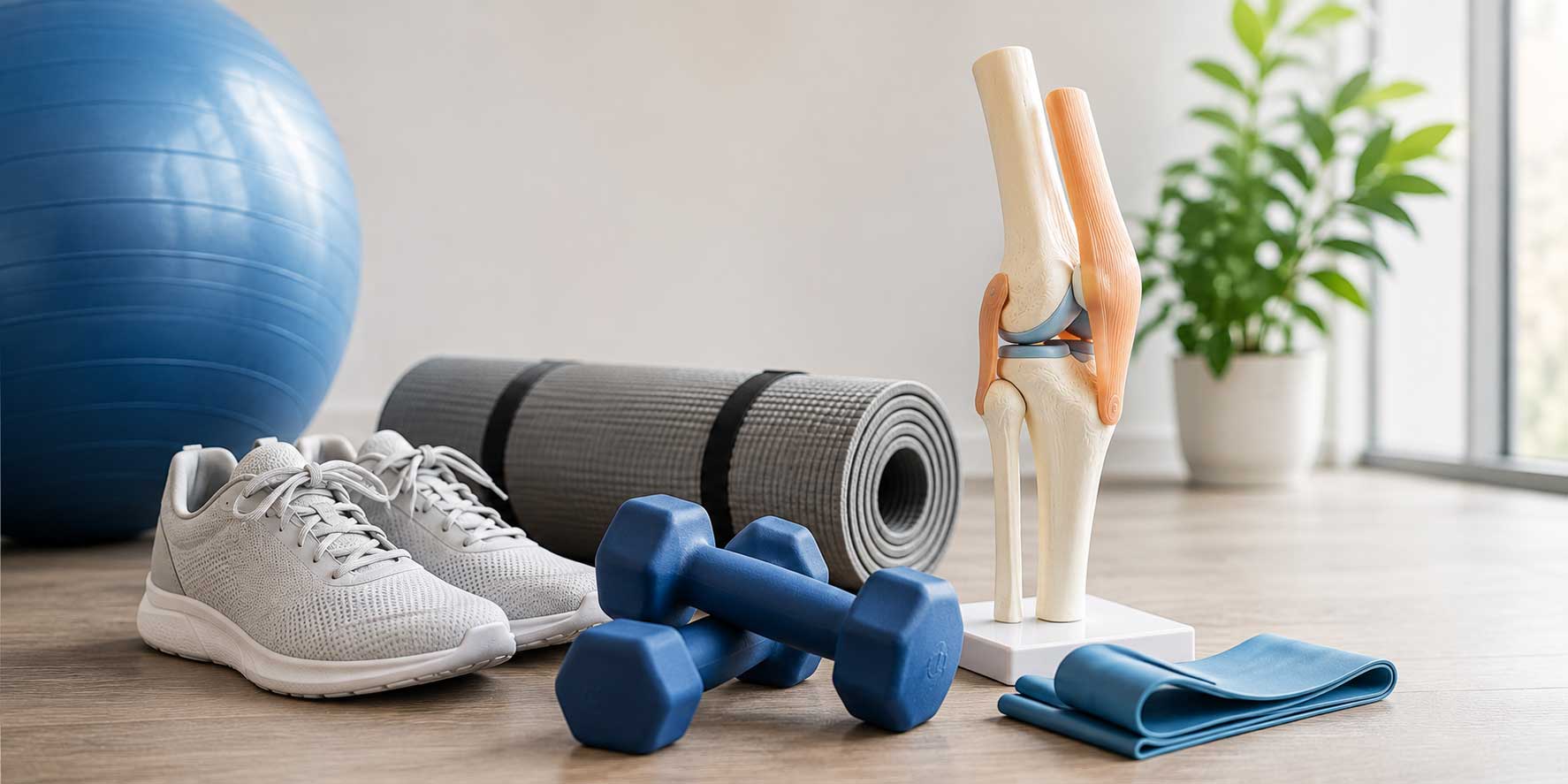
GLA:D® Canada: Reduce Joint Pain & Improve Mobility
Can the GLA:D® Canada Program Reduce Joint Pain and Improve Mobility?
If knee or hip pain is making everyday activities harder, you may have wondered whether exercise can actually help — or whether exercising with arthritis is simply asking for trouble. The GLA:D® Canada Program takes a different approach: instead of telling people with osteoarthritis to stop moving, it combines education, supervised exercise, and physiotherapy to help them move with greater confidence, manage symptoms, and improve everyday function.
At Sync Move Rehab Centre, the GLA:D® Canada Program is designed for people living with knee or hip osteoarthritis who want a structured, evidence-based way to stay active and manage their symptoms. The program combines education with supervised neuromuscular exercise, strengthening, balance and movement training, and functional exercises. (Sync Move Rehab Centre)
But can GLA:D® Canada really reduce joint pain and improve mobility?
The short answer is yes, many people can experience meaningful improvements in pain and physical function, although results vary from person to person. Research involving tens of thousands of GLA:D® participants has found improvements in pain, walking ability, chair-stand performance, and quality of life. Broader research on osteoarthritis also continues to support exercise as one of the central parts of non-surgical care.
So, let’s take a closer look at what the program does, what the research says, and what someone living with knee or hip osteoarthritis can realistically expect.
What Is the GLA:D® Canada Program?
GLA:D® stands for Good Life with OsteoArthritis in Denmark. It was originally developed in Denmark as a structured program for people with knee and hip osteoarthritis.
The program was later adapted for Canada. Its basic philosophy is refreshingly practical: people with osteoarthritis need information about their condition, but information alone is not enough. They also need guidance on how to move, strengthen their muscles, manage symptoms, and stay active.
The Canadian program combines education and supervised exercise and is delivered by trained healthcare professionals. Research examining its implementation in Canada found that the program could be successfully adapted to the Canadian healthcare setting for people with mild to severe knee and hip osteoarthritis. (Osteoarthritis and Cartilage)
At Sync Move Rehab Centre, the program begins with a physiotherapy assessment to determine whether GLA:D® is appropriate for you. The clinic’s current program structure includes education sessions and 12 supervised neuromuscular exercise sessions.
The exercise sessions are held twice per week for six weeks, with each session lasting about 60 minutes. (GLA:D® Canada Program at Sync Move Rehab Centre)
That may sound like a fairly simple recipe:
Learn → Move → Strengthen → Practice → Repeat.
And sometimes the simple recipes are the ones that actually make it into everyday life.
Why Does Osteoarthritis Cause Joint Pain and Stiffness?
Before looking at whether GLA:D® can help, it is useful to understand what osteoarthritis actually is.
Osteoarthritis is a condition that affects the whole joint. It can involve cartilage, bone, muscles, ligaments, and other tissues around the joint.
The knee and hip are particularly important because we use them constantly.
Walking to the kitchen? Knees and hips.
Getting out of the car? Knees and hips.
Climbing stairs? Definitely knees and hips.
Trying to stand up gracefully after sitting for an hour? Your knees may have an opinion about that too.
The World Health Organization estimates that around 528 million people worldwide were living with osteoarthritis in 2019, representing a 113% increase since 1990. Around 73% of people living with osteoarthritis were older than 55, and approximately 60% were women. The knee is the most commonly affected joint. (World Health Organization)
Importantly, osteoarthritis is not simply an unavoidable consequence of getting older.
Age is one risk factor, but previous joint injuries, genetics, body weight, repetitive joint loading, and other factors can also play a role.
This is one reason modern osteoarthritis care has moved away from the old idea that the only options are “put up with it” or “have surgery.”
There is a lot that can be done in between.
Can Exercise Really Reduce Osteoarthritis Pain?
This is probably the biggest question people have.
After all, if your knee hurts when you walk, why would deliberately exercising it make things better?
It sounds almost like telling someone with a sunburn to spend more time in the sun.
But joints are not quite that simple.
Exercise can help improve muscle strength, movement control, physical function, and confidence. It can also help people become more physically active.
Major clinical guidelines support exercise as a core part of knee and hip osteoarthritis management.
The American College of Rheumatology and Arthritis Foundation strongly recommend exercise for people with knee and hip osteoarthritis. They also note that exercise programs tend to produce better outcomes when they are supervised, particularly by physical therapists or other trained professionals. (American College of Rheumatology/Arthritis Foundation guideline)
Similarly, NICE guidance recommends therapeutic exercise tailored to the individual’s needs and says supervised exercise sessions should be considered. NICE also recommends combining exercise with education or behaviour-change support as part of structured osteoarthritis care. (NICE)
The important word here is tailored.
The goal isn’t to force every person with arthritis to perform the same workout.
It is to find appropriate movements and gradually build capacity.
What Does the Research Say About GLA:D® and Joint Pain?
One of the strongest reasons to consider GLA:D® is that the program has been evaluated on a large scale.
A 2021 study published in Osteoarthritis and Cartilage examined outcomes from 28,370 people with symptomatic knee or hip osteoarthritis who participated in GLA:D® programs in Denmark, Canada, and Australia.
The results were encouraging.
Across the three countries, participants experienced:
- A 26–33% improvement in mean pain intensity
- An 8–12% improvement in walking speed
- An 18–30% improvement in chair-stand ability
- A 12–26% improvement in joint-related quality of life
- Clinically relevant pain reductions in approximately 43–47% of participants
The researchers concluded that around half or more of participants were classified as responders for pain and objective physical function following the program. (Roos et al., 2021)
That is an impressive amount of data.
But there is an important detail worth remembering: this was a longitudinal program evaluation rather than a simple randomized trial comparing GLA:D® directly against no treatment. So the results show meaningful improvements associated with participation, but they should not be interpreted as proof that every participant will experience the same level of improvement.
Healthcare rarely comes with a “results guaranteed” sticker.
And that’s a good thing to acknowledge.
What Happened When GLA:D® Was Introduced in Canada?
The Canadian experience provides another interesting piece of the puzzle.
An early Canadian implementation study included 72 participants. Of those, 59 started the program and 58 provided follow-up information.
The researchers reported a 40% improvement in pain, with 59% of participants achieving a clinically important improvement of at least two points on the Numeric Pain Rating Scale.
Other improvements were also seen in knee- and hip-related outcome measures. About 24% reported becoming more physically active.
Perhaps even more interestingly, 99% of participants said they benefited from and were satisfied with the program, while 90% said they used what they learned in daily life. (Davis et al., 2018)
Of course, this was a relatively small early implementation study, so it should not be treated as proof that 99% of everyone who tries GLA:D® will have the same experience.
But it does show that the program was feasible in Canada and that participants reported meaningful benefits.
What Do We Know About GLA:D® Canada on a Larger Scale?
The program did not remain a small Canadian pilot.
A 2023 study examined the GLA:D® Canada registry from its beginning through the end of 2022.
By that point, 15,193 participants had been registered:
- 11,228 with knee osteoarthritis
- 3,965 with hip osteoarthritis
Participants were approximately 66 years old on average and were predominantly women. Many had been dealing with their knee or hip problems for several years before starting the program.
The registry also showed that participation increased again in 2022 after declining during the COVID-19 pandemic and clinic closures. (PLOS ONE)
This large Canadian registry is important because it allows researchers and healthcare providers to monitor how the program is being delivered and how participants are doing over time.
The program’s Canadian outcomes registry collects information at baseline and follow-up, including patient-reported measures and physical function tests. (PubMed)
In other words, GLA:D® isn’t simply:
“Here are some exercises. Good luck!”
There is a system for measuring outcomes and learning from the data.
How Can GLA:D® Canada Improve Mobility?
Pain is only one piece of the osteoarthritis puzzle.
Many people are more frustrated by what the pain stops them from doing.
Maybe you can no longer:
- Walk as far as you used to
- Climb stairs comfortably
- Stand from a chair without using your hands
- Walk around a shopping centre
- Play recreational sports
- Garden
- Travel comfortably
- Keep up with friends or family
This is where mobility becomes especially important.
The GLA:D® Canada Program focuses on neuromuscular exercise, which means exercises designed to improve the way your muscles and joints work together.
Participants learn how to control their movements, improve posture, build strength, and apply these skills to everyday activities. (Sync Move Rehab Centre)
Better movement doesn’t necessarily mean faster movement.
Sometimes better movement simply means:
“I can do that without worrying about my knee.”
That is a meaningful improvement.
Strength Matters More Than Many People Realize
When knee or hip pain begins, people often reduce activity.
Understandably.
If walking hurts, you walk less.
If stairs hurt, you avoid stairs.
If standing hurts, you sit more.
The problem is that reduced activity can contribute to reduced muscle strength and physical capacity.
Then everyday activities become even harder.
This can create a frustrating cycle:
Pain → less activity → weakness → reduced confidence → even less activity.
GLA:D® aims to interrupt that cycle through supervised exercise.
Strengthening exercises can help the muscles around the hip and knee perform their jobs more effectively.
The goal isn’t to build enormous muscles.
You don’t need to leave physiotherapy looking like you are preparing for the Olympics.
You need enough strength and control to make daily movement easier.
Why Neuromuscular Exercise Is Part of GLA:D®
You may have heard the phrase “strength training” many times.
Neuromuscular exercise is slightly different.
It focuses not only on how strong a muscle is, but also on how well you control movement.
Imagine having a strong engine but poor steering.
That’s not exactly the driving experience you want.
Your muscles, joints, balance, and nervous system need to work together.
Neuromuscular exercises can help people practice controlled movement, balance, alignment, and functional tasks.
This is especially relevant for knee osteoarthritis because movement patterns can change when people are experiencing pain.
The GLA:D® approach therefore doesn’t simply say:
“Make your legs stronger.”
It also asks:
“How can you move better?”
What Does a Typical GLA:D® Canada Program Include?
At Sync Move Rehab Centre, the GLA:D® Canada Program includes three main components.
1. Education Sessions
Participants typically complete two or three education sessions.
These sessions cover topics such as:
- What osteoarthritis is
- Symptoms and risk factors
- Available treatment options
- How exercise can help
- Self-management strategies
- How to cope with challenging daily activities
This education is important because osteoarthritis comes with plenty of myths.
For years, people were often told that arthritis was simply “wear and tear.”
Modern understanding is more complicated.
Learning what osteoarthritis is — and what it is not — can help people make better decisions about activity.
2. Twelve Exercise Sessions
The Sync Move Rehab Centre program includes 12 supervised neuromuscular exercise sessions, with sessions held twice a week for six weeks.
During these sessions, participants work on:
- Movement control
- Posture
- Strength
- Balance
- Functional movement
- Everyday activities
Exercises can be adjusted according to individual ability, fitness level, and symptoms. (Sync Move Rehab Centre)
3. Progress Monitoring
The program also collects outcome information.
At Sync Move Rehab Centre, progress is monitored at the initial visit and at later follow-ups, including three and 12 months after starting the program. (Sync Move Rehab Centre)
This provides useful information about how people are doing beyond the first few weeks.
Can GLA:D® Canada Help With Stairs and Getting Out of a Chair?
Yes, these are exactly the kinds of everyday activities that rehabilitation programs should care about.
A person might not care whether their quadriceps strength has increased by a certain percentage.
They may care very deeply about whether they can stand up from the sofa without pushing themselves up with both hands.
Research on GLA:D® has included objective tests such as chair stands and walking performance.
The large international study found improvements of 18–30% in chair-stand ability and 8–12% in walking speed across Denmark, Canada, and Australia. (Osteoarthritis and Cartilage)
These types of measures are valuable because they connect rehabilitation with real-world function.
What Does Newer Exercise Research Tell Us?
The evidence supporting exercise for knee osteoarthritis continues to evolve.
A major systematic review and network meta-analysis published in The BMJ in 2025 examined 217 randomized controlled trials involving 15,684 participants with knee osteoarthritis.
The researchers compared different types of exercise, including aerobic, strengthening, flexibility, neuromotor, mind-body, and mixed exercise.
They found that exercise improved pain, physical function, walking performance, and quality of life compared with control conditions.
Aerobic exercise showed particularly strong results across several outcomes, while strengthening and mixed exercise also produced meaningful improvements in function. Neuromotor exercise was particularly beneficial for gait performance in the short term. (The BMJ, 2025)
This research does not mean that everyone with knee osteoarthritis should suddenly start running five kilometres every morning.
In fact, it highlights an important point:
The best exercise is the exercise that is appropriate for the person and can be done consistently.
That is one reason individualized physiotherapy matters.
What If Exercise Hurts?
This is probably one of the most common concerns.
“Won’t exercise make my arthritis worse?”
Not necessarily.
Some people experience temporary increases in discomfort when beginning a new exercise program. NICE specifically notes that joint pain may increase when therapeutic exercise is first started, while also emphasizing that regular and consistent exercise can benefit pain, function, and quality of life over the longer term. (NICE)
That doesn’t mean you should simply ignore severe pain.
Pain is information.
A physiotherapist can help distinguish between expected exercise-related discomfort and symptoms that suggest an exercise needs to be changed.
This is another advantage of supervised rehabilitation.
If you are exercising alone at home and something feels wrong, your first thought may be:
“Should I keep going?”
During supervised exercise, you can ask the person who is actually watching your movement.
That is considerably more useful than asking Google at 11:47 p.m.
Is GLA:D® Canada Suitable for Severe Osteoarthritis?
According to Sync Move Rehab Centre, the program can be appropriate for people with mild, moderate, and severe knee or hip osteoarthritis, with suitability determined during the physiotherapy assessment. (GLA:D® Canada at Sync Move Rehab Centre)
This is important because people sometimes assume that exercise is only useful during the early stages of arthritis.
That is not the case.
People with more advanced osteoarthritis may still benefit from improving strength, balance, physical function, and confidence.
However, severe symptoms should be assessed professionally.
GLA:D® is not a promise that joint replacement will never be necessary.
For some people, surgery eventually becomes the most appropriate option.
The purpose of conservative management is to help people function as well as possible and make informed treatment decisions.
Could GLA:D® Canada Help Delay Joint Replacement?
Potentially — but this needs careful wording.
The program is not a guaranteed surgery-prevention treatment.
However, if exercise, education, and symptom management improve your function and quality of life enough, you may be able to postpone surgery.
For someone already considering joint replacement, physiotherapy can also help prepare the body for surgery by improving strength and physical capacity.
The decision about surgery should always be made with appropriate healthcare professionals based on symptoms, function, imaging when relevant, overall health, and personal goals.
Think of GLA:D® as another tool in the toolbox, not a magical wrench that fixes every knee.
Is GLA:D® Canada Better Than Exercising at Home?
Home exercise can absolutely be useful.
In fact, continuing to exercise outside the clinic is an important part of long-term osteoarthritis management.
The difference is that supervised exercise gives you:
- Professional guidance
- Exercise progression
- Movement feedback
- Individual modifications
- Accountability
- Education
- A structured program
The American College of Rheumatology and Arthritis Foundation specifically note that supervised exercise tends to be associated with better outcomes than unsupervised exercise. (ACR/Arthritis Foundation)
That doesn’t make home exercise “bad.”
It simply means that many people benefit from learning what to do — and how to do it — before continuing independently.
How Is GLA:D® Canada Different From Simply “Going to the Gym”?
A gym gives you access to equipment.
GLA:D® gives you a structured osteoarthritis management program.
Those are not the same thing.
You could walk into a gym and find:
- Treadmills
- Exercise bikes
- Weight machines
- Dumbbells
- Resistance bands
But which exercises are appropriate for your knee?
How much resistance should you use?
How often should you train?
What should you do if pain increases?
How should you progress?
Those are the questions that make professional rehabilitation valuable.
GLA:D® combines exercise with education and clinical guidance specifically for knee and hip osteoarthritis.
Who May Benefit From GLA:D® Canada?
The program may be appropriate for people experiencing:
- Knee osteoarthritis
- Hip osteoarthritis
- Pain when walking
- Pain when climbing stairs
- Morning stiffness
- Difficulty standing from a chair
- Reduced balance
- Reduced mobility
- Reduced confidence with movement
- Mild to severe osteoarthritis
- Concerns about joint replacement
At Sync Move Rehab Centre, the program begins with a comprehensive physiotherapy assessment to determine whether it is suitable for you. (Sync Move Rehab Centre)
A doctor’s referral or X-ray is often not required to begin the program, according to the clinic’s current information.
Why Choose Sync Move Rehab Centre for GLA:D® Canada?
For people in Thornhill and surrounding communities, finding a convenient provider can make it easier to follow through with a rehabilitation program.
Sync Move Rehab Centre provides the GLA:D® Canada Program with physiotherapy care and individualized exercise progression.
The clinic serves communities including:
- Thornhill
- Markham
- Richmond Hill
- Vaughan
- North York
Its GLA:D® Canada service combines the standardized program framework with individualized exercise modifications based on each participant’s abilities, fitness level, symptoms, and goals. (Sync Move Rehab Centre)
The clinic’s approach is not simply about getting through 12 exercise sessions.
It is about helping participants understand osteoarthritis and develop skills they can continue using in everyday life.
What Can You Realistically Expect From GLA:D® Canada?
It is important to have realistic expectations.
GLA:D® Canada is not a cure for osteoarthritis.
It does not rebuild damaged cartilage overnight.
It does not guarantee that your knee or hip will never hurt again.
And it certainly cannot promise that everyone will avoid surgery.
What it can do is provide a structured opportunity to work on things that are within your control.
These include:
- Strength
- Movement
- Balance
- Physical activity
- Confidence
- Self-management
- Functional ability
Research suggests that many participants experience improvements in pain and physical function.
But individual responses vary.
Some people may notice changes quickly.
Others may need more time.
Some may experience large improvements.
Others may experience smaller but still meaningful changes.
In rehabilitation, “meaningful” doesn’t always mean dramatic.
Being able to walk another ten minutes without stopping can be a huge victory if you previously couldn’t walk for five.
The Importance of Staying Active After the Program
One of the biggest mistakes people can make is thinking:
“I finished physiotherapy, so I’m done exercising.”
Unfortunately, joints don’t hand out graduation certificates.
Osteoarthritis is a long-term condition, so maintaining physical activity matters.
The goal of GLA:D® is not simply to help you during the supervised sessions.
The education and exercises are intended to help you develop skills that can continue beyond the formal program.
That may mean walking regularly, continuing strengthening exercises, participating in recreational activities, or following an individualized exercise plan.
Consistency usually matters more than perfection.
Missing one workout doesn’t erase your progress.
Think of it like brushing your teeth. You don’t decide that because you missed Tuesday, the whole concept of dental hygiene is cancelled.
GLA:D® Canada and the Bigger Picture of Osteoarthritis Care
Modern osteoarthritis management is becoming more active and more personalized.
The World Health Organization identifies rehabilitation as an important part of managing osteoarthritis and notes that hundreds of millions of people worldwide could benefit from rehabilitation services. (WHO)
The OARSI guidelines for non-surgical management identify structured land-based exercise and education as core treatments for knee osteoarthritis. (OARSI)
The American College of Rheumatology and Arthritis Foundation also strongly recommend exercise for knee and hip osteoarthritis. (ACR/Arthritis Foundation)
And NICE recommends tailored therapeutic exercise and considers supervised exercise an important option. (NICE)
GLA:D® fits naturally into this broader evidence-based approach.
It takes principles that can sometimes sound abstract in a clinical guideline — “exercise,” “education,” “self-management” — and turns them into a structured program that people can actually participate in.
Frequently Asked Questions About GLA:D® Canada
Can GLA:D® Canada completely eliminate joint pain?
No program can guarantee complete pain relief.
Research shows that many GLA:D® participants experience meaningful reductions in pain, but individual results vary.
Is GLA:D® only for older adults?
No. Osteoarthritis can affect younger adults too, particularly after previous joint injuries or other risk factors.
The program is designed around the person’s symptoms and physical abilities rather than simply their age.
Can I participate if I have severe arthritis?
Sync Move Rehab Centre states that GLA:D® may be suitable for mild, moderate, and severe knee or hip osteoarthritis. A physiotherapy assessment helps determine whether the program is appropriate. (Sync Move Rehab Centre)
Does GLA:D® Canada involve surgery?
No. GLA:D® is an education and exercise-based program.
It is designed as a non-surgical management approach, although people who eventually require surgery may also benefit from physiotherapy before or after joint replacement.
Do I need a doctor’s referral?
According to Sync Move Rehab Centre, a referral is generally not required to participate.
However, individual circumstances can vary.
How long does the program take?
At Sync Move Rehab Centre, the program includes education and 12 supervised exercise sessions over approximately six weeks.
Is GLA:D® Canada covered by insurance?
Coverage depends on your extended health insurance plan. Sync Move Rehab Centre notes that many plans cover physiotherapy services associated with GLA:D®, but patients should confirm their individual coverage before starting. (Sync Move Rehab Centre)
So, Can GLA:D® Canada Reduce Joint Pain and Improve Mobility?
The available evidence gives us good reason to say it can help many people.
Large-scale GLA:D® research involving 28,370 people with symptomatic knee or hip osteoarthritis found improvements in pain, walking speed, chair-stand performance, and quality of life after the program. A Canadian implementation study also found meaningful improvements in pain and osteoarthritis-related outcomes.
At the same time, newer exercise research continues to reinforce the value of exercise for people with knee osteoarthritis. A 2025 BMJ systematic review of 217 randomized controlled trials found that exercise can improve pain, function, gait performance, and quality of life. (The BMJ)
So the question may not be:
“Can exercise cure my arthritis?”
A better question is:
“Can the right exercise program help me live better with arthritis?”
The evidence suggests the answer can be yes.
For people living with knee or hip osteoarthritis, GLA:D® Canada offers a structured way to combine education, supervised exercise, strengthening, movement training, and self-management. If pain or stiffness is making walking, stairs, recreational activities, or everyday tasks more difficult, Sync Move Rehab Centre can help you explore whether the GLA:D® Canada Program is appropriate for your needs. Visit the Sync Move Rehab Centre website or learn more about the GLA:D® Canada Program for Knee & Hip Osteoarthritis to take the next step toward reducing pain, improving mobility, and staying active.
References
- World Health Organization – Osteoarthritis
WHO Osteoarthritis Fact Sheet - Roos EM, Grønne DT, Skou ST, et al. (2021). Immediate outcomes following the GLA:D® program in Denmark, Canada and Australia.
PubMed – GLA:D® Outcomes Study - Young JJ, Perruccio AV, Veillette CJH, et al. (2023). The GLA:D® Canada program for knee and hip osteoarthritis: A comprehensive profile of program participants from 2017 to 2022.
PLOS ONE – GLA:D® Canada Registry Study - Zywiel MG, Ellis K, Veillette CJH, Skou ST, McGlasson R. (2021). Implementation of the GLA:D® Program across Canada.
PubMed – GLA:D® Canada Implementation - Davis AM, Kennedy D, Wong R, et al. (2018). Cross-cultural adaptation and implementation of GLA:D® in Canada.
Osteoarthritis and Cartilage – Canadian GLA:D® Study - Yan L, Li D, Xing D, et al. (2025). Comparative efficacy and safety of exercise modalities in knee osteoarthritis.
The BMJ – 2025 Exercise Meta-analysis - Kolasinski SL, Neogi T, Hochberg MC, et al. (2020). 2019 ACR/Arthritis Foundation Guideline for the Management of Osteoarthritis.
American College of Rheumatology / Arthritis Foundation Guideline - Bannuru RR, Osani MC, Vaysbrot EE, et al. (2019). OARSI Guidelines for the Non-Surgical Management of Knee, Hip and Polyarticular Osteoarthritis.
OARSI Guidelines - NICE Guideline NG226 – Osteoarthritis in over 16s: diagnosis and management.
NICE Osteoarthritis Recommendations - GLA:D® Canada – Osteoarthritis Information
Official GLA:D® Canada Osteoarthritis Resources - GLA:D® International – Key Research Publications
GLA:D® International Research Publications - Sync Move Rehab Centre – GLA:D® Canada Program for Knee & Hip Osteoarthritis
Official GLA:D® Canada Service Page