Orthopaedic braces providing joint support during rehabilitation

Braces: Types, Benefits, and How to Choose the Right Support

Have you ever felt your knee wobble while walking downstairs, noticed your ankle feels weak after a sports injury, or struggled to enjoy a long walk because of joint pain? You are not alone. Braces can provide additional support, improve stability, and help some people manage discomfort during everyday activities. Whether you are recovering from an injury, managing arthritis, or trying to return to your favourite sport, understanding how braces work can help you make a more informed decision about your health.

However, choosing the right brace is not as simple as picking one off a pharmacy shelf. Different braces serve different purposes, and a product that helps one person may be unsuitable for another. The good news is that you do not need to become a medical expert to understand the basics.

In this guide, we will explore the different types of braces, their benefits, how to choose the right support, and when professional advice may be helpful. We will also explain why braces are often most useful when combined with an appropriate rehabilitation plan.

What Are Braces?

Braces are supportive devices worn around a joint or body part to help control movement, improve stability, reduce stress on certain structures, or provide comfort during daily activities.

Depending on their design, braces may be made from elastic fabric, foam, plastic, metal, or a combination of materials. Some fit snugly around a joint, while others use straps, hinges, or rigid components to provide more structured support.

You may have seen someone wearing a knee brace at the gym, a wrist brace while working at a computer, or an ankle brace during a basketball game. These devices may look similar, but their purposes can be quite different.

For example, a soft knee sleeve may provide gentle compression and a feeling of support. A hinged knee brace, on the other hand, may be designed to help control certain movements after a specific injury.

According to the American Academy of Orthopaedic Surgeons, orthopaedic treatment options vary according to the condition being treated. This is an important point: a brace should be selected according to your needs, not simply because it is popular or comfortable.

Why Might Someone Need Braces?

Braces can be useful in several situations. The right device may help you feel more confident moving around while protecting a joint or supporting a particular activity.

Here are some common reasons people use braces.

1. Support After an Injury

Sports injuries, accidental falls, and everyday movements can cause sprains, strains, and other problems affecting joints and surrounding tissues.

For example, twisting an ankle while playing soccer may stretch or damage the ligaments that help stabilise the joint. Depending on the severity of the injury, a healthcare professional may recommend an ankle brace to provide support during recovery.

Similarly, certain knee injuries may require a brace to limit particular movements while the injured tissues heal.

Not every injury requires a brace, though. The type of injury, its severity, and your stage of recovery all matter.

2. Managing Joint Pain

Joint pain can make ordinary activities surprisingly difficult.

Walking to the grocery store, climbing stairs, or standing while preparing dinner may become uncomfortable when a joint is painful or unstable.

In selected cases, braces can help redistribute pressure or provide support during movement. Some people with knee osteoarthritis, for example, may benefit from a specially designed brace that changes how forces are distributed across the knee.

However, braces do not cure arthritis or reverse joint damage. They are one possible part of a broader management plan that may include exercise, education, weight management where appropriate, and medical treatment.

The Arthritis Society Canada provides information and resources for people living with arthritis and other joint conditions.

3. Returning to Sports and Exercise

Nobody enjoys sitting on the sidelines when they would rather be playing hockey, running, or hiking.

Depending on the injury and the sport, a brace may help provide additional stability during a gradual return to activity.

For instance, an ankle brace may be recommended for some athletes with a history of ankle sprains. A knee brace may be appropriate for certain knee conditions.

Still, wearing a brace does not automatically make an injured joint ready for intense activity.

Before returning to demanding exercise, you may also need to regain strength, balance, flexibility, and confidence. A healthcare professional can help you determine when it is appropriate to increase your activity level.

4. Supporting Daily Activities

Some people use braces to make everyday movements more manageable.

A wrist support may help someone with a particular wrist condition perform selected activities. A knee support may make walking more comfortable for someone who experiences mild instability.

The goal is not simply to wear a device all day. It is to find an appropriate level of support that helps you function safely while addressing the underlying problem whenever possible.

What Are the Different Types of Braces?

There are several types of braces, and each has its own design and purpose. Understanding the main categories can make it easier to discuss your options with a qualified healthcare professional.

Knee Braces

Knee braces are among the most familiar types of orthopaedic supports.

They may be recommended for selected knee injuries, joint instability, or certain cases of osteoarthritis.

Common designs include:

  • Compression knee sleeves: Elastic supports that fit around the knee and provide gentle compression.
  • Hinged knee braces: Braces with side hinges that provide additional support and help control certain movements.
  • Patellar support braces: Designs intended to help support or guide the kneecap in selected situations.
  • Unloader knee braces: Specialised braces designed to shift some of the load away from a particular part of the knee in certain conditions.

Which option is appropriate depends on the problem being treated.

For example, someone who wants mild support during exercise may have different needs from someone recovering from a ligament injury.

A brace that is too restrictive, poorly fitted, or unsuitable for your condition may cause discomfort without providing the intended benefit.

Ankle Braces

Ankle braces are commonly used in sports and during recovery from certain ankle injuries.

They may help provide stability and limit movements that could aggravate an injury.

Some ankle braces use elastic materials, while others feature straps or firmer supports.

People who have experienced repeated ankle sprains may sometimes benefit from external support alongside balance and strengthening exercises.

However, persistent ankle pain, significant swelling, or difficulty putting weight on the foot should not simply be managed by buying a brace and hoping for the best.

The cause of the symptoms should be assessed, particularly after a significant injury.

Wrist Braces

Wrist braces can provide support for selected wrist conditions and injuries.

Depending on the design, a brace may limit wrist movement, support the joint during certain tasks, or help maintain a comfortable position.

Some are intended for daytime activities, while others may be recommended for use during rest or sleep.

The correct approach depends on the diagnosis. For example, a wrist support used for a particular tendon problem may not be appropriate for every cause of wrist pain.

If you experience ongoing numbness, tingling, weakness, or worsening pain, seek professional advice rather than relying on a brace alone.

Elbow Braces

Elbow supports are sometimes used for selected sports-related injuries, tendon problems, or joint conditions.

Some designs provide compression around the elbow, while others apply pressure to a specific area of the forearm.

People experiencing discomfort during repetitive gripping, lifting, or racquet sports may encounter these products.

Nevertheless, elbow pain can have several causes. A suitable brace may help some people, but it should not replace an assessment when symptoms persist or interfere with daily activities.

Back Braces

Back braces are designed to support or restrict movement around the trunk in particular situations.

They may be prescribed for specific spinal conditions, certain injuries, or following some surgical procedures.

However, back pain is not a single condition, and wearing a brace is not the right solution for everyone.

For many types of persistent, non-specific lower back pain, remaining appropriately active and following an individualised exercise programme are important parts of management.

A back brace should therefore be used for a clear reason and according to professional advice, especially when prolonged use is being considered.

What Are the Benefits of Braces?

When appropriately selected, braces can offer several potential benefits.

Improved Stability

Some braces help control excessive or unwanted movement around a joint.

This may be particularly useful when a joint feels unstable following an injury or when a healthcare professional recommends movement restrictions during recovery.

Greater Confidence During Movement

Pain or instability can make people hesitant to move.

A suitable brace may help some individuals feel more confident during walking, exercise, or other daily activities.

That extra confidence can be valuable, although the brace should not encourage you to ignore pain or push beyond your recovery limits.

Support During Recovery

Depending on the injury, a brace may help protect a healing area or control movement while rehabilitation progresses.

Some injuries require more substantial protection than others. For this reason, the recommended brace and wearing schedule can vary considerably.

Help With Selected Joint Conditions

Certain braces may reduce discomfort or improve function for people with particular joint conditions.

For example, a properly selected knee brace may help some individuals with knee osteoarthritis perform everyday activities more comfortably.

Results vary, however. Not everyone experiences the same level of improvement, and some people may find that a brace provides little benefit.

Support for Everyday Activities

A brace may help someone manage specific activities that would otherwise be uncomfortable.

For example, a person recovering from an ankle sprain may use a recommended support while gradually increasing their walking distance.

The long-term aim should be to improve safe, comfortable function rather than depend on a brace indefinitely without reviewing whether it remains necessary.

How Do You Choose the Right Brace?

Choosing braces involves more than measuring your knee or selecting a size from an online chart.

The best option depends on your symptoms, the condition being treated, your activity level, and the amount of support required.

Here are five practical considerations.

1. Understand the Problem First

Before purchasing a brace, consider why you need one.

Are you recovering from an injury? Do you experience joint pain during exercise? Has a healthcare professional identified a particular problem with your joint?

These questions matter because similar symptoms can have different causes.

For example, knee pain might be related to osteoarthritis, a ligament injury, a tendon problem, or another condition. Each may require a different approach.

If you have significant pain, persistent swelling, repeated instability, or symptoms that are getting worse, arrange an appropriate assessment before choosing a brace.

2. Consider Your Daily Activities

Think about what you want to do while wearing the brace.

Someone who spends most of the day sitting at a desk may have different requirements from a person who works on their feet, participates in sports, or regularly hikes.

Consider questions such as:

  • Will you mainly wear the brace while walking?
  • Do you need support during exercise?
  • Does your work involve repeated lifting or standing?
  • Will the brace fit comfortably beneath your clothing?
  • Does it allow the movement required for your activities?

A healthcare professional can help match the device to your daily needs.

3. Choose the Correct Size and Fit

A brace should fit securely without creating excessive pressure.

If it is too loose, it may slip and fail to provide the intended support. If it is too tight, it may cause discomfort, skin irritation, or other problems.

Follow the manufacturer’s sizing instructions and any professional fitting advice.

Pay attention to how the brace feels during movement, not just when you first put it on.

If you notice persistent rubbing, blisters, increasing swelling, numbness, tingling, or changes in skin colour or temperature, remove the brace if it is safe to do so and seek prompt medical guidance. If you have been instructed not to remove a prescribed brace, contact your treating professional immediately for advice.

4. Think About Comfort and Practicality

Even a well-designed brace may not be useful if you cannot wear it comfortably as instructed.

Consider its weight, material, fastening system, breathability, and ease of cleaning.

If you live in Canada, seasonal changes may also influence your choice. A bulky brace may feel uncomfortable under winter clothing, while a breathable design may be preferable during summer activities.

Comfort matters, but it should not be the only deciding factor. The brace must also be appropriate for your condition.

5. Ask Whether You Need Professional Fitting

Some simple supports are available over the counter. Others require careful selection, adjustment, or monitoring.

If you have a significant injury, a complex joint condition, or a brace that must restrict movement in a specific way, professional guidance is particularly important.

Ask about the purpose of the device, when to wear it, when to remove it, how to clean it, and what warning signs to watch for.

You should also ask how the brace fits into your wider recovery plan.

Braces vs. Physiotherapy: Do You Need Both?

This is one of the most important questions to consider.

Braces and physiotherapy serve different purposes, and in some situations they work well together.

A brace may provide external support or help control movement. Physiotherapy, meanwhile, can address factors such as muscle strength, joint mobility, balance, coordination, and movement habits.

Imagine twisting your ankle while playing recreational basketball.

A suitable brace may provide support during an appropriate stage of recovery. However, the brace alone does not necessarily restore your balance, rebuild muscle strength, or prepare you for the demands of jumping and changing direction.

A rehabilitation programme may include exercises that gradually challenge these abilities as the injury improves.

The same principle applies to many knee and other musculoskeletal conditions. External support can be useful, but it may not address every factor contributing to pain or reduced function.

The right combination depends on your individual circumstances.

At Sync Move Rehab Centre, patients can explore rehabilitation services such as physiotherapy as part of a broader approach to movement, function, and recovery. The clinic also lists braces among its services.

If you are unsure whether you need a brace, physiotherapy, or another form of care, you can contact Sync Move Rehab Centre to ask about the available services and whether an assessment may be appropriate.

It is important to note that not every person who wears a brace needs physiotherapy. Equally, physiotherapy does not automatically mean you need a brace. The decision should be based on your condition and treatment goals.

How Long Should You Wear a Brace?

There is no single answer that applies to every brace or every condition.

Some supports may be used temporarily during particular activities. Others may be prescribed for longer periods following an injury or surgery.

The recommended schedule depends on the reason for wearing the brace, the type of device, and your stage of recovery.

For example, a soft support used for comfort during exercise is very different from a rigid brace prescribed after a significant injury.

Do not assume that wearing a brace for longer will produce better results.

In some circumstances, unnecessary or prolonged restriction may interfere with normal movement or make it harder to follow an appropriate rehabilitation programme.

On the other hand, removing a prescribed brace too early may compromise the protection your healthcare professional intended.

Follow the instructions provided for your specific device. If you are unsure whether you should wear it during sleep, exercise, work, or daily activities, ask the professional who recommended it.

Can You Exercise While Wearing Braces?

Sometimes, yes. However, the answer depends on the condition being treated and the type of brace.

Some braces are designed to provide support during selected activities. Others are intended to restrict movement and should not be used during exercise unless your treating professional says it is safe.

If you are recovering from an injury, your return to activity should be gradual and guided by your symptoms and functional progress.

Depending on your condition, a rehabilitation programme may involve:

  • Gentle movement to maintain joint mobility.
  • Strengthening exercises for the muscles surrounding the affected area.
  • Balance and coordination exercises.
  • Gradual increases in walking or other everyday activities.
  • Sport-specific exercises before returning to full participation.

Do not use a brace as permission to continue an activity that causes significant pain or makes your symptoms worse.

If you are unsure which exercises are suitable, seek advice from a qualified healthcare professional.

How Should You Care for Your Brace?

Proper care helps keep your brace comfortable and allows you to notice potential problems early.

Although the instructions vary by product, these general tips can help.

Keep it clean. Follow the manufacturer’s instructions for washing and drying. Some braces can be hand-washed, while others have components that should not be submerged in water.

Check the fit regularly. Swelling can change the way a brace fits. Straps and fastenings may also loosen over time.

Inspect your skin. Look for persistent redness, rubbing, blisters, or pressure marks. People with reduced skin sensation may need additional help checking the affected area.

Look for damage. Cracked components, worn straps, damaged hinges, or loose fastenings may affect how a brace works.

Follow the prescribed wearing schedule. Do not change the instructions for a rigid or post-surgical brace without professional advice.

If the device becomes damaged or starts causing new symptoms, contact the professional who fitted or recommended it.

When Should You Seek Medical Advice?

A brace may be helpful for selected conditions, but it is not a substitute for identifying the cause of pain or injury.

Seek prompt medical assessment if you experience severe pain, substantial swelling, a joint that looks deformed, or an inability to bear weight after an injury.

New numbness, significant tingling, or a foot or hand that becomes unusually cold, pale, or blue also requires urgent assessment, particularly when wearing a brace.

Do not wait for a brace to solve these symptoms.

You should also arrange an assessment if pain persists, instability repeatedly affects your activities, or your symptoms worsen despite following the recommended care plan.

For additional general information about musculoskeletal injuries and recovery, the National Health Service guide to sprains and strains explains common symptoms, initial care, and when medical advice may be needed.

Remember that general online information cannot determine which brace is right for your particular injury.

Braces in Canada: What Should You Know About Cost and Coverage?

If you are considering braces in Canada, price and insurance coverage may be important parts of your decision.

The cost of an orthopaedic brace varies according to its design, materials, complexity, and whether it is a standard product or a customised device.

A simple elastic support may cost considerably less than a specialised brace with hinges or adjustable movement controls.

Coverage also varies. Some extended health insurance plans may cover eligible orthopaedic devices, but the rules depend on the individual policy and the specific product.

Before purchasing a brace, check:

  • Whether your insurance plan covers the device.
  • Whether a prescription or referral is required.
  • Whether the insurer requires approval before purchase.
  • Whether the brace must come from an approved supplier.
  • What documentation or receipts you need to submit.

Do not assume that every brace is covered simply because it is intended for medical use.

If you are considering a brace through a healthcare provider, ask for a clear explanation of the available options, costs, and any insurance documentation that may be required.

You can also review the Sync Move Rehab Centre insurance information for details about the clinic’s insurance arrangements and contact the team to clarify questions relevant to its services.

Frequently Asked Questions About Braces

Are braces only for people who have injuries?

No. Braces may be used for several reasons, including selected joint conditions, instability, post-injury support, and particular stages of recovery.

However, not everyone with joint pain needs one. The appropriate treatment depends on the cause of the symptoms and the person’s needs.

Do braces help with knee arthritis?

Some people with knee osteoarthritis may benefit from a properly selected knee brace, particularly when the device is designed to address a specific problem with joint loading or stability.

Braces do not cure arthritis. Exercise, education, medical management, and other treatments may also be important.

Can wearing a brace make muscles weaker?

The answer depends on the type of brace, the condition being treated, and how long movement is restricted.

A brace that is prescribed for a specific injury may be necessary to protect the affected area. However, prolonged restriction without a clear reason may limit normal activity and muscle use.

Follow the recommended wearing schedule and ask whether strengthening exercises are appropriate for your situation.

Should I buy a brace online?

You can purchase many standard supports online, but buying a product is not the same as determining whether it is suitable for your condition.

For minor needs, a standard product may be appropriate. For significant injuries, persistent symptoms, or devices that restrict movement, professional assessment and fitting may be important.

Can a brace replace physiotherapy?

Not in every situation. Braces and physiotherapy have different purposes.

A brace may provide external support, while physiotherapy may help address strength, mobility, balance, and movement limitations. Some people benefit from both, while others may not need a brace at all.

How do I know if my brace fits properly?

A brace should fit securely and provide its intended support without causing excessive pressure, persistent rubbing, or changes in sensation or circulation.

Follow the fitting instructions. If the brace causes new or worsening symptoms, seek professional guidance.

Do I need a referral to ask about rehabilitation services?

Requirements depend on the service, provider, and insurance policy. Some services can be accessed without a doctor’s referral, although an insurance plan may impose additional requirements.

For details about the services offered by Sync Move Rehab Centre, visit the clinic’s FAQ page or contact the team directly.

Final Thoughts: Finding the Right Braces for Your Needs

Braces can be useful tools for supporting joints, managing selected symptoms, and helping people move more confidently during certain stages of recovery. However, the best results come from choosing the right device for the right reason and understanding how it should be used. Whether you are dealing with knee discomfort, recovering from an ankle sprain, or looking for support during everyday activities, consider your symptoms, the fit of the brace, your activity level, and whether professional guidance is needed. In many cases, an appropriate rehabilitation plan can complement external support and help you work towards better movement and function. If you would like to learn more about available rehabilitation services or ask whether an assessment may be appropriate, visit Sync Move Rehab Centre at syncmove.ca. The clinic is located in Thornhill, Ontario, and offers services including physiotherapy and braces. Taking the time to understand your options is a sensible first step towards making informed decisions about your recovery and long-term mobility.


References and Further Reading

The following sources provide additional information about orthopaedic supports, joint conditions, injury recovery, and rehabilitation.

  1. American Academy of Orthopaedic Surgeons (AAOS) — OrthoInfo — Patient information about orthopaedic conditions and treatment options.
  2. Arthritis Society Canada — Resources for managing arthritis and joint symptoms.
  3. National Health Service (NHS) — Sprains and Strains — Information about injury symptoms, initial care, and recovery.
  4. NHS — Knee Pain — Guidance on common causes of knee pain and when to seek help.
  5. Mayo Clinic — Knee Arthritis — Information about knee arthritis and selected management options.
  6. Versus Arthritis — Joint Care — Information about protecting joints and the use of splints.
  7. University College London Hospitals — Hinge Knee Brace Advice — Patient guidance on wearing and monitoring a hinged knee brace.
  8. Chelsea and Westminster Hospital — Knee Injury Information and Advice — Information about knee injuries, recovery, and activity.
  9. East Kent Hospitals University NHS Foundation Trust — Knee Injury and Exercises — Advice about knee injury aftercare and movement.
  10. The Rotherham NHS Foundation Trust — Range of Motion Knee Brace — Guidance about using and caring for a prescribed knee brace.
  11. Sync Move Rehab Centre — Physiotherapy — Information about the clinic’s physiotherapy services.
  12. Sync Move Rehab Centre — Insurance — Information about insurance arrangements at the clinic.
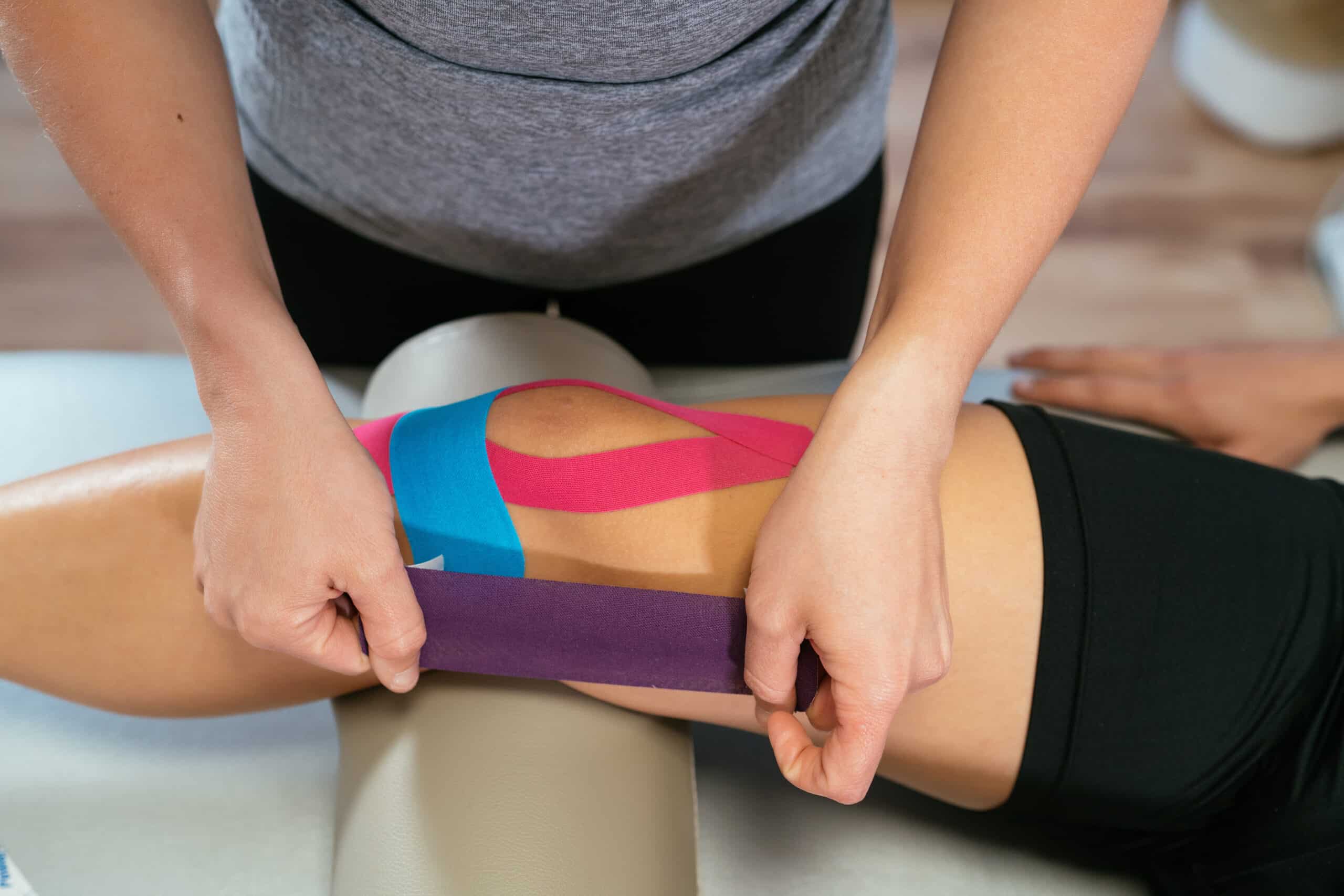
Kinesio Taping

Kinesio Taping Benefits: Science, Recovery & Pain Relief Guide

Kinesio Taping: Benefits, Science, Applications, and What Canadians Need to Know

Why Kinesio Taping Has Become So Popular

If you have ever watched a professional athlete compete, chances are you have noticed colorful strips of tape stretched across shoulders, knees, backs, or arms. From Olympic runners and NHL players to weekend warriors and office workers recovering from aches and pains, Kinesio Taping has become one of the most recognizable rehabilitation and recovery techniques in modern healthcare.

But what exactly is Kinesio Taping? Does it really work? Is it only for athletes, or can everyday Canadians benefit from it as well?

These are some of the most common questions physiotherapists hear today.

Over the past two decades, Kinesio Taping has evolved from a relatively unknown treatment technique into a widely used rehabilitation tool. Healthcare professionals around the world now incorporate kinesiology tape into treatment plans for sports injuries, muscle strains, joint pain, postural issues, and recovery programs.

In Canada, where active lifestyles, recreational sports, and workplace-related musculoskeletal problems are common, interest in Kinesio Taping continues to grow. Whether someone is training for a marathon in Toronto, recovering from a shoulder injury in Vancouver, or managing chronic knee pain in Calgary, Kinesio Taping is increasingly being considered as part of a comprehensive rehabilitation strategy.

At Sync Move Rehab Centre, patients frequently ask whether Kinesio Taping can help improve movement, reduce discomfort, and support recovery. While tape itself is not a miracle cure, research suggests it can play a valuable role when combined with evidence-based rehabilitation, physiotherapy, exercise therapy, and proper clinical assessment.

For more information about rehabilitation services, physiotherapy treatments, and recovery programs, visit the official website of Sync Move Rehab Centre: https://syncmove.ca/

In this comprehensive guide, we will explore:

  • What Kinesio Taping is
  • How it works
  • What science says about its effectiveness
  • Common conditions it may help
  • Latest research findings
  • Benefits and limitations
  • What Canadians should know before trying it

By the end of this article, you will have a clear understanding of whether Kinesio Taping may be a useful addition to your recovery journey.

What Is Kinesio Taping?

Kinesio Taping is a therapeutic technique that involves applying a specialized elastic cotton tape to the skin in specific patterns. The tape is designed to support muscles and joints without restricting movement.

Unlike traditional athletic tape, which is often used to immobilize or stabilize a joint, kinesiology tape is flexible and stretches similarly to human skin. This allows individuals to maintain a full range of motion while receiving therapeutic support.

The method was originally developed by Japanese chiropractor Dr. Kenzo Kase in the 1970s. His goal was to create a treatment approach that would support the body’s natural healing processes while allowing normal movement.

Today, kinesiology tape is used by:

  • Physiotherapists
  • Chiropractors
  • Athletic therapists
  • Sports medicine physicians
  • Massage therapists
  • Occupational therapists
  • Rehabilitation specialists

People seek Kinesio Taping for many reasons, including:

  • Muscle pain
  • Sports injuries
  • Joint instability
  • Swelling and inflammation
  • Postural correction
  • Tendon problems
  • Chronic pain conditions
  • Rehabilitation after surgery

One of the reasons for its popularity is its simplicity. Once properly applied, the tape can typically remain in place for several days, allowing patients to continue daily activities while receiving ongoing support.

The Story Behind Kinesio Taping

Every successful healthcare innovation has an interesting story behind it.

The origins of Kinesio Taping date back to the early 1970s when Dr. Kenzo Kase began searching for alternatives to rigid sports taping techniques.

At the time, most taping methods focused on restricting movement. While this provided stability, it sometimes interfered with natural biomechanics and recovery.

Dr. Kase believed movement was essential for healing.

Instead of creating a tape that prevented motion, he wanted a tape that encouraged movement while still providing support.

After years of development, he introduced what would later become known worldwide as Kinesio Tape.

The technique remained relatively unknown outside Japan for many years. However, interest increased significantly after elite athletes began using it during major international sporting events.

The turning point came during the 2008 Beijing Olympics and the 2012 London Olympics. Television viewers around the world noticed athletes wearing brightly colored tape on various body parts.

Many people wondered:

“Is that tape helping them perform better?”

Since then, Kinesio Taping has become a common feature in professional sports including:

  • Hockey
  • Soccer
  • Basketball
  • Tennis
  • Track and field
  • Swimming
  • Cycling
  • Volleyball

Today, however, its use extends far beyond sports.

Many patients receiving rehabilitation services at clinics such as Sync Move Rehab Centre use Kinesio Taping as part of treatment plans for everyday musculoskeletal issues.

How Does Kinesio Taping Work?

This is where things become particularly interesting.

Although researchers continue to investigate the exact mechanisms involved, several theories help explain why Kinesio Taping may be beneficial.

1. Skin Lifting Effect

One of the most widely accepted theories is known as the skin lifting effect.

When properly applied, kinesiology tape creates a slight lifting action on the skin.

This microscopic lifting may help:

  • Reduce pressure on pain-sensitive structures
  • Improve local circulation
  • Enhance lymphatic drainage
  • Reduce swelling

Imagine lifting a heavy blanket slightly off a surface underneath. That tiny amount of space can change how pressure is distributed.

Similarly, small changes in tissue pressure may influence comfort and movement.

2. Sensory Feedback to the Brain

The human body contains millions of sensory receptors embedded within the skin.

These receptors continuously send information to the brain about:

  • Position
  • Movement
  • Pressure
  • Stretch

Kinesiology tape interacts with these receptors.

The additional sensory input may help improve body awareness, a concept known as proprioception.

For example:

If someone has an ankle injury, they may have difficulty sensing the exact position of the joint.

The tape may provide extra feedback that helps improve movement awareness and control.

Think of it like adding GPS guidance to a road trip. The destination remains the same, but the route may become smoother.

3. Support Without Restriction

Traditional athletic tape often limits motion.

Kinesio Tape takes a different approach.

Because the tape stretches and moves with the body, it provides support while allowing natural movement patterns.

This can be particularly valuable during rehabilitation because movement is often necessary for:

  • Muscle activation
  • Joint nutrition
  • Circulation
  • Tissue healing

The goal is not to “hold everything still.”

The goal is to encourage healthy movement.

4. Potential Pain Modulation

Pain is complex.

It is influenced by tissues, nerves, the brain, emotions, and many other factors.

Researchers believe Kinesio Taping may influence pain perception through neurological pathways.

Some experts compare this to the “gate control theory” of pain.

According to this theory, certain sensory signals can compete with pain signals traveling to the brain.

The gentle stimulation provided by the tape may help alter how discomfort is perceived.

While this does not eliminate the underlying cause of an injury, it may help some individuals feel more comfortable during rehabilitation.

What Does Science Say About Kinesio Taping?

Now comes the big question.

Does Kinesio Taping actually work?

The answer is nuanced.

If you are hoping for a simple “yes” or “no,” science unfortunately rarely works that way.

The good news is that researchers have conducted hundreds of studies examining Kinesio Taping across a variety of conditions.

What Researchers Generally Agree On

Many systematic reviews suggest that Kinesio Taping can provide short-term benefits for:

  • Pain reduction
  • Movement confidence
  • Functional performance
  • Swelling management
  • Rehabilitation support

These benefits appear most significant when tape is used as part of a broader treatment plan rather than as a standalone intervention.

In other words:

Tape works best when combined with:

  • Physiotherapy
  • Exercise therapy
  • Strength training
  • Mobility work
  • Education
  • Lifestyle modifications

This is exactly why rehabilitation professionals often integrate Kinesio Taping into comprehensive treatment programs rather than relying on tape alone.

What Researchers Continue to Debate

While positive findings exist, researchers continue discussing:

  • How large the benefits truly are
  • Which patient groups respond best
  • Optimal taping techniques
  • Long-term effectiveness

Some studies show substantial improvements.

Others show modest benefits.

A few show minimal differences compared to placebo applications.

This variability highlights an important reality:

No single treatment works equally well for every person.

Healthcare professionals increasingly focus on individualized treatment plans rather than one-size-fits-all solutions.

The Placebo Question

Whenever Kinesio Taping is discussed, someone eventually asks:

“What if it only works because people think it works?”

This is actually a reasonable scientific question.

Interestingly, even when placebo effects contribute to positive outcomes, patients may still experience meaningful improvements in pain and function.

Modern pain science recognizes that expectations, confidence, and perception can influence recovery.

However, research also suggests Kinesio Taping may produce physiological effects beyond placebo alone, particularly regarding sensory feedback and movement awareness.

The reality is likely somewhere in between.

Both physiological and psychological factors may contribute to the overall outcome.

Why Canadians Are Increasingly Interested in Kinesio Taping

Canada has one of the most active populations in the world.

Millions of Canadians participate in:

  • Running
  • Hiking
  • Hockey
  • Skiing
  • Cycling
  • Fitness training
  • Recreational sports

At the same time, many Canadians spend long hours sitting at desks, driving, or working physically demanding jobs.

These lifestyles can contribute to:

  • Back pain
  • Neck tension
  • Shoulder discomfort
  • Knee injuries
  • Repetitive strain conditions

According to Canadian health statistics, musculoskeletal disorders remain among the leading causes of disability and reduced quality of life.

As awareness of conservative, non-invasive treatment options grows, many individuals seek alternatives before considering medications or surgical procedures.

This trend has contributed to the growing popularity of:

  • Physiotherapy
  • Exercise rehabilitation
  • Manual therapy
  • Kinesio Taping
  • Movement-based healthcare

At Sync Move Rehab Centre, Kinesio Taping is often incorporated into broader rehabilitation programs designed to address the root causes of pain rather than simply masking symptoms.

Can Kinesio Taping Improve Athletic Performance?

This is one of the most frequently searched questions online.

The answer is: probably not in the way many people imagine.

Kinesio Tape is unlikely to transform someone from an average runner into an Olympic champion overnight.

Sorry—if a strip of tape could do that, every sports store would have a line around the block!

However, Kinesio Taping may help athletes by:

  • Improving movement confidence
  • Reducing discomfort
  • Supporting rehabilitation
  • Enhancing body awareness
  • Encouraging proper movement patterns

For athletes recovering from injury, these factors may indirectly contribute to better performance.

The tape itself is not the magic.

The improved movement and rehabilitation process are what matter most.

Kinesio Taping for Back Pain, Neck Pain, Shoulder Injuries, Knee Conditions, Arthritis, Workplace Injuries, and Detailed Scientific Evidence.

Kinesio Taping: Benefits, Science, Applications, and What Canadians Need to Know

Kinesio Taping for Back Pain

If there were an award for the most common physical complaint in Canada, back pain would almost certainly be a top contender.

Whether it’s from long hours at a desk, lifting heavy objects, gardening, parenting, commuting, or simply getting older, back pain affects millions of Canadians every year.

According to the Government of Canada, musculoskeletal conditions—including back pain—are among the leading causes of disability, missed workdays, and healthcare utilization across the country.

Naturally, many people wonder whether Kinesio Taping can help.

How Kinesio Taping May Help Back Pain

When applied appropriately, Kinesio Tape may:

  • Reduce muscle tension
  • Improve posture awareness
  • Encourage movement
  • Support strained muscles
  • Reduce discomfort during daily activities

One interesting aspect of Kinesio Taping is that it often reminds people to pay attention to their posture.

Imagine sitting at your desk and slowly slouching forward.

With tape applied along the upper or lower back, many people notice the sensation immediately.

The tape doesn’t physically force perfect posture, but it acts as a gentle reminder.

It’s a bit like having a polite friend tap you on the shoulder and say:

“Hey, maybe sit up a little straighter.”

Without the judgment.

What Research Says

Research findings suggest that Kinesio Taping may provide short-term improvements in pain and function for some individuals with low back pain.

However, experts generally agree that the tape works best when combined with:

  • Strengthening exercises
  • Mobility training
  • Physiotherapy
  • Ergonomic improvements
  • Education about movement

Tape alone rarely solves the underlying issue.

Think of it as one member of the recovery team rather than the entire team.

At Sync Move Rehab Centre, clinicians typically incorporate Kinesio Taping into a broader rehabilitation plan tailored to the individual’s specific condition and goals.

Kinesio Taping for Neck Pain

Modern life has created a new physical challenge.

Some healthcare professionals jokingly call it “smartphone neck.”

Others call it “tech neck.”

Whatever name you choose, the problem is familiar.

Many people spend hours each day:

  • Looking at phones
  • Working on laptops
  • Sitting at computers
  • Driving
  • Reading tablets

Over time, these habits can contribute to:

  • Neck pain
  • Muscle tightness
  • Headaches
  • Reduced mobility
  • Shoulder tension

How Tape May Help

Kinesio Taping is commonly used for neck-related complaints because it may:

  • Improve awareness of head position
  • Reduce muscle fatigue
  • Support posture correction
  • Encourage healthier movement patterns

Many patients report feeling more conscious of their posture while wearing the tape.

Again, the tape isn’t acting like a rigid brace.

Instead, it provides subtle sensory feedback.

A Real-World Example

Imagine carrying a backpack that’s slightly off-center.

You immediately notice something feels different.

Your body automatically makes adjustments.

Kinesio Tape may create a similar awareness effect.

By enhancing sensory input, it can help people recognize movement habits that contribute to discomfort.

Kinesio Taping for Shoulder Injuries

The shoulder is one of the most mobile joints in the human body.

Unfortunately, it is also one of the most vulnerable.

Shoulder pain can affect:

  • Athletes
  • Office workers
  • Construction workers
  • Parents lifting children
  • Older adults

Common shoulder conditions include:

  • Rotator cuff injuries
  • Shoulder impingement
  • Frozen shoulder
  • Tendinitis
  • Muscle strains

Why the Shoulder Is Complicated

Unlike the knee or elbow, the shoulder relies heavily on muscles for stability.

This means that rehabilitation often focuses on improving:

  • Muscle coordination
  • Strength
  • Movement quality

Kinesio Taping may assist by providing feedback that encourages more efficient movement patterns.

What Studies Suggest

Several studies have found that shoulder taping may improve:

  • Range of motion
  • Pain levels
  • Functional movement

However, experts consistently emphasize that exercise-based rehabilitation remains the cornerstone of treatment.

The tape can support recovery.

It cannot replace the work required to restore strength and mobility.

Kinesio Taping for Knee Pain

Few body parts receive as much attention in rehabilitation clinics as the knee.

The knee absorbs tremendous forces every day.

Walking, climbing stairs, running, jumping, squatting, and even getting up from a chair all place demands on the joint.

Common conditions include:

  • Patellofemoral pain syndrome
  • Runner’s knee
  • Osteoarthritis
  • Ligament injuries
  • Tendon irritation

How Kinesio Taping May Help the Knee

Depending on the condition, taping may be used to:

  • Improve kneecap tracking
  • Reduce discomfort
  • Enhance proprioception
  • Support movement confidence
  • Assist rehabilitation exercises

Many runners report feeling more stable while wearing kinesiology tape around the knee.

Whether this improvement comes primarily from sensory feedback, mechanical effects, or a combination of factors continues to be studied.

A Useful Analogy

Think about driving a car.

The steering wheel doesn’t drive the vehicle.

It simply provides guidance.

Similarly, Kinesio Tape doesn’t create movement.

It may help guide movement in a more efficient direction.

Kinesio Taping and Arthritis

Arthritis affects millions of Canadians.

For many individuals, arthritis can cause:

  • Joint stiffness
  • Pain
  • Reduced mobility
  • Difficulty performing daily activities

Although Kinesio Taping cannot reverse arthritis, it may help manage some symptoms.

Potential Benefits

Some individuals with arthritis report improvements in:

  • Comfort during movement
  • Joint awareness
  • Confidence during activity
  • Functional mobility

Maintaining movement is one of the most important aspects of arthritis management.

Many people mistakenly believe painful joints should be completely rested.

In reality, appropriate movement is often beneficial.

Kinesio Taping may help some individuals remain active while participating in rehabilitation and exercise programs.

Kinesio Taping for Seniors

One misconception about Kinesio Taping is that it is only for elite athletes.

In reality, older adults may benefit just as much—or sometimes even more.

As people age, they may experience:

  • Balance challenges
  • Joint stiffness
  • Muscle weakness
  • Chronic pain
  • Reduced confidence during movement

Supporting Active Aging

One of the primary goals of modern rehabilitation is helping people remain active and independent.

Kinesio Taping may contribute by:

  • Enhancing body awareness
  • Supporting movement confidence
  • Encouraging participation in exercise
  • Reducing fear of movement

For many seniors, the biggest obstacle isn’t physical ability.

It’s fear.

Fear of pain.

Fear of falling.

Fear of making an injury worse.

Anything that safely improves confidence can play an important role in successful rehabilitation.

Kinesio Taping for Office Workers

You don’t need to be a professional athlete to develop musculoskeletal pain.

In fact, many rehabilitation clinics see more office workers than athletes.

Long periods of sitting can contribute to:

  • Neck tension
  • Upper back discomfort
  • Shoulder pain
  • Wrist strain
  • Lower back pain

Why Desk Workers Benefit

When combined with:

  • Ergonomic adjustments
  • Stretching
  • Strength training
  • Movement breaks

Kinesio Taping may help reinforce healthier movement habits.

Think of it as a gentle reminder system attached directly to your body.

Unlike phone notifications, however, you can’t simply swipe it away.

Swelling and Lymphatic Applications

One of the more unique uses of Kinesio Taping involves swelling management.

Special taping techniques are sometimes used to encourage lymphatic drainage.

What Is the Lymphatic System?

The lymphatic system helps remove excess fluid and waste products from tissues.

When injury occurs, swelling often develops.

Some clinicians use fan-shaped taping patterns designed to:

  • Improve fluid movement
  • Reduce swelling
  • Enhance comfort

Research in this area continues to evolve, but many rehabilitation professionals report positive clinical outcomes when taping is combined with other evidence-based treatments.

Common Myths About Kinesio Taping

Whenever a treatment becomes popular, myths tend to follow.

Let’s separate fact from fiction.

Myth #1: The Color Changes the Effectiveness

Blue tape.

Pink tape.

Black tape.

Beige tape.

Rainbow tape.

Some people believe certain colors work better than others.

Fortunately—or unfortunately, depending on your favorite color—scientific evidence suggests color does not affect therapeutic outcomes.

Choose the color you like.

Your knee doesn’t care.

Myth #2: More Tape Means Better Results

Not necessarily.

Applying excessive amounts of tape may provide no additional benefit.

Proper assessment and correct application are far more important than quantity.

Myth #3: Kinesio Tape Cures Injuries

This is perhaps the biggest misconception.

Tape does not heal injuries by itself.

Recovery usually requires:

  • Exercise
  • Rehabilitation
  • Time
  • Load management
  • Professional guidance

Tape can support recovery.

It is not magic.

Myth #4: Anyone Can Apply It Perfectly After Watching One Video

The internet is full of taping tutorials.

Some are excellent.

Others are… less excellent.

While simple applications can be learned, proper assessment remains critical.

Different conditions often require different taping strategies.

Professional guidance can help ensure the tape is being used appropriately.

Why Individual Assessment Matters

One person’s shoulder pain may have an entirely different cause than another person’s shoulder pain.

This is why assessment matters.

Effective rehabilitation begins with understanding:

  • The cause of symptoms
  • Movement limitations
  • Strength deficits
  • Activity goals
  • Lifestyle factors

At Sync Move Rehab Centre, clinicians focus on identifying the root causes of dysfunction rather than simply treating symptoms.

Kinesio Taping may be included when appropriate, but it is typically one component of a larger evidence-based treatment plan.

For patients seeking personalized rehabilitation support, treatment options and clinical services can be explored through the Sync Move Rehab Centre website:

https://syncmove.ca/

Is Kinesio Taping Safe?

For most people, Kinesio Taping is considered very safe.

However, there are situations where caution is required.

Potential contraindications include:

  • Open wounds
  • Skin infections
  • Severe allergic reactions
  • Certain circulatory disorders
  • Fragile skin conditions

Mild skin irritation occasionally occurs, particularly in individuals with sensitive skin.

A healthcare professional can determine whether taping is appropriate based on an individual’s medical history and current condition.

The Psychology of Recovery: An Often Overlooked Factor

One fascinating area of modern rehabilitation research involves the connection between the brain and recovery.

Pain is not simply a tissue problem.

It is a whole-person experience.

Confidence matters.

Expectations matter.

Movement confidence matters.

When people feel supported, they often move more naturally.

When they move more naturally, rehabilitation tends to progress more effectively.

Some researchers believe part of Kinesio Taping’s success may come from its ability to increase confidence and reduce fear during movement.

Interestingly, even if this is only part of the explanation, it remains clinically valuable.

After all, recovery is about helping people function better—not winning debates in research journals.

Part 3 will cover:

  • Latest Scientific Research (2024–2026)
  • Canadian Statistics and Trends
  • Professional vs DIY Taping
  • Frequently Asked Questions
  • How Sync Move Rehab Centre Uses Kinesio Taping
  • SEO-optimized Conclusion
  • 10+ References with Links
  • Keywords List
  • Meta Description
  • Recommended Internal Links
  • Schema Markup Recommendations
  • Featured Image SEO Recommendations
  • Final 8,000+ Word Completion.

The Latest Scientific Research on Kinesio Taping (2024–2026)

One of the most important questions readers ask is:

“What does the newest science say?”

Healthcare professionals today place a strong emphasis on evidence-based practice. Rather than relying solely on tradition or anecdotal success stories, clinicians increasingly combine their experience with current research findings.

The good news is that Kinesio Taping continues to be studied extensively around the world.

Recent reviews and clinical studies published between 2024 and 2026 suggest several important conclusions.

Key Finding #1: Kinesio Taping Works Best as Part of a Comprehensive Treatment Plan

This may be the single most important takeaway from modern research.

Studies consistently show that Kinesio Taping tends to be most effective when combined with:

  • Physiotherapy
  • Therapeutic exercise
  • Strength training
  • Mobility programs
  • Education
  • Activity modification

Patients who expect tape alone to solve chronic pain often experience disappointment.

Patients who use taping as one component of a broader recovery strategy often achieve better outcomes.

This aligns closely with modern rehabilitation principles practiced at clinics such as Sync Move Rehab Centre, where treatment focuses on identifying and addressing the root causes of dysfunction rather than simply masking symptoms.

Key Finding #2: Short-Term Pain Reduction Is the Most Consistent Benefit

Across multiple systematic reviews, one finding appears repeatedly:

Many patients experience a reduction in pain shortly after tape application.

Researchers continue investigating exactly why this occurs, but potential explanations include:

  • Enhanced sensory feedback
  • Improved proprioception
  • Reduced tissue stress
  • Neurological pain modulation
  • Increased movement confidence

For individuals recovering from injury, even a modest reduction in discomfort may allow more productive participation in rehabilitation exercises.

Key Finding #3: Improved Movement Awareness May Be More Important Than Mechanical Support

Years ago, many people assumed kinesiology tape physically “held” muscles and joints in place.

Modern research suggests the story is more complicated.

Many experts now believe the tape’s influence on the nervous system may be more significant than its mechanical effects.

By providing continuous sensory input, the tape may help individuals:

  • Move more efficiently
  • Recognize poor movement habits
  • Improve joint positioning
  • Increase body awareness

This may explain why some people report feeling more stable even though the tape itself provides minimal structural support.

Key Finding #4: Results Vary Between Individuals

Perhaps one of the most important realities of healthcare is this:

People are different.

A treatment that works exceptionally well for one person may produce only modest benefits for another.

Factors influencing response may include:

  • Age
  • Injury type
  • Activity level
  • Pain sensitivity
  • Psychological factors
  • Rehabilitation adherence
  • Overall health status

This is why personalized assessment remains essential.

Kinesio Taping in Canadian Healthcare

Canada’s healthcare landscape has increasingly embraced non-invasive rehabilitation approaches.

Several factors contribute to this trend:

Aging Population

Canada’s population continues to age.

As people live longer, the prevalence of conditions such as:

  • Osteoarthritis
  • Chronic back pain
  • Neck pain
  • Joint dysfunction

also increases.

Conservative treatment approaches are often preferred before considering more invasive interventions.

Growing Interest in Active Lifestyles

Canadians are among the world’s most active populations.

Popular activities include:

  • Hockey
  • Running
  • Cycling
  • Hiking
  • Skiing
  • Fitness training
  • Recreational sports

Greater participation naturally increases demand for injury prevention and rehabilitation services.

Increased Awareness of Physiotherapy

Over the past decade, physiotherapy has gained greater recognition as a frontline treatment option for musculoskeletal conditions.

Patients are increasingly seeking:

  • Evidence-based rehabilitation
  • Exercise therapy
  • Manual therapy
  • Movement assessments
  • Kinesio Taping

before exploring medications or surgical procedures.

Professional Kinesio Taping vs. DIY Taping

A common question is:

“Can I apply Kinesio Tape myself?”

The answer is yes—but with some important caveats.

Advantages of Professional Application

A trained rehabilitation professional can:

  • Identify the underlying problem
  • Assess movement patterns
  • Select the appropriate technique
  • Determine correct tension
  • Adjust application based on goals

For example:

The taping strategy for shoulder impingement differs significantly from the strategy for knee pain.

Without proper assessment, even perfectly applied tape may target the wrong issue.

When Self-Application May Be Appropriate

After receiving instruction from a healthcare professional, many patients successfully apply tape at home.

This can be particularly useful for:

  • Ongoing rehabilitation
  • Sports participation
  • Chronic condition management
  • Travel situations

Education is key.

Good technique matters more than simply sticking tape onto the skin.

How Long Does Kinesio Tape Last?

Most kinesiology tape applications remain effective for:

3–5 days

In some cases, tape may stay in place for up to a week.

Factors affecting longevity include:

  • Skin preparation
  • Sweat levels
  • Physical activity
  • Showering habits
  • Application technique

The tape is generally water-resistant, allowing individuals to shower and participate in normal activities.

Who Should Avoid Kinesio Taping?

Although generally safe, Kinesio Taping is not appropriate for everyone.

Healthcare professionals may advise caution in individuals with:

  • Active skin infections
  • Open wounds
  • Certain vascular conditions
  • Severe adhesive allergies
  • Fragile skin
  • Some forms of uncontrolled swelling

Professional assessment is always recommended before beginning treatment.

Frequently Asked Questions About Kinesio Taping

Does Kinesio Taping Hurt?

No.

Properly applied kinesiology tape should not cause pain.

Most people describe the sensation as mild and comfortable.

Can I Exercise While Wearing Kinesio Tape?

Absolutely.

In fact, movement is often encouraged.

The tape was specifically designed to allow activity while providing support.

Can I Shower With It?

Yes.

Most kinesiology tapes are water-resistant and designed for normal daily activities.

Is Kinesio Taping Only for Athletes?

Not at all.

Many users are:

  • Office workers
  • Seniors
  • Parents
  • Students
  • Individuals recovering from surgery
  • People with chronic pain

Does Insurance Cover Kinesio Taping?

Coverage varies depending on:

  • Province
  • Insurance provider
  • Rehabilitation plan
  • Clinical setting

Many extended health benefit plans cover Kinesio Taping when provided as part of physiotherapy or rehabilitation services.

How Sync Move Rehab Centre Uses Kinesio Taping

At Sync Move Rehab Centre, Kinesio Taping is not viewed as a standalone solution.

Instead, it may be integrated into individualized rehabilitation programs that focus on restoring function, reducing pain, and improving quality of life.

Depending on the patient’s needs, treatment plans may also include:

  • Physiotherapy
  • Exercise rehabilitation
  • Manual therapy
  • Mobility training
  • Postural education
  • Injury prevention strategies

The objective is always long-term improvement rather than temporary symptom management.

Patients interested in learning more about rehabilitation services can visit:

https://syncmove.ca/

Potential internal linking opportunities include:

  • Physiotherapy Services
  • Sports Injury Rehabilitation
  • Chronic Pain Management
  • Post-Surgical Rehabilitation
  • Exercise Therapy Programs
  • Mobility and Movement Assessments

These internal links help users navigate the website while also supporting SEO performance.

Kinesio Taping has become one of the most recognizable rehabilitation techniques in modern healthcare, and for good reason. Its flexibility, ease of use, and potential benefits make it an appealing option for athletes, office workers, seniors, and individuals recovering from injury alike.

While Kinesio Taping is not a miracle cure, growing scientific evidence suggests that it can play a meaningful role in reducing discomfort, improving movement awareness, supporting rehabilitation, and helping individuals remain active during recovery. The greatest benefits are typically seen when taping is incorporated into a comprehensive treatment plan that includes physiotherapy, exercise therapy, education, and individualized clinical assessment.

For Canadians seeking effective, evidence-based rehabilitation solutions, Kinesio Taping may serve as a valuable tool within a broader recovery strategy. Whether the goal is returning to sport, managing chronic pain, recovering from an injury, or improving day-to-day function, professional guidance can make a significant difference.

At Sync Move Rehab Centre, rehabilitation professionals focus on helping patients move better, feel better, and regain confidence in their bodies through personalized treatment plans that may include Kinesio Taping alongside other proven therapeutic approaches. To learn more about available services or to explore treatment options, visit https://syncmove.ca/.

References

  1. Kase K, Wallis J, Kase T. Clinical Therapeutic Applications of the Kinesio Taping Method. https://kinesiotaping.com
  2. Cleveland Clinic – Kinesiology Tape Overview. https://health.clevelandclinic.org
  3. Journal of Orthopaedic & Sports Physical Therapy (JOSPT). https://www.jospt.org
  4. Physiopedia – Kinesiology Taping. https://www.physio-pedia.com/Kinesiology_Taping
  5. National Center for Biotechnology Information (NCBI). https://www.ncbi.nlm.nih.gov
  6. PubMed Research Database. https://pubmed.ncbi.nlm.nih.gov
  7. Canadian Physiotherapy Association. https://physiotherapy.ca
  8. Arthritis Society Canada. https://arthritis.ca
  9. Government of Canada – Musculoskeletal Health Resources. https://www.canada.ca
  10. World Health Organization – Rehabilitation Resources. https://www.who.int
  11. British Journal of Sports Medicine. https://bjsm.bmj.com
  12. Sports Medicine Journal. https://link.springer.com/journal/40279
  13. American Physical Therapy Association. https://www.apta.org
  14. Mayo Clinic – Sports Injury Rehabilitation. https://www.mayoclinic.org
  15. Cochrane Library Evidence Reviews. https://www.cochranelibrary.com