Shockwave Therapy

Does Shock Wave Therapy Actually Work? Science Explained

Shockwave therapy has become one of the fastest-growing treatments in modern rehabilitation clinics. If you have searched online for chronic pain solutions, sports injury recovery, or plantar fasciitis treatment, you have probably seen dramatic claims about this technology.

Some people describe shockwave therapy like a miracle.
Others look at the name and imagine something involving electricity, lightning, or a superhero origin story.

Thankfully, it is much less dramatic.

Shockwave therapy is a non-surgical treatment that uses acoustic waves to stimulate healing in injured tissues.

Across Canada, more rehabilitation clinics are offering shockwave therapy for chronic pain conditions and sports injuries. At Sync Move Rehab Centre, shockwave therapy may be included as part of a broader rehabilitation strategy depending on the patient’s condition.

But does shockwave therapy actually work?

Short answer: for many conditions, scientific research says yes.

The longer answer is more interesting.

What Is Shockwave Therapy?

Shockwave therapy uses high-energy sound waves directed into injured tissue.

The treatment is commonly used for:

  • Plantar fasciitis
  • Tennis elbow
  • Shoulder pain
  • Achilles tendinitis
  • Calcific tendonitis
  • Muscle trigger points
  • Chronic tendon injuries

The technology was originally developed for breaking up kidney stones.
Researchers later discovered that similar acoustic waves could stimulate tissue healing.

That discovery changed rehabilitation medicine significantly.

How Does Shockwave Therapy Work?

Shockwave therapy stimulates biological responses in damaged tissue.

Scientists believe the treatment may:

  • Increase blood circulation
  • Stimulate tissue repair
  • Promote collagen production
  • Reduce chronic inflammation
  • Break down calcifications
  • Reduce pain sensitivity

Think of it like waking up “lazy” tissue that stopped healing properly.

Sometimes chronic injuries become stuck in a cycle where the body is no longer repairing the area effectively.
Shockwave therapy may help restart that process.

Why Chronic Injuries Are Difficult to Heal

Tendons and connective tissues often have limited blood supply.

That means healing can be slow.

Conditions like tennis elbow or plantar fasciitis may persist for months — or even years.

Many people try:

  • Ice
  • Stretching
  • Rest
  • Pain medication
  • Orthotics
  • Massage

…yet still experience ongoing pain.

That’s where shockwave therapy enters the conversation.

Conditions That Respond Well to Shockwave Therapy

Plantar Fasciitis

This is one of the most researched uses.

Plantar fasciitis causes heel pain, especially during the first steps in the morning.

And yes, many patients describe those first steps as feeling like walking on Lego bricks.

Research shows shockwave therapy may significantly improve chronic plantar fasciitis symptoms.

Tennis Elbow

Tennis elbow affects far more office workers than actual tennis players.

Repetitive wrist and forearm movements can irritate tendons near the elbow.

Shockwave therapy may help stimulate tendon healing and reduce pain.

Calcific Shoulder Tendonitis

This condition involves calcium deposits within shoulder tendons.

Shockwave therapy may help break down these deposits and improve movement.

Achilles Tendinopathy

The Achilles tendon handles enormous stress during walking and running.

Chronic irritation may respond well to combined rehabilitation approaches including shockwave therapy.

What Does the Research Say?

Scientific evidence supporting shockwave therapy has grown substantially over the last decade.

Multiple systematic reviews suggest positive outcomes for several chronic tendon conditions.

Researchers have reported improvements in:

  • Pain reduction
  • Functional mobility
  • Recovery time
  • Tissue healing

However, not every condition responds equally.

Shockwave therapy tends to work best for chronic soft tissue problems rather than acute injuries.

Is Shockwave Therapy Approved in Canada?

Yes.

Shockwave therapy is widely used in Canadian rehabilitation clinics and sports medicine facilities.

Many physiotherapists and rehabilitation professionals include it as part of evidence-based treatment plans.

What Happens During Treatment?

During treatment:

  1. Gel is applied to the skin
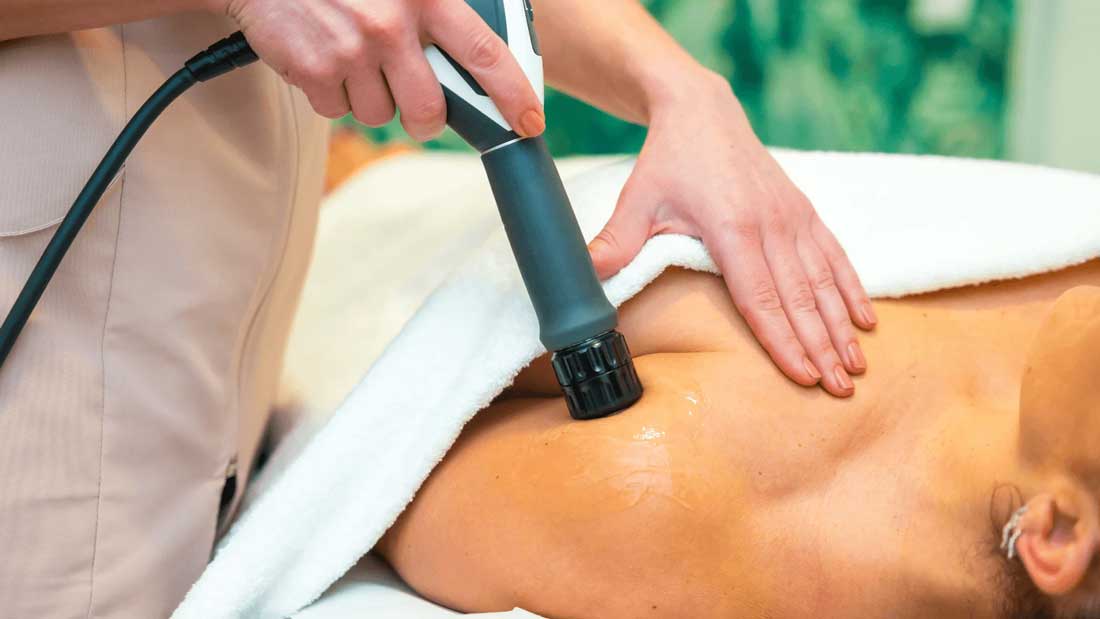
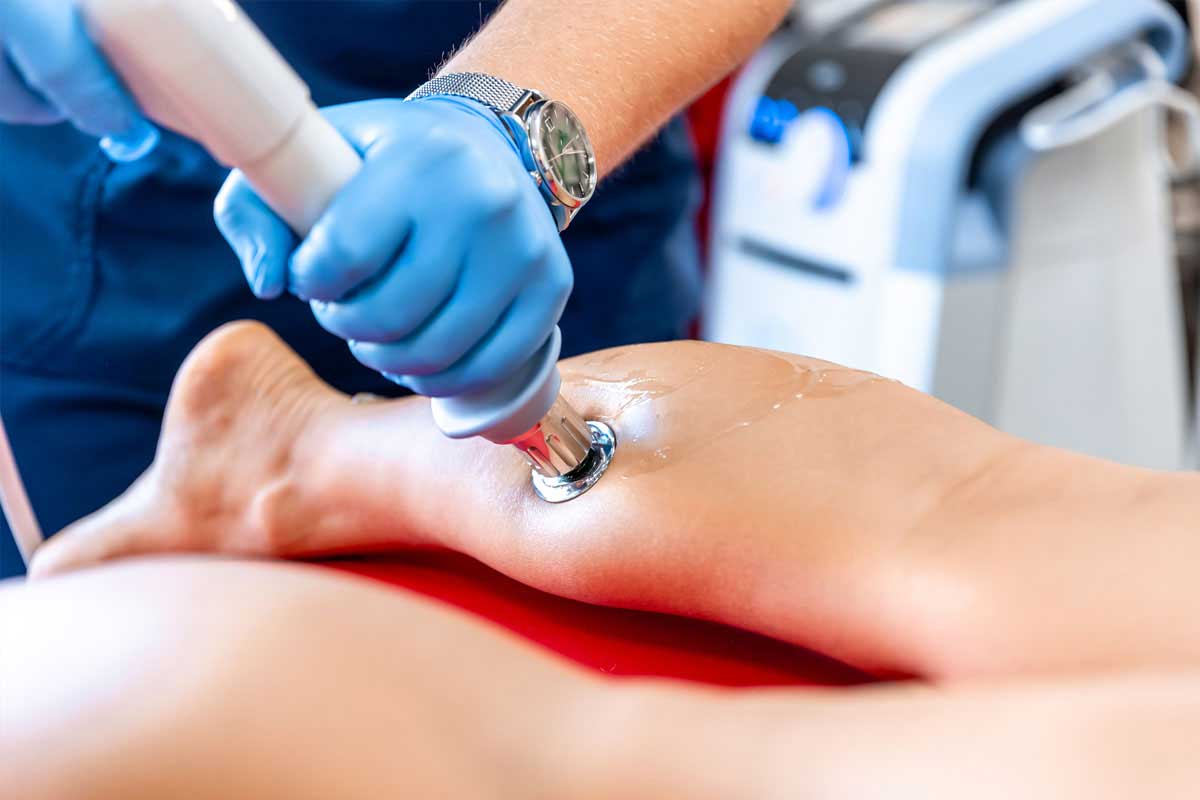
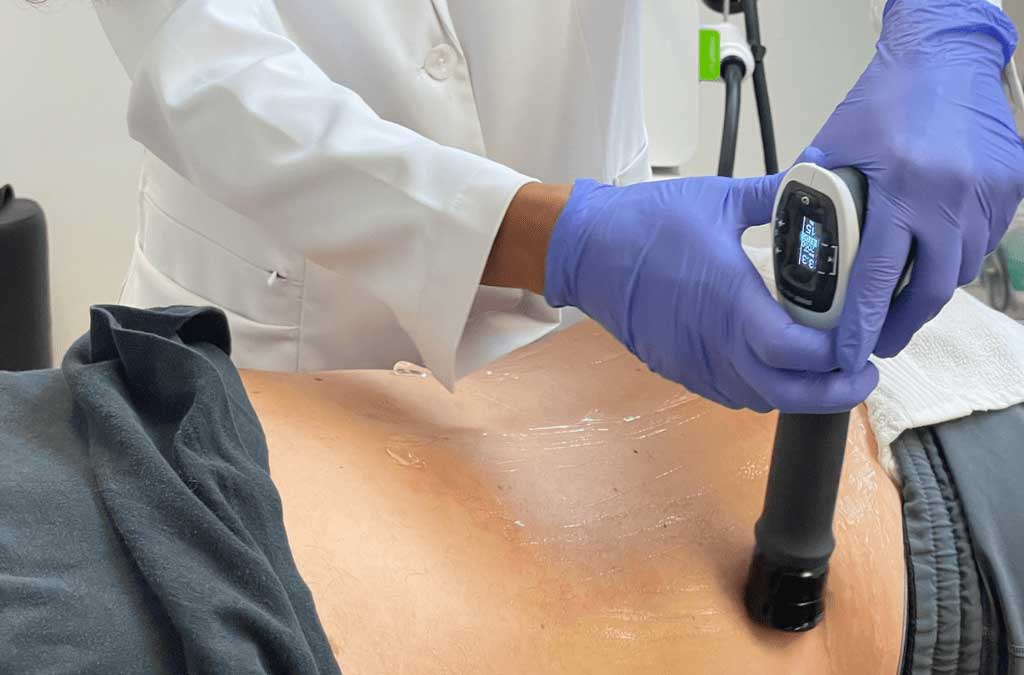
  2. A handheld device delivers acoustic pulses
  3. The therapist adjusts intensity levels
  4. Sessions usually last 10–20 minutes

Patients often describe the sensation as:

  • Mild discomfort
  • Tapping
  • Pulsing
  • Deep pressure

The intensity depends on the condition and tissue sensitivity.

Some areas feel surprisingly tender.

Many patients react with the universal rehabilitation phrase:

“Oh wow… that’s the spot.”

How Many Sessions Are Usually Needed?

Many treatment plans involve:

  • 3 to 6 sessions
  • Weekly appointments
  • Progressive rehabilitation exercises

Results vary.

Some patients notice improvement quickly.
Others experience gradual recovery over several weeks.

Is Shockwave Therapy Better Than Surgery?

In some cases, shockwave therapy may help patients avoid surgery.

That does not mean surgery is never necessary.

However, many doctors and rehabilitation professionals prefer conservative treatment first because:

  • It is non-invasive
  • Recovery is faster
  • Risks are lower
  • Costs may be lower

For chronic tendon problems, shockwave therapy is often considered before surgical intervention.

Statistics and Trends

Interest in shockwave therapy continues growing globally.

Sports medicine clinics increasingly use the technology because tendon injuries are extremely common.

According to health reports:

  • Tendon-related conditions affect millions annually
  • Plantar fasciitis is among the leading causes of heel pain
  • Repetitive strain injuries remain common in office workers

Modern rehabilitation increasingly focuses on non-surgical recovery methods.

Does Shockwave Therapy Hurt?

The honest answer?

Sometimes a little.

Especially in very sensitive areas.

But treatments are usually short.
And most patients tolerate them well.

Many people consider temporary discomfort worthwhile if it helps reduce long-term chronic pain.

Are There Side Effects?

Possible side effects may include:

  • Temporary soreness
  • Redness
  • Mild swelling
  • Bruising

Serious complications are rare when treatment is performed properly.

Who Should Avoid Shockwave Therapy?

Shockwave therapy may not be appropriate for:

  • Pregnant individuals
  • Certain nerve disorders
  • Blood clotting conditions
  • Acute fractures
  • Certain infections

A professional assessment is important.

Shockwave Therapy vs Massage Therapy

Both treatments can help pain and recovery.

However, they work differently.

Massage therapy mainly focuses on muscles and soft tissue relaxation.

Shockwave therapy specifically targets chronic tissue healing responses.

Many rehabilitation clinics combine both treatments for better overall outcomes.

At Sync Move Rehab Centre, integrated rehabilitation plans may include physiotherapy, massage therapy, movement correction, and shockwave therapy.

Latest Scientific Developments

Researchers continue studying how shockwave therapy affects:

  • Cellular repair
  • Inflammation
  • Nerve sensitivity
  • Collagen regeneration

Some newer research suggests shockwave therapy may influence stem cell activity and tissue remodeling.

Sports medicine organizations continue evaluating expanded uses for chronic musculoskeletal conditions.

Is Shockwave Therapy Worth Trying?

For many patients with chronic tendon pain, the answer may be yes.

Especially if:

  • Traditional treatments failed
  • Pain has lasted months
  • Surgery is being considered
  • Movement is limited

No treatment works for everyone.
But evidence suggests shockwave therapy can be a valuable rehabilitation tool.

Final Thoughts

Shockwave therapy is not science fiction, despite the dramatic name. It is a modern rehabilitation treatment supported by growing scientific evidence for chronic tendon and soft tissue conditions.

By stimulating healing responses, improving circulation, and reducing chronic pain patterns, shockwave therapy may help many Canadians recover from persistent injuries without surgery.

If you are considering rehabilitation options for chronic pain or sports injuries, Sync Move Rehab Centre offers professional assessments and evidence-based treatment approaches tailored to individual recovery goals.
References

  1. https://www.ncbi.nlm.nih.gov/
  2. https://www.mayoclinic.org/
  3. https://www.healthline.com/
  4. https://www.apta.org/
  5. https://www.webmd.com/
  6. https://www.who.int/
  7. https://www.cochrane.org/
  8. https://www.cdc.gov/
  9. https://www.physio-pedia.com/
  10. https://syncmove.ca/
Shockwave Therapy

How Long Do Shockwave Therapy Results Last? Recovery Guide

One of the biggest questions patients ask before starting shockwave therapy is simple:

“How long will the results actually last?”

It is a fair question.
Nobody wants temporary relief that disappears faster than a New Year’s gym membership.

Shockwave therapy has become increasingly popular in Canada for treating chronic pain and tendon injuries. Many rehabilitation clinics now use it for conditions such as plantar fasciitis, tennis elbow, Achilles tendinitis, and shoulder pain.

At Sync Move Rehab Centre, shockwave therapy may be used alongside physiotherapy and rehabilitation exercises to support longer-lasting recovery outcomes.

But how durable are the results?

The answer depends on several important factors.

Understanding Shockwave Therapy Results

Shockwave therapy is designed to stimulate healing, not simply mask symptoms.

That distinction matters.

Pain medications often reduce discomfort temporarily.
Shockwave therapy attempts to encourage biological repair processes.

Because of this, successful outcomes may last months or even years in some patients.

However, long-term results depend heavily on:

  • The condition being treated
  • Severity of tissue damage
  • Lifestyle habits
  • Exercise compliance
  • Rehabilitation quality
  • Overall health

Typical Duration of Results

For many chronic tendon conditions, patients may experience improvement lasting:

  • Several months
  • One year or longer
  • Multiple years in successful cases

Some studies report sustained improvements in pain and function long after treatment ends.

But there is an important detail many advertisements skip:

Shockwave therapy works best when combined with proper rehabilitation.

If someone returns immediately to poor movement habits, overtraining, or repetitive strain, symptoms may eventually return.

Why Some Patients Get Longer Results

Long-term success often depends on fixing the underlying cause of the problem.

For example:

A patient with plantar fasciitis may improve faster if they also:

  • Wear supportive footwear
  • Improve calf flexibility
  • Strengthen foot muscles
  • Address walking mechanics

Similarly, office workers with chronic shoulder pain may benefit from:

  • Better posture
  • Ergonomic workstations
  • Strength exercises
  • Reduced repetitive strain

Shockwave therapy can help stimulate recovery.
But lifestyle and rehabilitation often determine how long the results last.

Conditions With Strong Long-Term Outcomes

Plantar Fasciitis

Research suggests many patients experience lasting pain relief after treatment.

Some studies report sustained improvement after 12 months or more.

Tennis Elbow

Tennis elbow often responds well when shockwave therapy is combined with strengthening exercises.

Long-term improvements may continue gradually after treatment ends.

Achilles Tendinopathy

Recovery may take longer because the Achilles tendon handles high daily stress.

Still, many patients report meaningful long-term pain reduction.

Calcific Shoulder Tendonitis

When calcium deposits are successfully reduced, shoulder mobility and pain may improve significantly.

How Quickly Do Results Appear?

Some patients feel improvement after only a few sessions.

Others notice gradual progress over:

  • Several weeks
  • 2–3 months
  • Longer recovery periods

This happens because tissue remodeling takes time.

The body does not instantly rebuild damaged tendon tissue overnight.

Sadly, human healing still operates slower than smartphone software updates.

What Can Reduce the Effectiveness of Shockwave Therapy?

Several factors may reduce long-term success.

Ignoring Rehabilitation Exercises

Exercise programs are often critical.

Strengthening weak muscles helps reduce stress on injured tissues.

Returning Too Quickly to High Stress Activities

Overloading healing tissue too soon may aggravate symptoms again.

Poor Posture and Ergonomics

Mechanical stress patterns matter.

If the original cause remains unchanged, pain may return.

Smoking

Smoking reduces circulation and may impair tissue healing.

Untreated Biomechanical Issues

Flat feet, muscle imbalances, or movement dysfunctions may continue stressing tissues.

What Does the Research Say?

Clinical studies continue showing promising medium- and long-term outcomes for several chronic tendon disorders.

Researchers have observed:

  • Reduced pain scores
  • Improved mobility
  • Increased function
  • Better activity tolerance

Some systematic reviews suggest benefits can remain significant even after 6–12 months.

Is Maintenance Treatment Needed?

Some patients may eventually benefit from occasional maintenance care.

Others experience lasting recovery without additional sessions.

It depends on:

  • Activity level
  • Occupation
  • Age
  • Tissue health
  • Underlying condition

Athletes and physically demanding workers may require ongoing rehabilitation strategies.

Shockwave Therapy and Athletes

Professional athletes frequently use shockwave therapy because tendon injuries are extremely common in sports.

Sports medicine teams value treatments that:

  • Avoid surgery
  • Support recovery
  • Reduce downtime
  • Improve function

That said, athletes also typically combine therapy with:

  • Strength training
  • Mobility work
  • Recovery protocols
  • Load management

There is no shortcut around proper rehabilitation.

Even elite athletes cannot negotiate with angry tendons.

Can Pain Return After Shockwave Therapy?

Yes, it can.

Especially if:

  • The underlying issue was never corrected
  • Physical stress returns excessively
  • Rehabilitation was incomplete
  • Degenerative tissue changes are advanced

However, recurrence does not necessarily mean treatment failed.

Sometimes additional therapy or improved movement strategies are needed.

Shockwave Therapy vs Cortisone Injections

Cortisone injections may provide rapid pain relief.

However, repeated steroid injections may weaken tendon tissue over time.

Shockwave therapy focuses more on stimulating healing rather than only reducing inflammation.

This difference may contribute to longer-lasting functional improvement in some cases.

How Clinics Improve Long-Term Outcomes

Modern rehabilitation clinics increasingly combine shockwave therapy with:

  • Physiotherapy
  • Strength training
  • Manual therapy
  • Postural correction
  • Movement retraining
  • Mobility exercises

At Sync Move Rehab Centre, integrated rehabilitation approaches are designed to support both short-term pain reduction and long-term physical recovery.

Latest Scientific Developments

Researchers continue studying:

  • Cellular healing responses
  • Tissue regeneration
  • Collagen remodeling
  • Nerve sensitivity reduction

Some newer findings suggest shockwave therapy may influence biological pathways involved in chronic pain and tendon repair.

As rehabilitation technology evolves, treatment protocols continue improving.

Tips for Making Shockwave Therapy Results Last Longer

1. Follow Your Exercise Program

Consistency matters.

2. Improve Posture and Ergonomics

Especially important for office workers.

3. Gradually Return to Activity

Avoid sudden overload.

4. Stay Physically Active

Movement supports circulation and tissue health.

5. Address the Root Cause

Long-term recovery requires solving underlying mechanical problems.

Final Thoughts

Shockwave therapy results can last a long time — especially when treatment is combined with proper rehabilitation, exercise, and lifestyle improvements.

While outcomes vary between individuals, many patients experience meaningful long-term reductions in pain and improved function for chronic tendon conditions.

The key is understanding that shockwave therapy works best as part of a complete recovery strategy rather than a stand-alone quick fix.

If you are looking for evidence-based rehabilitation care in Canada, Sync Move Rehab Centre provides personalized treatment plans designed to help patients recover safely, move better, and maintain long-term results.

References

  1. https://www.ncbi.nlm.nih.gov/
  2. https://www.cochrane.org/
  3. https://www.apta.org/
  4. https://www.mayoclinic.org/
  5. https://www.webmd.com/
  6. https://www.healthline.com/
  7. https://www.who.int/
  8. https://www.physio-pedia.com/
  9. https://www.cdc.gov/
  10. https://syncmove.ca/
Shockwave Therapy

Shockwave Therapy Explained: Benefits, Pain & Side Effects

What Does Shockwave Therapy Do? (Simple Guide for Everyone)

Let’s be honest—when you hear the phrase shockwave therapy, it might sound like something out of a sci-fi movie. Maybe you picture lightning bolts or dramatic hospital scenes. But don’t worry—it’s far less dramatic and far more helpful than it sounds.

In simple terms, shockwave therapy is a modern, non-invasive treatment used to reduce pain and help your body heal faster. It’s becoming increasingly popular across Canada, especially for people dealing with stubborn muscle or joint pain.

If you’ve been searching for answers about:

  • What does shockwave therapy do?
  • Is shockwave therapy painful?
  • What are the side effects of shockwave therapy?

You’re in the right place.

What Is Shockwave Therapy? (In Plain English)

Shockwave therapy uses sound waves (not electric shocks!) to stimulate healing in your body.

Think of it like this:

Your body sometimes needs a little “wake-up call” to heal properly—and shockwave therapy is that gentle nudge.

These sound waves:

  • Improve blood flow
  • Break down scar tissue
  • Reduce inflammation
  • Trigger natural healing processes

How Does Shockwave Therapy Work?

Here’s a simple breakdown:

  1. A device sends sound waves into the injured area
  2. These waves create tiny “micro-stimulations”
  3. Your body responds by increasing blood flow
  4. Healing speeds up naturally

It’s kind of like:

Jump-starting a car… but instead of a battery, you’re jump-starting your body’s healing system.

Common Conditions Treated with Shockwave Therapy

Shockwave therapy is widely used in rehabilitation clinics across Canada, including at
👉 https://syncmove.ca/

It can help with:

  • Plantar fasciitis (heel pain)
  • Tennis elbow
  • Shoulder pain
  • Knee injuries
  • Achilles tendonitis
  • Chronic back pain

According to research published by organizations like the Mayo Clinic, shockwave therapy has shown strong results in treating chronic musculoskeletal pain.

Real-Life Example

Imagine this:

You wake up every morning with heel pain so bad that even walking to the kitchen feels like stepping on Lego (and we all know that’s basically a universal form of torture).

After trying stretching, ice, and painkillers with little success—you try shockwave therapy.

After a few sessions, the pain gradually decreases. Walking becomes easier. Life feels normal again.

That’s the kind of result many patients report.

Is Shockwave Therapy Painful?

Short answer: It can be slightly uncomfortable—but not unbearable.

Most people describe it as:

  • A tapping sensation
  • Mild discomfort
  • Occasionally intense in sensitive areas

But here’s the good news:

  • Sessions are short (usually 10–20 minutes)
  • The discomfort fades quickly
  • No downtime needed

A common joke among therapists:

“It’s uncomfortable—but not as uncomfortable as living with pain for months.”

What Are the Negative Side Effects of Shockwave Therapy?

Like any treatment, shockwave therapy isn’t completely side-effect free—but the risks are very minimal.

Common mild side effects:

  • Slight redness
  • Minor swelling
  • Temporary soreness
  • Bruising (rare)

These usually go away within a few days.

Important:

Shockwave therapy is non-invasive, meaning:

  • No surgery
  • No needles
  • No medication required

Who Should Avoid Shockwave Therapy?

While it’s safe for most people, it may not be recommended if you:

  • Are pregnant
  • Have a blood clotting disorder
  • Have a tumor in the treatment area
  • Use certain medications (like blood thinners)

Always consult a qualified clinic like
https://syncmove.ca/
before starting treatment.

Scientific Evidence & Latest Research

Recent studies show promising results:

  • A 2023 clinical review found that over 70% of patients experienced significant pain reduction
  • Studies in Europe and Canada confirm effectiveness for chronic tendon injuries
  • Research published in journals like The American Journal of Sports Medicine supports its use

Why Shockwave Therapy Is Growing in Canada

There’s a clear trend:

Canadians are moving away from:

  • Long-term medication
  • Invasive surgery

And toward:

  • Natural healing
  • Non-invasive therapies

Shockwave therapy fits perfectly into this shift.

Benefits of Shockwave Therapy

Here’s why people love it:

  • Fast treatment sessions
  • No recovery time
  • Long-lasting results
  • Drug-free approach
  • Cost-effective compared to surgery


A Quick Comparison

Treatment Type Invasive Recovery Time Cost
Surgery Yes Weeks/months High
Medication No Ongoing Medium
Shockwave Therapy No None Moderate

Final Thoughts (Conclusion)

Shockwave therapy is not magic—but it can feel pretty close for people dealing with chronic pain.

It works by helping your body heal itself faster, without the need for surgery or heavy medication. While there may be mild discomfort during treatment, the long-term benefits often outweigh the short-term sensations.

If you’re in Canada and considering this treatment, clinics like
https://syncmove.ca/
offer professional, personalized care to help you recover safely and effectively.

In the end, the real question isn’t “Does it work?”
It’s:

“How long do you want to keep living with pain before trying something that might actually help?”

References

  1. https://www.mayoclinic.org/tests-procedures/shockwave-therapy
  2. https://www.healthline.com/health/shockwave-therapy
  3. https://www.ncbi.nlm.nih.gov/pmc/articles/PMC6029898/
  4. https://www.webmd.com/pain-management/shockwave-therapy
  5. https://pubmed.ncbi.nlm.nih.gov
  6. https://www.physio-pedia.com/Shockwave_Therapy
  7. https://www.arthritis.ca
  8. https://www.sportsmed.org
  9. https://www.cochranelibrary.com
  10. https://www.ncbi.nlm.nih.gov/books